

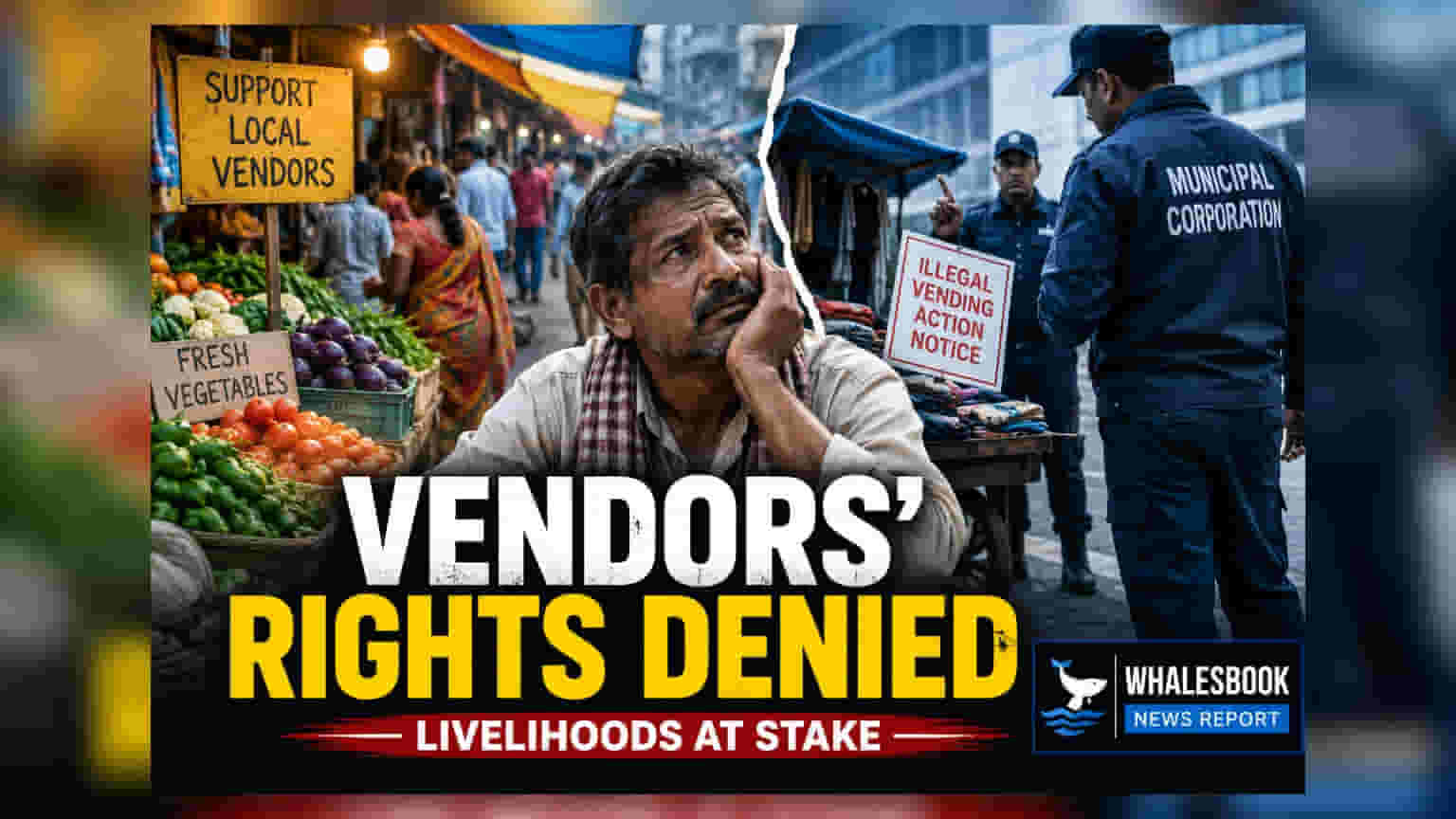
Despite the Street Vendors Act of 2014, street vendors often face eviction challenges. For investors, this sector is vital as it sustains the informal economy and drives significant consumption demand across India. Understanding the balance between urban planning and the right to trade is key to mapping the broader retail and consumption landscape.
What Happened
Street vending remains a central, yet often legally conflicted, part of the Indian economy. While landmark judicial rulings, such as the Supreme Court case of Sodan Singh versus New Delhi Municipal Corporation, and the Street Vendors (Protection of Livelihood and Regulation of Street Vending) Act, 2014, provide legal protections for street trade, the reality on the ground often involves frequent evictions and harassment. The core tension lies between urban planning initiatives, which prioritize clearing city spaces, and the fundamental constitutional right to carry out trade as a means of livelihood.
Why It Matters for Investors
For investors monitoring the Indian consumption story, the informal economy is a critical component. With over 90% of India's workforce engaged in the informal sector, street vendors play an essential role in the last-mile distribution of goods and services. This network sustains the daily consumption patterns of millions. When local policies lead to the mass eviction of vendors, it disrupts local economic activity, affects the circulation of capital, and can create uncertainty in the retail ecosystem. Understanding the regulatory environment for street vending provides insight into how informal and organized retail sectors coexist and compete in Indian urban centers.
The Economic Contribution
Street vending is far more than a subsistence activity; it acts as a significant pillar of the local economy. These vendors provide affordable goods and services to a vast demographic, effectively supporting the demand side of the consumer economy. Because this sector functions with limited resources, it is highly sensitive to municipal regulations and city planning decisions. Analysts often view the health of the informal economy as a barometer for broader domestic consumption, as it reflects the purchasing power and spending habits of a large portion of the population that eventually filters up to larger, organized retail chains.
Challenges in Urban Integration
There is a growing debate on how to modernize urban infrastructure without dismantling the informal economy. The State faces the challenge of absorbing a large workforce into formal employment, which remains limited. Consequently, evictions are often viewed by economists as a temporary measure that fails to address the underlying need for employment. From a structural perspective, effective urban planning would require the integration of vendors into the city layout—through designated zones, improved sanitation, and regulated vending spaces—rather than attempting to clear them entirely. For businesses, the transition toward more formal, regulated vending spaces could potentially alter the competitive landscape for low-cost retail products.
What Investors Can Track
Investors looking at the consumer and retail sector may monitor how state and municipal governments balance urban modernization with the protection of informal livelihoods. Future triggers include policy updates on urban vendor registration, the allocation of dedicated vending zones in master plans, and any shifts in enforcement that might signal a move toward more inclusive city planning. Such changes can influence the supply chain and competitive pricing models of major consumer goods companies that rely on the vast informal retail network to reach end-consumers.