 Whalesbook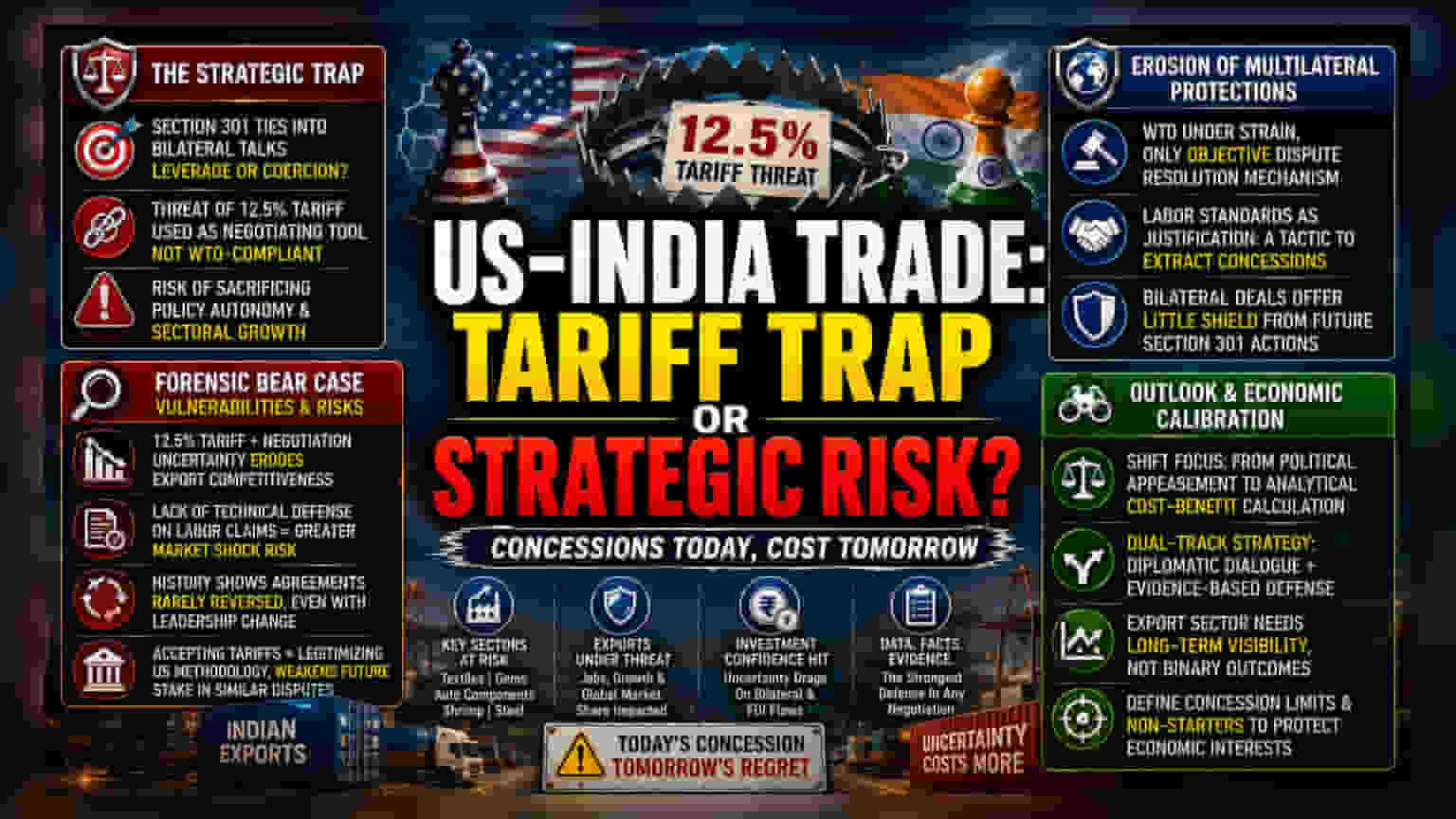


The Strategic Trap of Bundled Negotiations
The central tension in the current US-India trade discourse revolves around the conflation of the Section 301 investigation with long-term bilateral cooperation. By treating the threat of a 12.5% tariff on specific Indian goods as a leverage point in broader trade discussions, Washington effectively forces a concession-heavy posture. Strategic analysis suggests this approach creates a dangerous precedent, where New Delhi potentially sacrifices policy autonomy and specific sectoral growth prospects to mitigate the immediate impact of tariffs that arguably lack a foundation in existing World Trade Organization (WTO) norms.
The Erosion of Multilateral Protections
Existing WTO framework, while currently under strain, provides the only objective mechanism for addressing trade disputes of this magnitude. Analysts point out that Washington’s invocation of labor standards to justify unilateral tariffs mimics tactics previously employed against other emerging markets to extract market access concessions. Unlike standard trade negotiations that seek mutual benefit, this scenario resembles a coercive framework where the threat of escalation is used to bypass multilateral dispute resolution. Furthermore, evidence from other US Free Trade Agreement partners indicates that bilateral pacts provide little shelter from future Section 301 actions, suggesting that any deal signed now may offer no permanent protection against future administrative shifts in Washington.
The Forensic Bear Case: Vulnerabilities in Concession
From a risk-management perspective, the primary danger lies in India’s domestic export stability. Industries currently under scrutiny must navigate a landscape where their cost-competitiveness is eroded not just by the proposed 12.5% tariff, but by the uncertainty inherent in the negotiation process itself. A failure to mount a technical, evidence-based defense regarding the alleged labor practices leaves companies exposed to secondary market shocks. Furthermore, past experience with US-led trade friction highlights the volatility of such agreements; once an administrative framework is set, reversals are rare, regardless of changes in political leadership. If the government opts to accept these tariffs as part of a compromise, it essentially legitimizes the US methodology while weakening its standing to contest similar measures in the future.
Outlook and Economic Calibration
Moving forward, the focus must shift from political appeasement to an analytical cost-benefit calculation. The export sector requires long-term visibility, which is currently obstructed by the binary outcome of the ongoing investigations. Economic experts advocate for a dual-track strategy: engaging in diplomatic dialogue to manage immediate fallout while simultaneously documenting scientific and technical data to refute the specific labor allegations. Until the government defines the exact threshold of concession that is acceptable—and more importantly, the thresholds that constitute an economic non-starter—the uncertainty will likely act as a drag on bilateral investment confidence.