 Whalesbook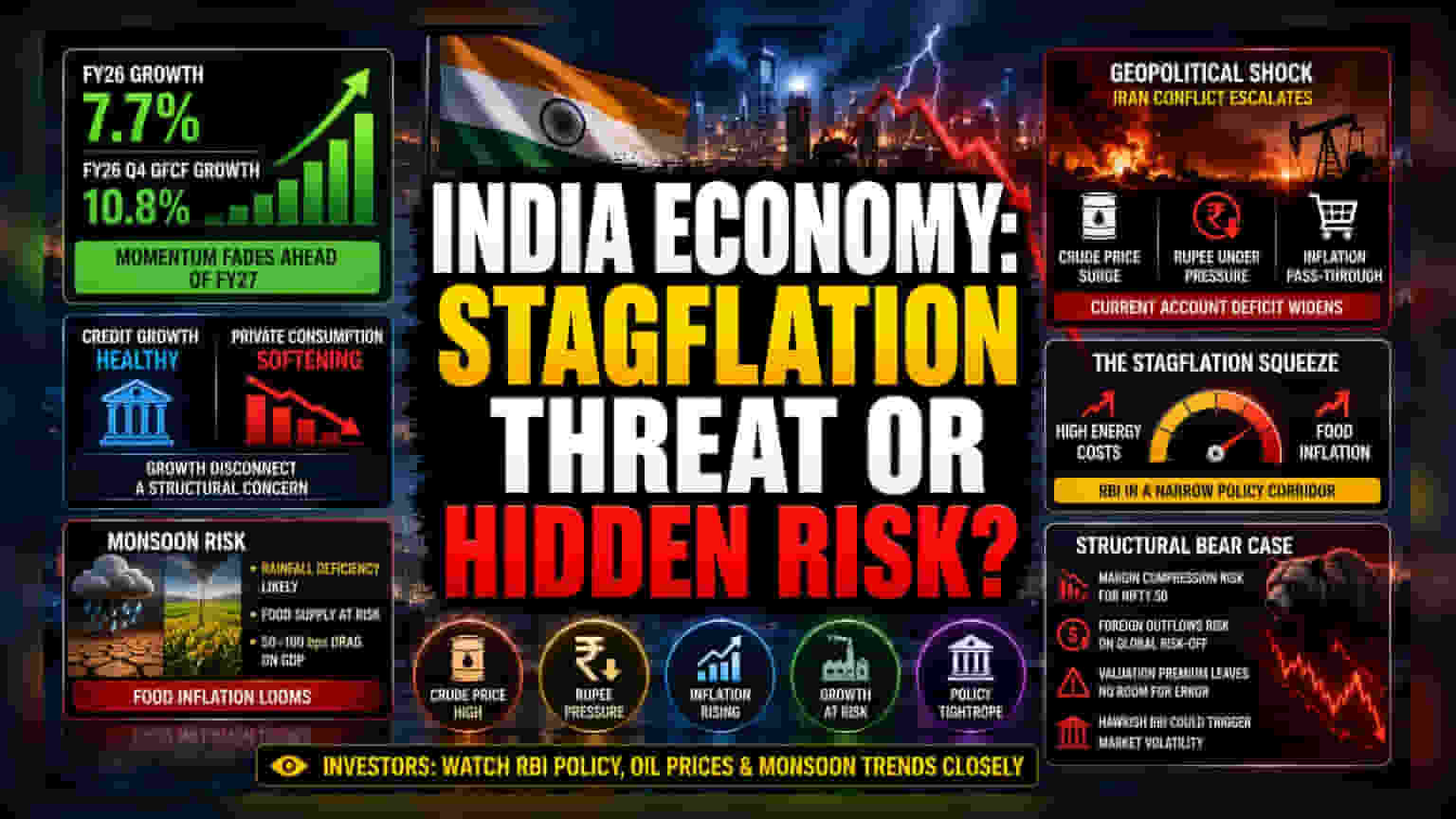


The Macroeconomic Divergence
The narrative surrounding India’s economic trajectory has shifted abruptly from the momentum of a 7.7% growth print in FY26 to a more precarious outlook for the current fiscal year. While the previous year benefited from a surge in Gross Fixed Capital Formation, which accelerated to 10.8% in the final quarter, the structural foundation is now being tested by external shocks. The disconnect between healthy credit growth and softening private consumption suggests that capital expenditure alone may struggle to sustain headline numbers if input cost volatility persists.
Geopolitics and the Energy Trap
The escalation of hostilities involving Iran introduces a direct transmission mechanism for inflation through the energy basket. Because India remains a net importer of crude oil, any sustained supply constraint in the Middle East forces a widening of the current account deficit and necessitates a pass-through of costs to the consumer. Unlike previous cycles where domestic demand could buffer such shocks, the current environment sees high levels of household debt limiting the capacity for further consumption. Market analysts are increasingly concerned that the Reserve Bank of India’s liquidity management, while effective during stable periods, may reach its limit if the rupee faces structural devaluation under persistent energy-driven pressure.
The Monsoon Variable
The agriculture sector remains the primary hedge against food inflation, but current meteorological models indicate a potential deficiency in rainfall that threatens to tighten domestic food supplies. When food-led inflation overlaps with high energy costs, the result is a classic stagflationary squeeze. Policymakers face a narrow corridor where tightening monetary policy to quell inflation risks choking off the remaining manufacturing momentum. Investors should note that historical patterns of poor monsoon performance in India often correlate with an immediate 50-100 basis point drag on headline GDP and a contraction in rural-centric consumer indices.
Structural Risks and the Bear Case
The primary danger for the Indian equity market lies in the potential for margin compression across the Nifty 50. Most large-cap firms are currently priced for perfection based on the stellar FY26 performance. Should corporate earnings growth fail to meet the anticipated 11-12% nominal GDP trajectory, multiples will likely face a sharp correction. Furthermore, the reliance on foreign portfolio inflows creates a vulnerability if the global risk-off sentiment intensifies due to the Iran crisis. Unlike the resilience displayed in previous fiscal years, the current valuation premium leaves little room for operational errors or supply chain disruptions. Investors are observing the RBI’s next policy moves with heightened sensitivity, as any signal of a shift toward a hawkish stance to combat these emerging inflationary forces could act as an immediate catalyst for market volatility.