

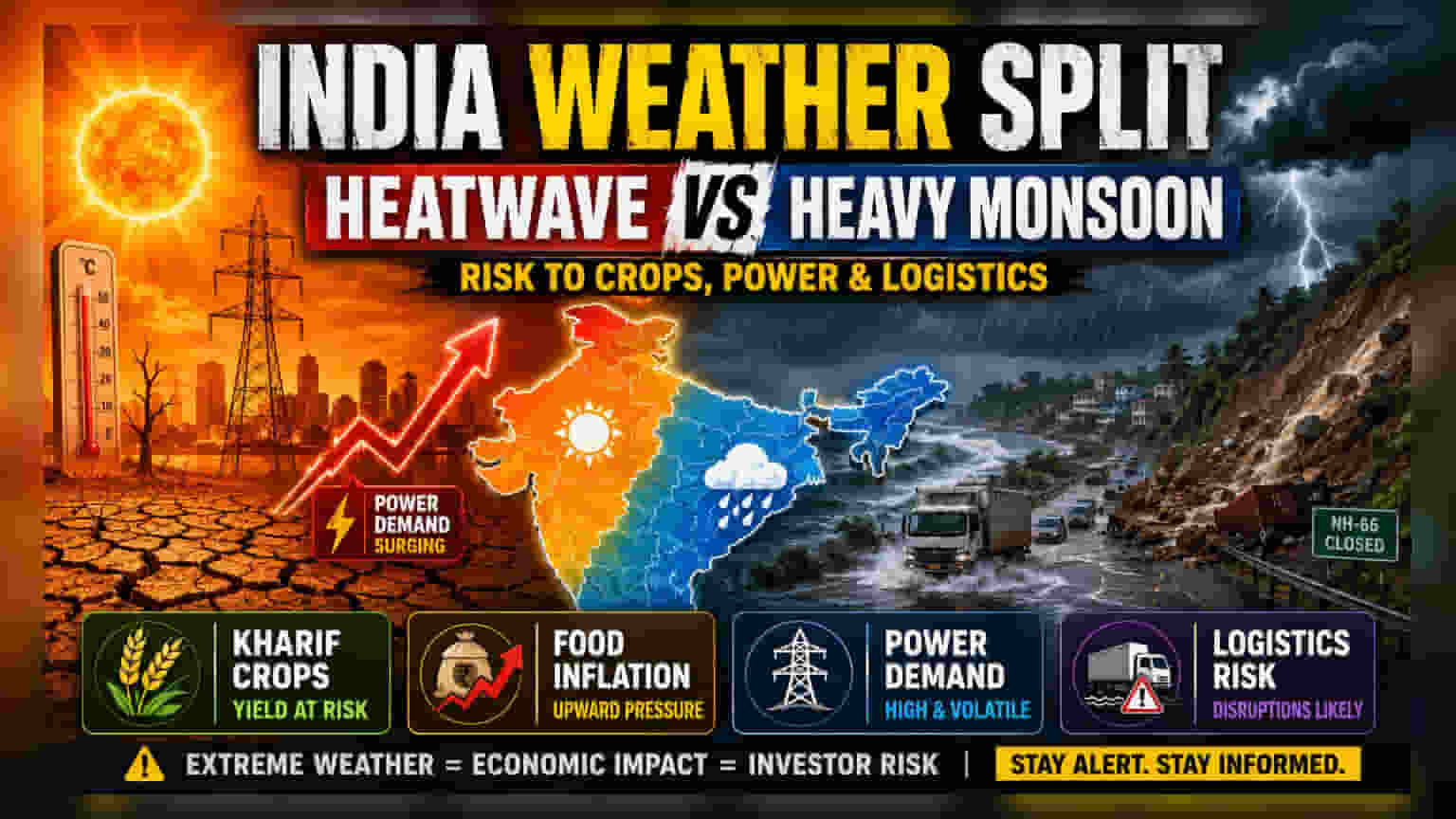
India faces a challenging weather mix as extreme heat hits the north while monsoon rains trigger alerts in other regions. For investors, this creates a dual challenge: potential inflationary pressure from uneven crop sowing and increased power demand in heat-affected states. These climate patterns can affect rural demand, food supply chains, and utility operations across the economy.
What Happened
India is currently experiencing a split weather pattern, with intense heatwaves in parts of the north and heavy monsoon rainfall across various other states. The India Meteorological Department (IMD) has issued multiple warnings, flagging the risk of localized flooding and landslides due to heavy rains, while simultaneously warning of heatwave conditions in the northern and eastern regions. This climate volatility creates immediate operational and economic questions for sectors ranging from agriculture to power generation.
The Impact on Agriculture and Food Inflation
The most immediate investor interest lies in the progress of the monsoon. As of late June, the monsoon is critical for the sowing of Kharif crops, which account for a significant portion of India’s annual food grain production. While the monsoon’s arrival typically boosts rural sentiment, an uneven distribution poses risks. Excess rain in certain regions can damage standing crops or delay planting, while dry spells in others may reduce yields. Investors often watch these patterns closely because food inflation remains a key monitorable for the Reserve Bank of India. Disruptions in supply chains due to weather can lead to price volatility in vegetables, pulses, and grains, impacting household budgets and consumer demand.
Power Sector Dynamics
The persistent heatwave in parts of northwest and central India creates a different type of pressure: a spike in electricity demand. As temperatures rise, the load on the power grid increases due to higher usage of cooling appliances in homes, offices, and industrial centers. This often forces power distribution companies to procure additional electricity from the short-term market, which can be expensive during peak demand periods. For investors, this highlights the necessity of tracking the operational efficiency and fuel availability—specifically coal—for power generation companies, as the grid remains under stress until temperatures stabilize.
Infrastructure and Logistics Risks
Heavy rainfall, particularly in hilly or coastal regions, brings the risk of infrastructure damage and logistical bottlenecks. Transporting goods across the country often slows down during heavy monsoon periods due to waterlogging, poor road conditions, or potential transit disruptions in mountainous terrain. Companies with high dependency on just-in-time inventory or those involved in heavy goods transport may face temporary cost increases or delays. These logistical challenges can affect the quarterly profit margins of businesses if they are unable to pass on the added transportation costs to end consumers.
What Investors Should Monitor
Investors can keep a close watch on several key indicators over the coming weeks. First, the spatial distribution of the monsoon rainfall is more important than the overall national average, as it directly dictates crop output. Second, tracking food price trends in the monthly inflation data will be important, as this often influences interest rate expectations. Third, management commentary from companies in the agri-input, FMCG, and power sectors during the upcoming quarterly earnings season may provide specific insights into how these weather conditions have affected their revenue, margins, and operational costs. Monitoring these trends helps in understanding how climatic shifts filter through to corporate performance.