

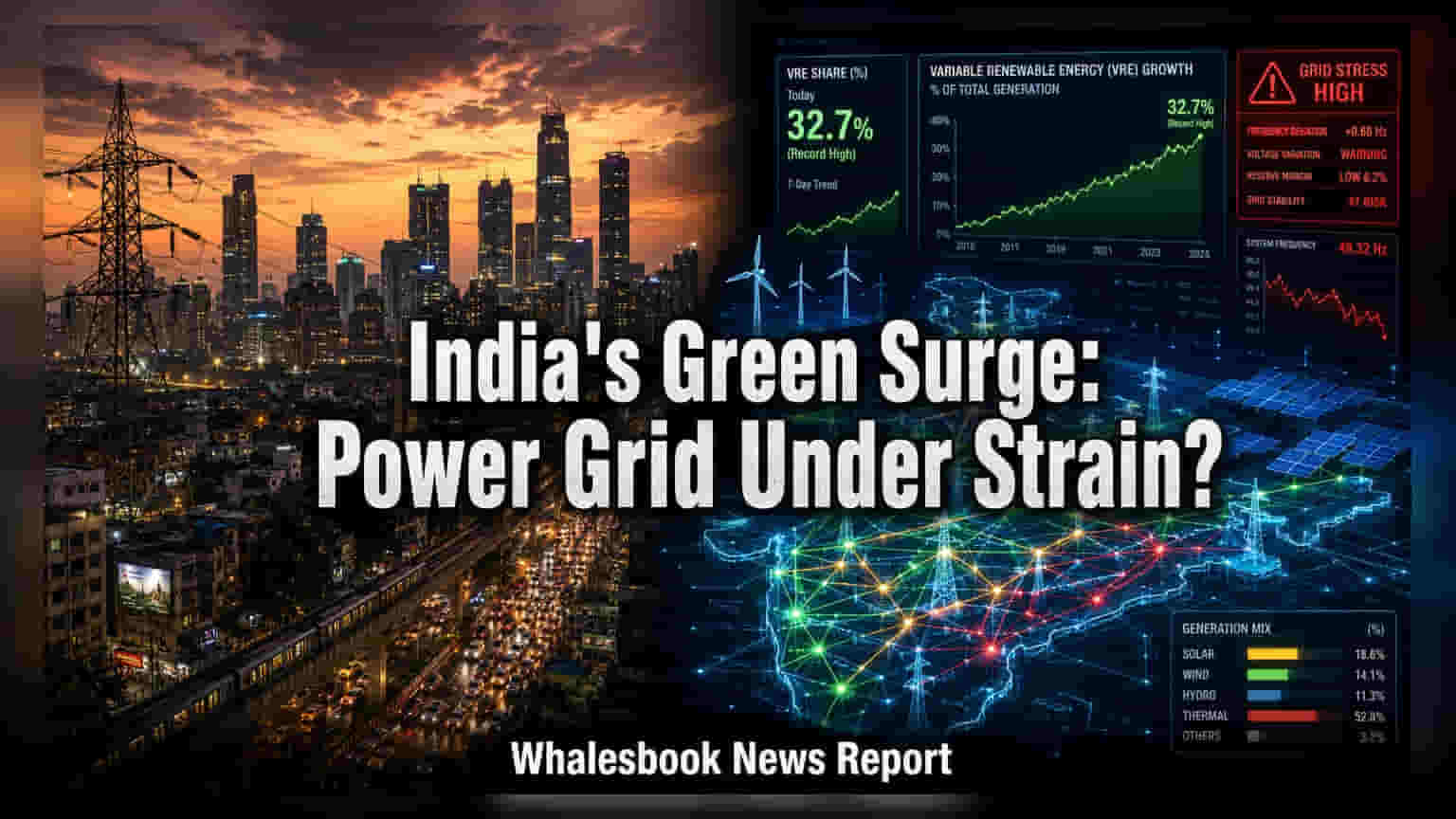
India achieved a record 42.79% share of variable renewable energy in the national grid on July 13, with generation crossing 103.7 GW. This milestone highlights the rapid growth of green energy but puts pressure on grid stability. Investors should monitor how the transition to new market mechanisms, such as capacity markets and battery storage, impacts power sector profitability and operational flexibility.
India’s power sector achieved a landmark moment on July 13 as variable renewable energy sources, specifically wind and solar, accounted for 42.79% of the total electricity generation in the country. This surge saw combined wind and solar output peak at 103.7 GW. With renewable energy now representing 40% of India's total installed power capacity, the nation is accelerating its transition toward cleaner energy sources.
Grid Flexibility and Operational Pressures
While this increase in clean energy is a major step forward, it creates technical difficulties for grid operators. Wind and solar power are intermittent, meaning their generation can fluctuate rapidly due to weather patterns. To keep the national grid stable, operators must balance electricity supply and demand in real-time. When renewable generation drops suddenly, other sources must compensate immediately to avoid outages.
Coal-fired power plants continue to act as the primary backup for this variability. Although these plants are traditionally meant to run at constant levels, they are now being required to ramp their operations up and down to balance the grid. Many older coal units struggle to operate reliably when capacity drops below 55%, which can lead to lower operational efficiency and increased maintenance costs for power generators.
The Shift Toward Storage and Capacity Markets
To manage this variability, the industry is increasingly focused on energy storage, particularly large-scale battery projects. These systems can store surplus solar energy during the day and release it when demand spikes in the evening. However, the high cost of storage means it cannot currently replace the massive generation capacity provided by conventional power plants.
To address these issues, the government is looking at changing how electricity markets function. Traditional markets focus on the total amount of electricity produced. New market structures, such as capacity markets, are being introduced to pay power providers for their ability to remain on standby and supply electricity when the grid needs it most. This shift aims to reward reliability rather than just volume, which may change how independent power producers and utility companies manage their long-term project planning.
Regulatory Focus on Grid Resilience
Regulators are also sharpening their focus on grid discipline. Officials have raised concerns regarding the need for stricter enforcement of technical standards, such as ensuring that renewable energy plants can handle voltage changes without disconnecting from the grid. Proposals have been made to give grid authorities more power to disconnect generators that do not comply with these resilience standards. Future investor updates will likely center on the pace of battery storage integration, the implementation of capacity-based payments, and how efficiently power companies can upgrade their existing coal assets to meet these new, more flexible requirements.