

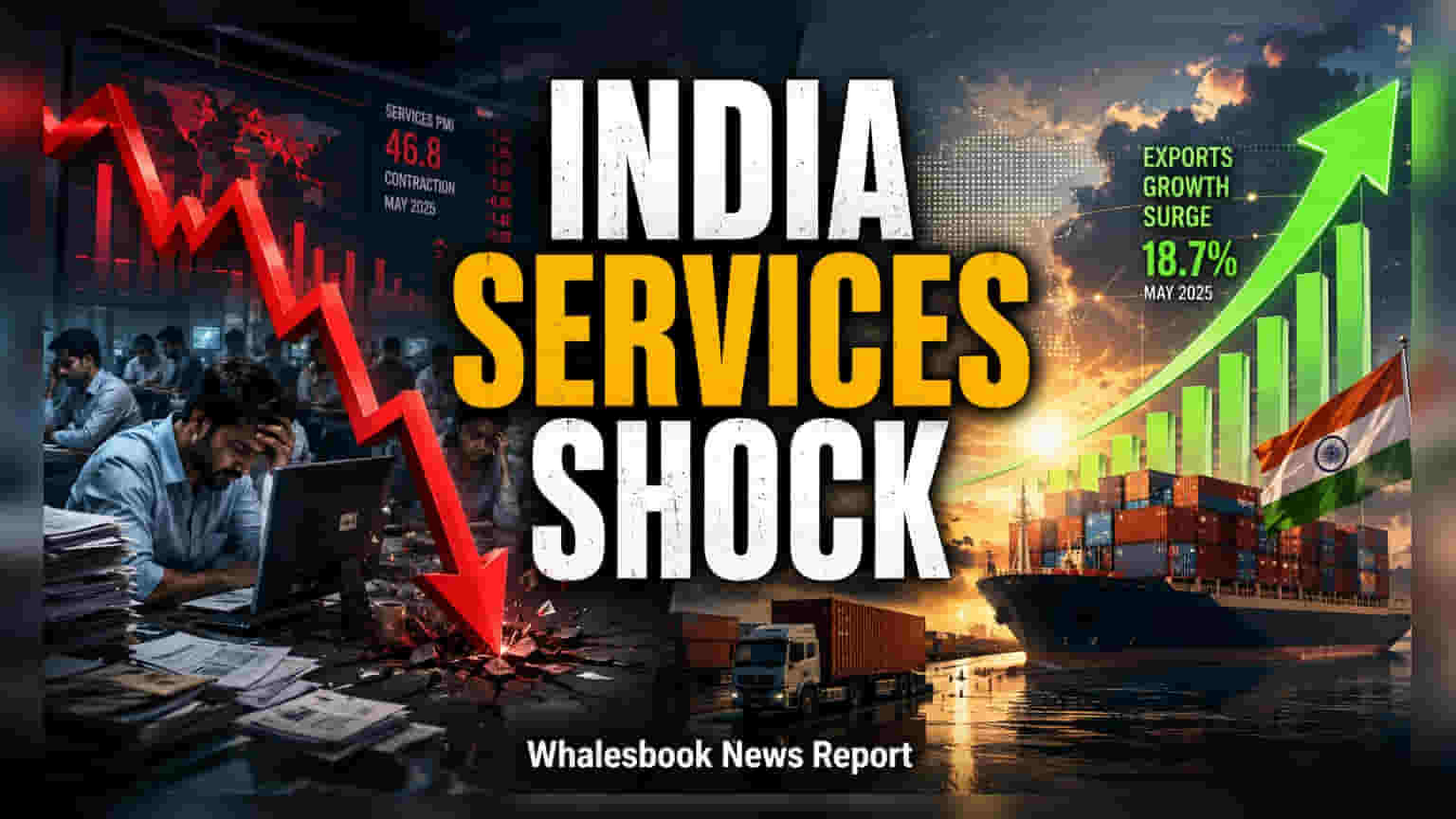
India's services sector growth slowed to a 53-month low in July 2026, with the Purchasing Managers' Index (PMI) slipping to 53.3 from 57.4 in June. The decline, driven by softer domestic demand and rising competition, reflects a broader cooling in private sector activity. While export orders show resilience, the seven-month low in business confidence suggests companies may turn more cautious regarding near-term hiring and spending plans.
India's private sector growth cooled significantly in July 2026, with the services sector recording its weakest expansion in over four years. The HSBC India Services PMI, a key indicator that tracks business activity based on manager surveys, fell to 53.3 from 57.4 in June. While any reading above 50 still indicates growth, the drop to a 53-month low highlights a noticeable loss of momentum in the country's economic engine.
The slowdown is not limited to services alone. The HSBC India Composite PMI, which combines both manufacturing and services data, also fell to 54.3 in July, marking its lowest reading since March 2022. Similarly, the manufacturing sector saw its PMI ease to 53.5, the lowest level since August 2021. This broad-based moderation across both primary sectors suggests that the economy is facing a period of cooling after earlier phases of rapid expansion.
Factors Influencing the Slowdown
Service providers pointed to several headwinds, primarily softer domestic demand and heightened competition. Businesses reported that order growth has slowed to the slowest pace seen since February 2022. This shift has led many companies to adopt a more cautious stance, reflected in business confidence dropping to a seven-month low. When companies feel less certain about future demand, they often delay capital spending and hiring, which can impact overall economic growth.
Despite the domestic challenges, the export front remains a point of relative strength. Businesses reported that demand from international clients, particularly in the UAE, the UK, and the US, helped drive growth in new export orders. This divergence—where international demand is holding up better than domestic sales—provides a buffer for many service-oriented companies.
Pricing and Margin Trends
Even as growth slows, companies have continued to manage their profit margins by adjusting prices. Interestingly, while input cost inflation hit a six-month low in July, businesses continued to pass on costs to consumers. Selling prices increased at the fastest pace since April, suggesting that companies are still finding ways to maintain or improve margins despite the competitive environment.
Employment growth saw a modest rebound compared to the low levels seen in June. However, this is largely attributed to only a small percentage of firms increasing their headcount, while many others kept payrolls steady. Looking ahead, investors and analysts will likely monitor monthly PMI data to see if domestic demand picks up or if the current moderation persists. Key factors to watch include the sustainability of export demand and whether companies sustain their pricing power if local consumption remains sluggish.