

India’s services sector is showing signs of fatigue as net exports fell to $16.95 billion in July 2026. While services inflation remains low, the rise of AI-driven automation is creating pricing wars and squeezing profit margins for major IT players. Analysts are now watching whether this traditional economic buffer can sustain its performance against global technology shifts.
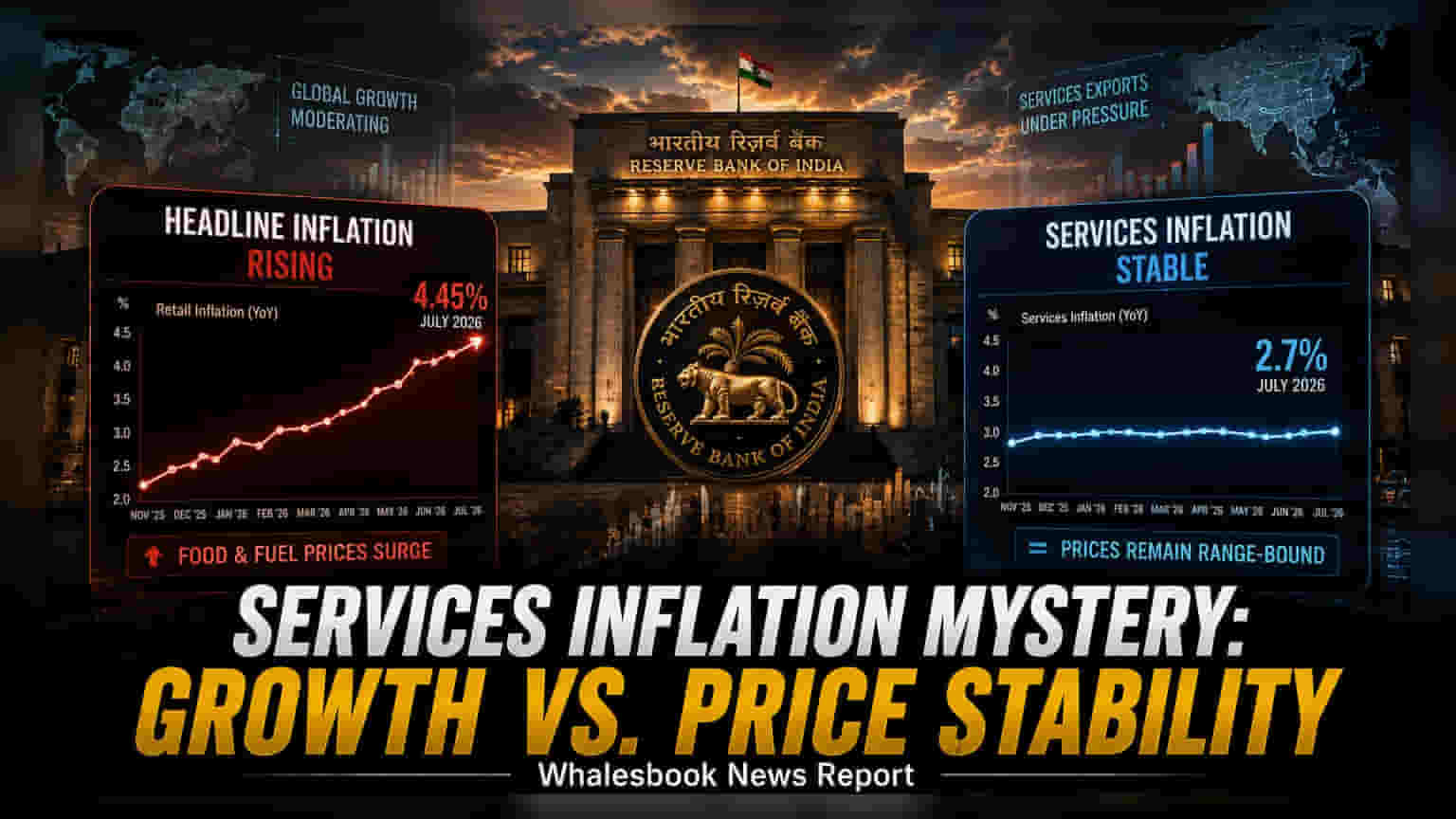
India’s retail inflation rose to 4.45% in July 2026, largely pushed up by food and fuel costs. While headline inflation has been climbing for nine consecutive months, services inflation remains surprisingly low. Historically, strong economic growth would lead to higher service prices, but this correlation has broken down, creating an economic anomaly that is drawing close attention from analysts.
For years, the services sector has acted as a vital shock absorber for the Indian economy. Strong services exports have helped offset the trade deficit, keeping the country's external balance in check. However, recent data suggests this cushion is under strain. In July 2026, net services exports fell to $16.95 billion, representing a 5% decline from the previous month. The HSBC India Services Purchasing Managers’ Index (PMI) also reflected this cooling trend, dropping to 53.3 in July from 57.4 in June.
The pressure on this sector is increasingly linked to the rapid adoption of Artificial Intelligence. Global clients, who rely on Indian IT services, are now demanding productivity gains from automation. This shift has triggered intense pricing competition, forcing major firms like TCS, Infosys, Wipro, and HCL Tech to adjust their pricing models. As companies compete for contracts in an AI-focused market, profit margins are coming under significant pressure.
Beyond the impact on exports and margins, the sector is also navigating new regulatory and operational challenges. In its June 2026 Financial Stability Report, the Reserve Bank of India (RBI) highlighted AI-enabled cyber threats as a rising systemic risk for the financial system. The combination of slowing export growth and the need for heavy investment to defend against new tech-driven risks could weigh on the sector’s financial flexibility.
For investors and policymakers, the core question is whether the services sector can continue to provide the same level of economic stability it has in the past. If the slowdown in services exports persists, it may increase the country’s reliance on other growth drivers or necessitate policy changes to support the sector. The key monitorables in the coming months will be the trend in services export values, the pricing power of IT firms in the face of AI-driven competition, and any further updates from the central bank regarding sector-wide systemic risks.