 Whalesbook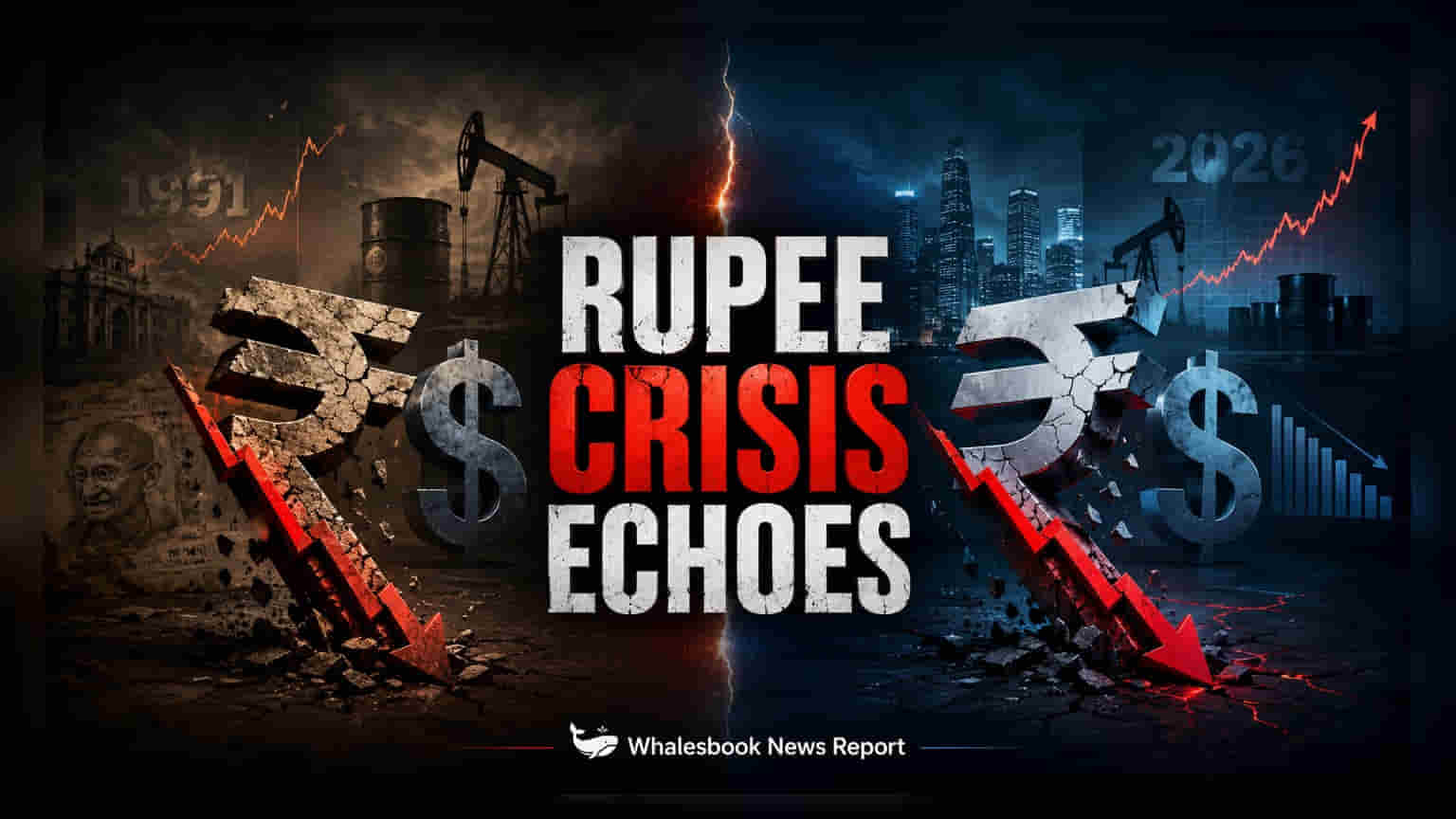


The Currency Defense Mechanism
The narrative surrounding India's currency performance in 2026 often reverts to historical anxiety, yet the current mechanics of the foreign exchange market differ substantially from the 1991 crisis. Faced with a rupee nearing the 97-per-dollar threshold in May, the Reserve Bank of India has maintained an aggressive intervention strategy, recording net sales of over $53 billion in the previous fiscal year. Unlike the desperate austerity measures of the past, today’s regulatory toolkit—including selective spot market intervention, specialized USD/INR buy-sell swap auctions, and limits on bank net open positions—is designed to decouple domestic liquidity from external speculative pressure while maintaining financial stability.
The Shift in Market Drivers
Unlike the balance-of-payments crisis three decades ago, the present depreciation is largely driven by a misalignment between capital flows and valuation rather than a fundamental lack of hard currency. While the geopolitical conflict in West Asia has intensified energy costs and pressured the current account deficit, the primary strain emanates from record foreign portfolio outflows. As global markets recalibrate amid shifting interest rate expectations and regional security concerns, India has encountered over $23 billion in equity outflows since early 2026. However, robust domestic institutional participation, marked by record monthly retail investment inflows, has effectively cushioned the market from a collapse, acting as a structural shock absorber that did not exist in prior decades.
Structural Vulnerabilities and Risks
Despite the resilience of headline macro indicators, the "price adjustment problem" remains a critical risk factor. India’s structural reliance on imported crude—meeting approximately 85% to 87% of demand—creates a feedback loop where currency weakness directly inflates the cost of essential inputs. Wholesale price index acceleration, which hit 8.3% in April 2026, signals that upstream pressures are broadening. If sustained, these costs may threaten to break through the current policy-led containment, forcing more difficult choices regarding fuel subsidies and monetary policy. Furthermore, the reliance on foreign inflows to support domestic growth leaves the rupee vulnerable to prolonged global risk aversion.
Future Policy Outlook
Policymakers remain focused on a transition toward structural reform rather than emergency-style contractions. Current sentiment within economic circles suggests that while a full-blown crisis is not the base case, the era of relying on passive capital inflows is waning. The path forward likely necessitates a shift toward direct benefit transfers to manage the impact of necessary energy price adjustments on vulnerable populations, alongside efforts to improve foreign investment frameworks. While forex reserves, currently hovering near $681 billion, provide a substantial buffer, the durability of this stability depends on the government's capacity to navigate the gap between its aggressive growth targets and the realities of a more volatile global capital environment.