

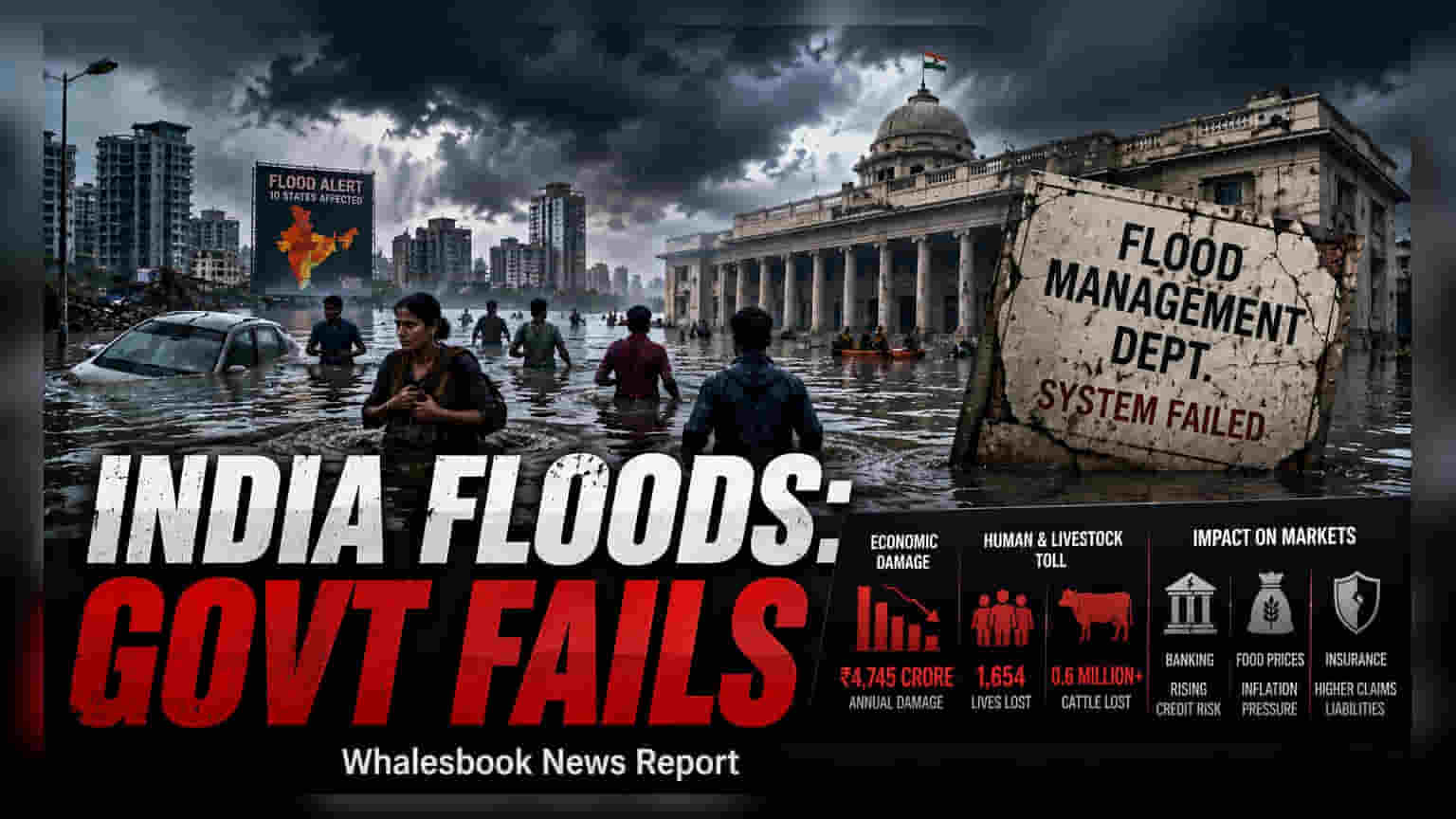
India’s recurring flood crisis, fueled by climate change and policy gaps, is posing structural risks to the economy. For investors, this volatility impacts food inflation, supply chain stability, and could pressure asset quality in the banking and insurance sectors.
India is currently grappling with a severe flood season that has affected millions of people across ten states, intensifying the debate on the economic cost of climate-driven disasters. With an estimated average annual flood damage now reaching ₹4,745 crore, the scale of destruction is moving beyond traditional riverine regions into urban centers. Recent reports indicate that 1,654 lives have been lost and over 0.6 million cattle have perished, highlighting the severe human and agricultural toll that accompanies these weather events.
For the Indian market, this is not just a humanitarian issue but a growing macroeconomic risk. Climate change is altering rain patterns, making extreme weather events more frequent and less predictable. This volatility directly impacts food supply chains. As weather shocks frequently disrupt crop yields, they act as a trigger for food inflation. Analysts and the Reserve Bank of India have often pointed to these climate-induced supply shocks as a significant factor that can complicate the central bank's efforts to manage headline inflation.
Investors may look closely at how this volatility impacts the financial sector. Banks with significant exposure to rural or agricultural borrowers often face increased stress during these periods. Floods can damage standing crops and livestock, directly affecting the borrower's ability to repay loans. Consequently, the asset quality of banks—or the health of their loan books—in affected regions becomes a monitorable metric. If these floods lead to a prolonged period of lower income for rural households, the recovery of agricultural loans can be delayed, putting pressure on bank margins.
The insurance sector also faces increasing risk from these events. As urban floods become more frequent, the claims liabilities for property and infrastructure damage rise. Insurance companies must account for these unpredictable, high-cost events, which can impact underwriting profits. Furthermore, the lack of a strong, unified regulatory framework for flood management—such as the delay in notifying rules for riverbed protection under the Environment Protection Act—adds to the long-term uncertainty for infrastructure and real estate projects.
While the government is tasked with steering water-related policies and flood control integration, the slow implementation of regulations like floodplain zoning means that structural risks remain high. For the markets, the key monitorables will be upcoming inflation data, the credit performance of banks with high rural exposure, and claims ratios reported by insurance firms. As climate risks become more structural, the ability of companies to manage supply chain disruptions and the capacity of the financial system to absorb weather-related shocks will be critical factors in assessing sector health.