

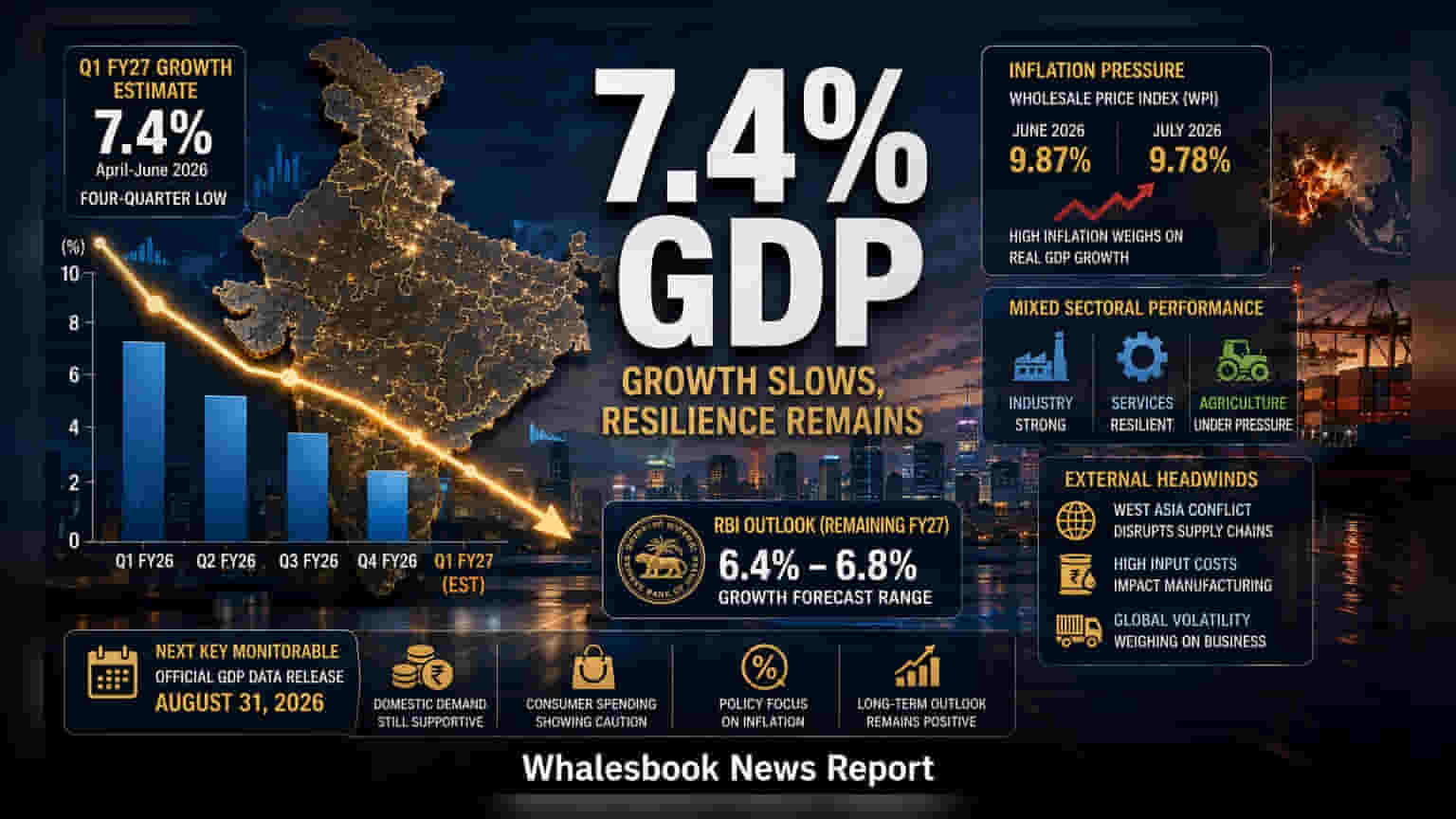
Economists estimate India's GDP growth slowed to 7.4% in the April-June quarter, a four-quarter low. The deceleration is linked to rising wholesale inflation and supply chain disruptions from the West Asia conflict. Investors are awaiting the official data release on August 31, which will provide clarity on domestic demand and future monetary policy expectations.
India’s economic growth is expected to show signs of cooling, with economists projecting a 7.4% expansion for the April-June quarter of the 2026-27 fiscal year. This figure, while still high, marks a four-quarter low and reflects growing challenges from both external and internal factors. The forecast suggests that while the economy is maintaining a positive trajectory, the rapid pace of growth seen in previous quarters is moderating.
A major technical factor influencing these numbers is the recent surge in wholesale inflation. Wholesale Price Index (WPI) data showed inflation rates at approximately 9.87% in June 2026 and 9.78% in July 2026. In economic terms, when wholesale prices rise sharply, the mechanism used to adjust nominal GDP for inflation—known as the GDP deflator—exerts downward pressure on the final 'real' growth figure. Consequently, even if production levels remain steady, higher input costs can lead to a lower reported real GDP growth rate.
Underlying these headline numbers is a story of mixed sectoral performance. The industrial and service sectors have shown continued resilience, supporting the overall growth narrative. However, the agricultural sector is facing specific headwinds, largely due to uneven monsoon patterns. This variability makes the agricultural contribution to GDP harder to predict and adds a layer of uncertainty to the final numbers.
External factors, particularly the conflict in West Asia, continue to create supply chain fractures. This has led to increased volatility in input costs for Indian businesses, particularly in manufacturing. These global pressures are being closely monitored by policymakers and market participants, as they impact corporate margins and the cost of doing business.
The Reserve Bank of India (RBI) has maintained a cautious outlook for the rest of the fiscal year, with growth projections set between 6.4% and 6.8% for the remaining three quarters. This suggests that the central bank was already anticipating a moderation in growth momentum. The upcoming official GDP data, scheduled for release on August 31, will be the next major monitorable. Investors will be looking to see if the actual performance matches these expectations and if there are any shifts in the RBI's stance on monetary policy to combat persistent inflation.