

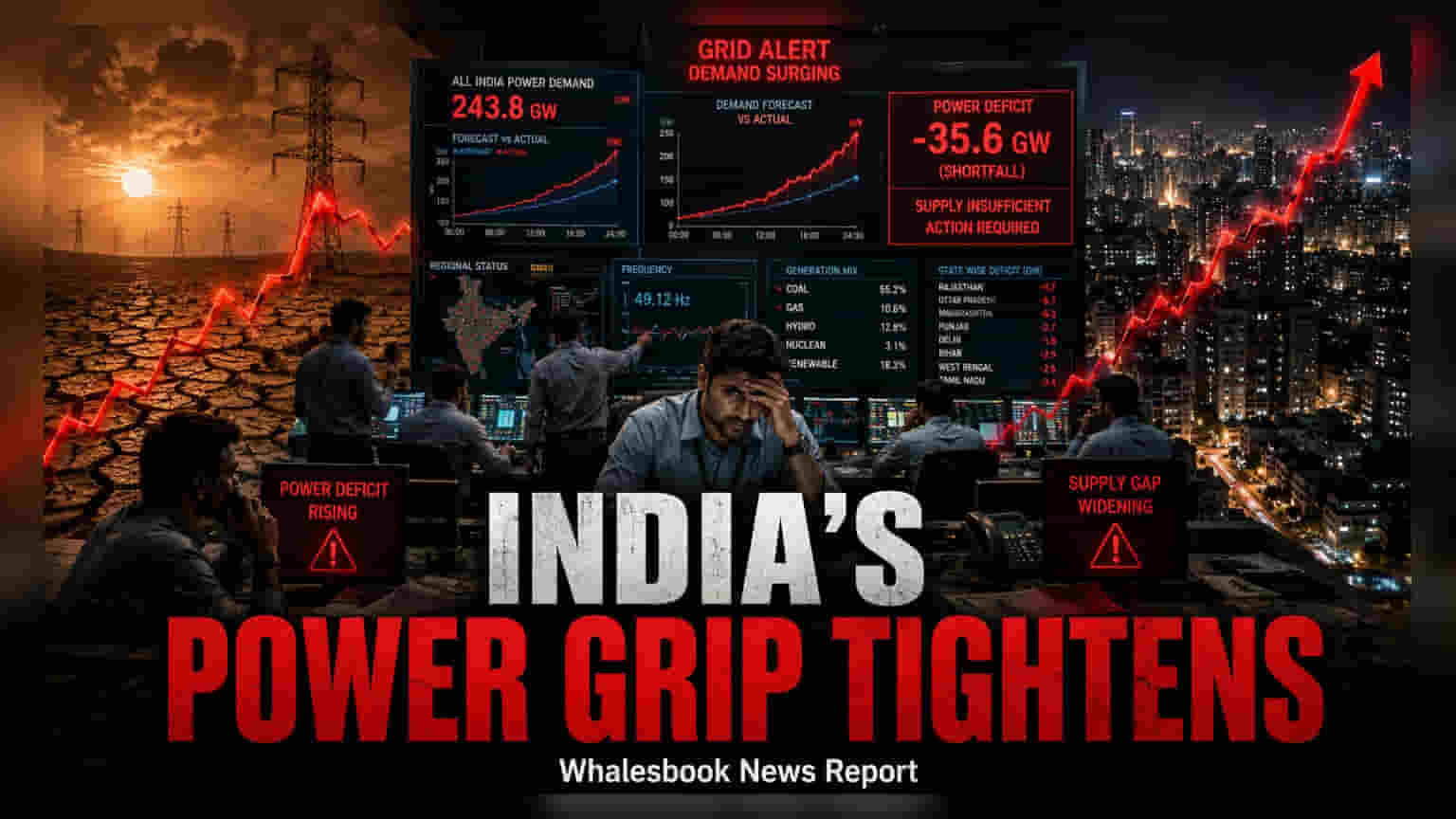
India's peak power demand surged 12% between April and June 2026, reaching a record 270.8 GW in May. While generation capacity is sufficient, a 3,045 MW supply deficit in June highlighted significant transmission and distribution constraints at the state level. This reveals a shifting focus for the power sector toward grid infrastructure and energy storage rather than just new power plants.
India’s power sector witnessed a significant demand surge between April and June 2026, with peak electricity requirements climbing approximately 12% compared to the previous year. This rapid rise in electricity usage pushed the national demand to an all-time high of 270.8 GW in May. However, this period also revealed a critical gap in the country's electricity delivery system, with a peak supply deficit of 3,045 MW recorded in June, according to government updates shared in the Rajya Sabha.
The most important takeaway for the market is that this shortfall is not caused by a lack of power generation capacity. India’s total installed capacity has reached 548.86 GW as of June 2026. Instead, the primary problems lie within state-level transmission and distribution networks—the lines and infrastructure that carry electricity from plants to homes and businesses. The northern region was particularly affected during evening hours, experiencing the largest supply gap, as demand spiked while solar energy production dropped.
Infrastructure and Storage Focus
Because the grid is currently better suited to handle daytime loads, the evening deficit has highlighted an urgent need for energy storage. The government is planning substantial additions to energy storage systems, including battery technology and pumped-storage projects, between 2027 and 2030. For the sector, this signals a major shift in capital spending. While thermal power plants currently provide the majority of the baseload, the focus for new investment is moving toward making the grid flexible enough to handle the intermittent nature of solar and wind power.
Key Risks for Investors
While the demand growth supports the outlook for the power sector, several risks persist. A major, long-standing issue in India's power market is the financial health of state-owned distribution companies, often called DISCOMs. These companies are responsible for purchasing and distributing power. Their historical difficulty in paying generation companies on time creates a ripple effect, often straining the cash flow of the entire power value chain.
Additionally, reliance on thermal power remains high, as it still accounts for nearly 70% of generation. This leaves the system sensitive to any volatility in coal availability or fuel prices. While renewable energy and hydro projects are increasing their contribution, their output can be affected by weather conditions, such as the El Niño effects that contributed to the recent demand spike and cooling constraints.
Moving forward, the primary monitorable for the industry is the speed of state-level grid upgrades and the successful commissioning of large-scale battery and pumped-storage projects. Investors are likely to track whether these infrastructure improvements can narrow the supply-demand gap during peak evening hours, as this will determine the efficiency and reliability of the entire power supply chain.