 Whalesbook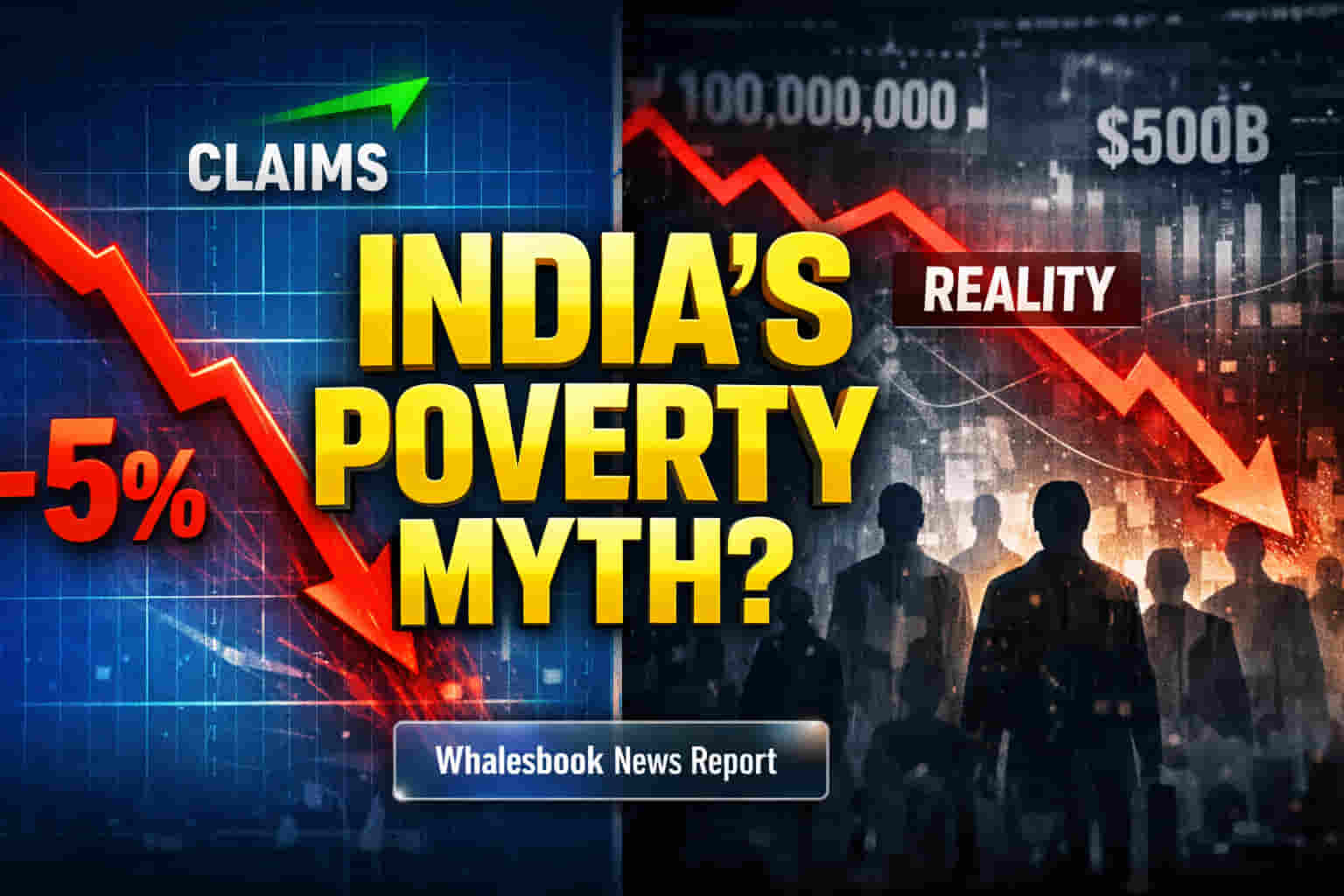


THE SEAMLESS LINK
The recent discourse surrounding India's poverty reduction statistics, particularly the government's assertion of a 5% poverty rate, has ignited significant debate, with economist Santosh Mehrotra leading the charge against these figures. While the numbers presented by official channels suggest a dramatic uplift, a closer examination reveals a more complex and potentially precarious economic reality for a substantial portion of the population. The dispute over poverty metrics masks deeper structural issues concerning employment generation, wage growth, and the increasing financial precarity of Indian households, which are increasingly relying on debt to sustain consumption.
The Disputed Poverty Line
Santosh Mehrotra has unequivocally dismissed the government's claim of a 5% poverty rate, stating it lacks a solid definition of extreme poverty and a credible methodological basis. He contends that the figures, allegedly derived from the 2022-23 Consumer Expenditure Survey, are misleading due to a significant divergence in methodology compared to the 2011-12 survey, rendering direct comparisons invalid [cite:original news]. Mehrotra posits that consumption surveys aligned with the Tendulkar and Rangarajan Committee methodologies suggest a poverty rate closer to 26%. This contrasts sharply with official narratives. The World Bank, using its international poverty line of $3.00 per day (2021 PPP), estimated India's extreme poverty at 5.3% for 2022-23, a figure that aligns more closely with the government's stance but is still higher than the widely contested 5%. The Multidimensional Poverty Index (MPI), while showing progress with NITI Aayog reporting a decline from 29.17% in 2013-14 to 11.28% in 2022-23, measures different deprivations and is not a direct substitute for consumption-based poverty metrics.
Stagnant Wages and Shifting Labour
Mehrotra's critique extends to the labour market, where he notes a substantial decline in non-agricultural employment growth, which has reportedly halved from previous rates [cite:original news]. This contraction has forced a significant number of people, estimated at 80 million post-COVID-19, to return to agriculture, a sector that has seen its share of the workforce increase. Between 2018-19 and 2023-24, agriculture employment as a percentage of total employment rose from 42.5% to 46.1%. This reverse migration underscores a lack of sufficient job creation in higher-productivity sectors. Furthermore, real wages have remained stagnant due to this labour market imbalance, pushing households to seek alternative means of survival [cite:original news]. The Economic Survey 2024-25 highlights the ongoing challenge, stating India needs to create an average of 7.85 million non-farm jobs annually until 2030 to accommodate its expanding workforce.
The Household Savings Drain and Debt Surge
The most alarming aspect of India's economic narrative, and a critical alpha angle, is the increasing reliance on household debt to bridge income shortfalls, even as savings dwindle. India's household savings rate has seen a concerning decline, falling from an average of 22.9% of GDP between 2000-2011 to 18.4% between 2012-2023. More critically, household liabilities have surged by 102% between 2019-20 and 2024-25, with household debt-to-GDP rising to 42% by end-2024 from 26% in 2015. This debt is increasingly concentrated in non-housing retail credit, such as personal loans, credit cards, and gold loans, which have hit record levels. The surge in gold loan NPAs, up by over 21% for scheduled commercial banks between March and June 2024, signals growing financial stress. This reliance on debt-fueled consumption, rather than productive investment, poses a significant risk to long-term macroeconomic stability.
Policy Echoes: Demonetisation and Job Creation
Past policy decisions have had lingering effects on the economic structure. The 2016 demonetisation policy, intended to curb black money and formalize the economy, severely impacted Micro, Small, and Medium Enterprises (MSMEs), which are heavily cash-dependent. This led to liquidity crunches, disrupted operations, and job losses, with demand for MNREGA work spiking, indicating rural distress. While the scheme has historically played a role in bolstering rural wages, the current economic landscape suggests that job creation, particularly in the non-agricultural sector, has not kept pace with the needs of the growing workforce, contributing to the strain on households. The unincorporated non-agricultural sector has seen growth, with enterprises increasing by 12.84% and employment surpassing 12 crore workers in 2023-24, but this sector is largely informal and often characterized by low productivity.
The Bear Case: Fragile Foundations
The economic picture is far from robust. The increasing reliance on household debt to fuel consumption, especially for aspirational purchases, erodes household assets and undermines long-term growth stability. The surge in employment has been concentrated in low-productivity sectors like agriculture and construction, with productivity growth stagnating. Compared to China, India's GDP per capita is significantly lower, and its debt-to-GDP ratio, while currently lower than China's, is on an upward trend, particularly in the household sector. The risk lies in a potential turn in the interest rate cycle, which could dramatically increase debt servicing costs and trigger defaults, especially given the prevalence of unsecured loans.
Future Trajectory
India's aspiration to achieve sustained economic growth and become a global economic powerhouse hinges on its ability to channel household savings into productive assets, rather than relying on debt-fueled consumption. The focus must shift towards creating quality, high-productivity jobs in manufacturing and services, a task underscored by the Economic Survey's call for substantial annual non-farm job creation. While the economy shows signs of recovery post-pandemic, addressing the structural weaknesses of stagnant real wages, declining savings, and rising household indebtedness will be crucial for ensuring inclusive and sustainable growth.