

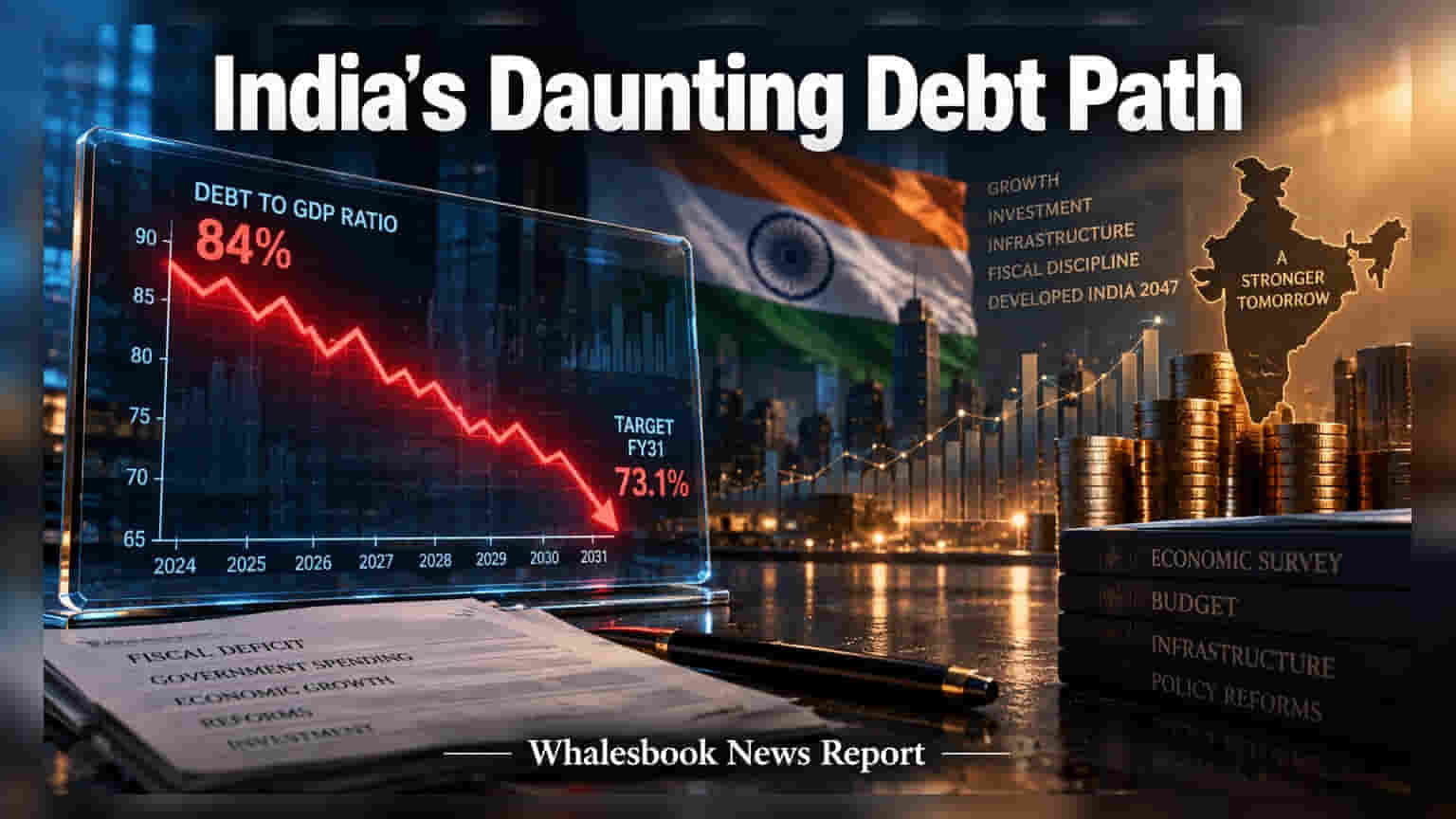
Former Finance Commission Chairman N K Singh warns that reducing India’s general government debt-to-GDP ratio to 73.1% by FY31 is a difficult task amid global economic instability. The country’s current general debt stands at 84%. For investors, fiscal health remains a critical factor as it impacts interest rates, sovereign credit stability, and the overall environment for private investment.
Former Finance Commission Chairman N K Singh has cautioned that India's goal to reduce its general government debt-to-GDP ratio to 73.1% by the 2030-31 fiscal year faces significant challenges. Achieving this target is considered essential for long-term economic stability as India works toward its goal of becoming a developed economy by 2047.
Currently, the general government debt-to-GDP ratio is approximately 84%. The central government is specifically aiming to lower its own debt-to-GDP ratio to between 49% and 51% by FY31. Recent data shows the central government's debt is at approximately 58.2%, which is slightly higher than the target of 56.1%. While there has been progress in bringing down the fiscal deficit from its pandemic-era peak of 9.2% to the current level of around 7%, officials emphasize that sustained fiscal discipline is required to reach future goals.
For the Indian economy, fiscal health is closely linked to investor sentiment. A lower debt-to-GDP ratio is generally viewed as a positive sign for sovereign credit ratings and can help stabilize interest rates. When government borrowing remains under control, it can create more space for private sector investment, which is seen as a necessary driver for growth that government budgets alone cannot fully sustain.
The roadmap to achieving these targets involves a coordinated effort between the Centre and the states. Policymakers are focusing on new financing models to meet capital requirements, especially as India looks to boost private capital participation in large projects. The shift in strategy involves engaging industry leaders and academic experts to refine how the government spends money while maintaining fiscal health.
The primary concern highlighted is the impact of global geopolitical tensions and unpredictable economic shocks, which could disrupt the planned path for debt reduction. Investors will likely watch how the government balances its spending on infrastructure and growth initiatives with the need to keep debt levels on a downward trend. Future updates on fiscal consolidation, state-level borrowing discipline, and the government’s ability to attract private investment will be important for tracking the success of this fiscal roadmap.