

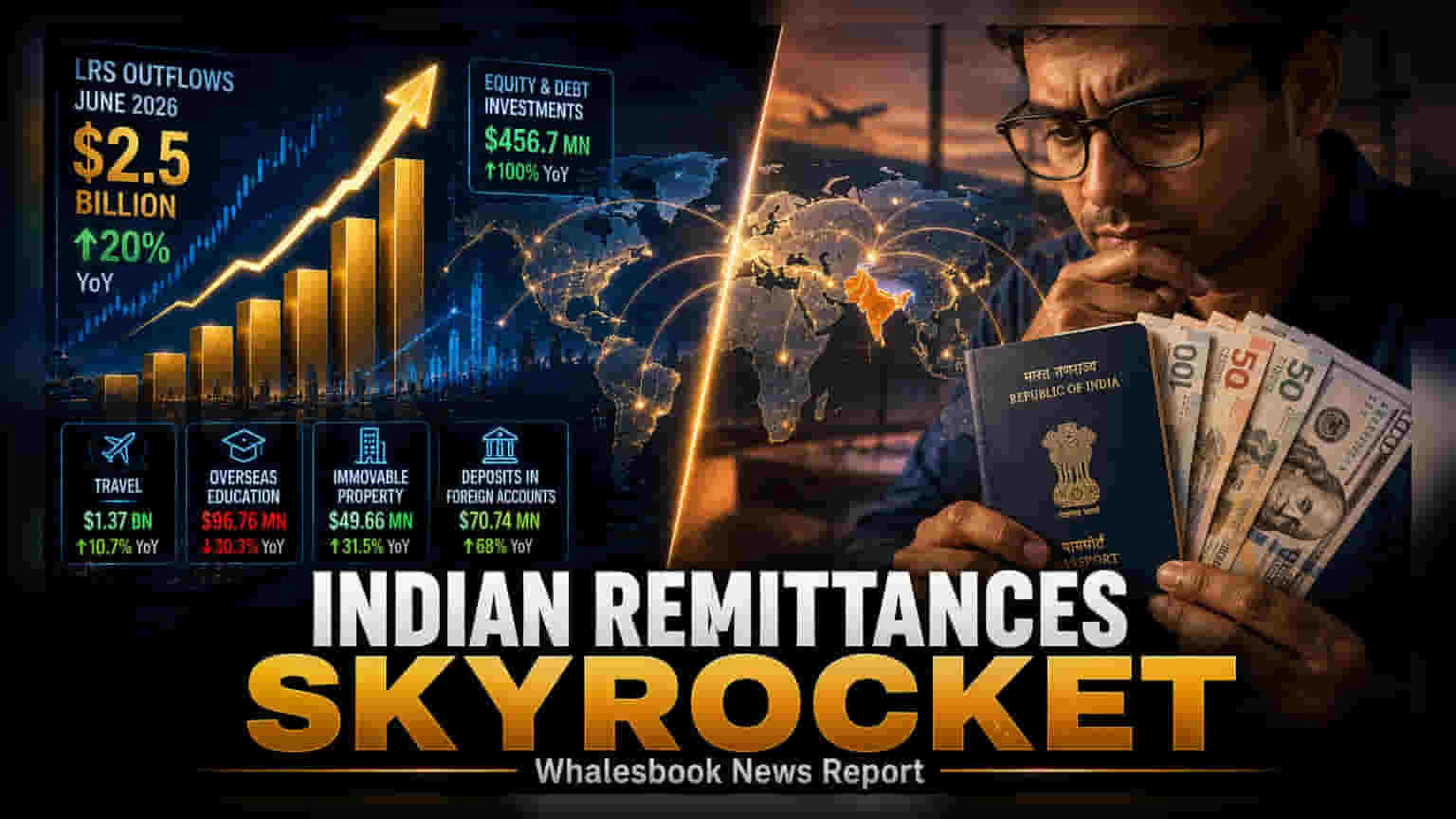
Outward remittances from India under the Liberalised Remittance Scheme rose 20% to $2.5 billion in June 2026. The increase was fueled by a sharp rise in overseas investments and travel spending, even as expenditure on foreign education saw a decline.
Indian residents moved $2.5 billion abroad under the Reserve Bank of India’s Liberalised Remittance Scheme (LRS) during June 2026. This represents a 20% increase compared to the same month last year, highlighting a continued trend of Indians diversifying their financial exposure toward international markets and travel.
Investment Flows and Changing Trends
The data shows a significant shift in how Indian capital is being deployed overseas. Remittances meant for purchasing equity and debt instruments doubled, reaching $456.7 million in June. Additionally, funds moved for the purpose of deposits in foreign accounts rose by nearly 68%, hitting $70.74 million. This indicates a growing appetite among domestic investors to seek returns in global markets, moving beyond traditional local asset classes.
While investment and savings flows increased, the spending pattern for services shifted. International travel remained the largest component of outward remittances, with $1.37 billion spent in June—a 10.7% rise compared to the previous year. In contrast, spending on overseas education recorded a notable decline, dropping 30.3% to $96.76 million. The purchase of immovable property abroad also grew, rising 31.5% to $49.66 million, reflecting sustained interest in acquiring global real estate.
Quarterly Performance
For the first quarter of the financial year (April-June 2026), total remittances amounted to $7.23 billion, reflecting a 4.5% growth year-on-year. During this three-month period, equity and debt investments saw a sharp increase, doubling to $1.06 billion. Deposit-related outflows grew by 48.6% to $283.65 million, while travel spending dipped slightly by 2.25% to $3.8 billion compared to the same quarter of the previous year.
Economic Context and Investor Risks
For investors and policymakers, these outflows are significant for a few reasons. First, consistent growth in outward remittances can exert pressure on the Indian Rupee. As more foreign currency is purchased by residents for investment or travel, it impacts the supply-demand balance of the currency in the forex market.
Second, the surge in overseas equity and debt investments exposes individual investors to global market risks. Unlike domestic markets, these investments are subject to currency fluctuations and the economic health of foreign nations. While the Liberalised Remittance Scheme allows individuals to move up to $250,000 annually, participants must consider the cost impact, including the Tax Collected at Source (TCS) applicable on these transactions. The continued high demand for LRS transfers suggests that despite tax implications, many Indian households and investors are prioritizing global diversification. Investors should monitor future RBI updates to see if this trend of high investment-related outflows persists through the fiscal year.