 Whalesbook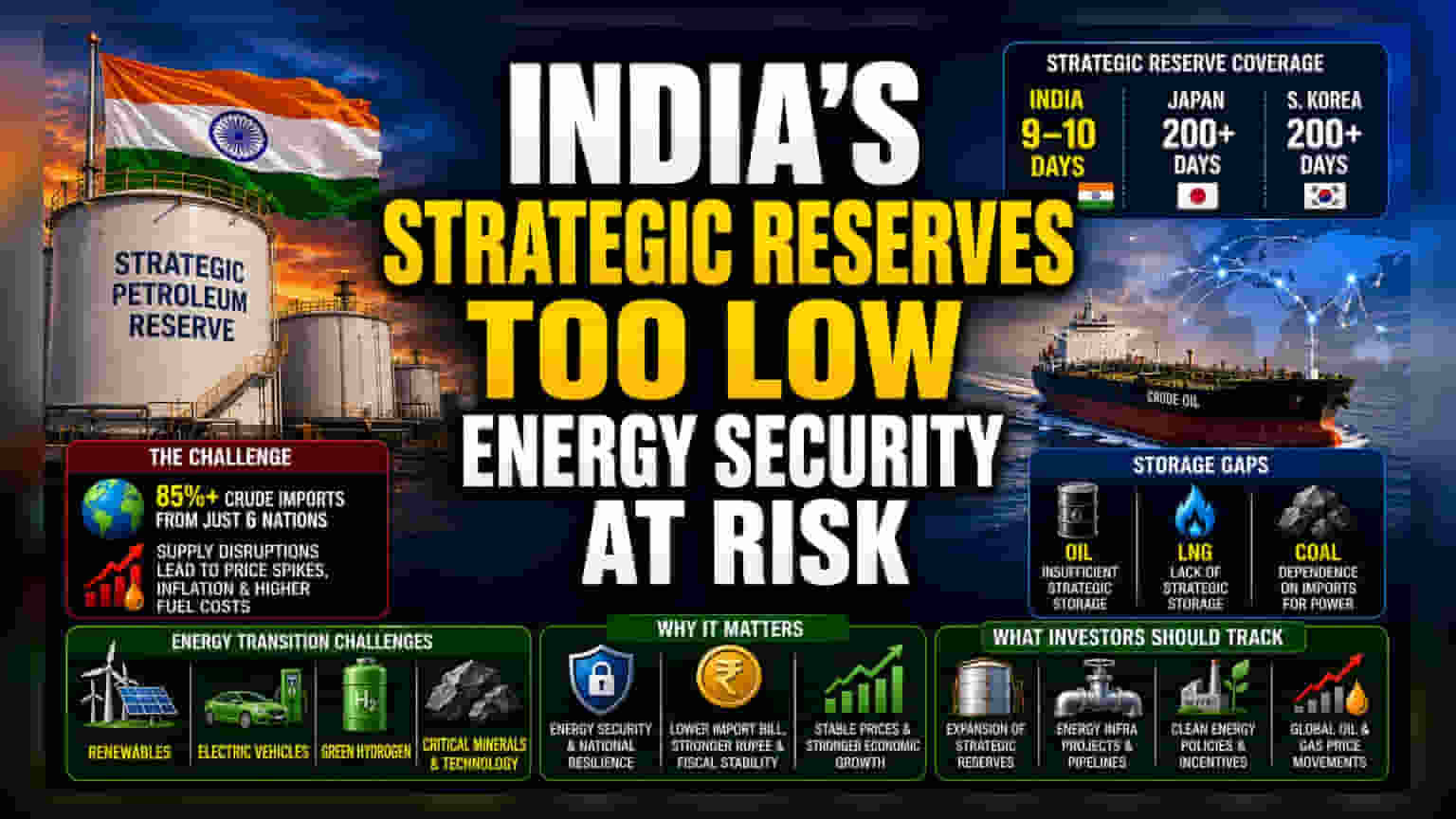


India’s strategic petroleum reserves currently cover only about 10 days of net imports, significantly lower than global peers like Japan or South Korea. A new CEEW report highlights risks from heavy dependence on a few energy suppliers and a lack of storage for natural gas. This energy vulnerability can impact national economic stability and fuel supply reliability. Investors should monitor how these structural gaps influence government infrastructure plans, energy transition policies, and the operational stability of the domestic oil and gas sector.
What Happened
India maintains strategic petroleum reserves that provide approximately 9 to 10 days of coverage for its net crude oil imports. This level is notably lower than that of other major economies like Japan and South Korea, which hold reserves exceeding 200 days. A recent report from the Council on Energy, Environment and Water (CEEW) details these gaps, pointing out that India's heavy reliance on external sources creates significant exposure to global supply chain disruptions.
The Challenge of Energy Dependency
The CEEW report highlights that over 85% of India’s crude oil comes from just six nations, including major suppliers in West Asia and Russia. This concentration creates a narrow supply chain, leaving the country vulnerable to geopolitical shocks or trade restrictions. When global oil prices spike due to regional conflicts or supply cuts, India's limited reserve capacity provides a thin buffer against immediate price volatility, which can lead to higher fuel costs and inflationary pressure within the domestic economy.
Storage Gaps and Infrastructure Needs
While the Indian Strategic Petroleum Reserves Limited (ISPRL) has established storage facilities in locations like Visakhapatnam, Mangaluru, and Padur, the current volume is insufficient to match global best practices. Beyond oil, the report also identifies a lack of strategic storage for liquefied natural gas (LNG), which is critical for sectors like power generation, city gas distribution, and fertilizer production. Similar concerns exist for coal, where dependence on imports from countries like Australia and Indonesia makes the power sector susceptible to the export policies of those nations.
Transition to Clean Energy
As India moves toward cleaner energy sources, new dependencies are emerging. The shift toward renewable energy, electric vehicles, and green hydrogen requires access to critical minerals and advanced technology. The report emphasizes that energy security in the future will depend on building resilient local supply chains, diversifying energy imports, and increasing domestic manufacturing capacity. Without a clear transition plan, India could shift from importing fossil fuels to being dependent on imported green technologies and minerals.
How Investors May Read This
For investors, the report underscores the structural importance of energy independence and infrastructure investment. Companies operating in the oil and gas sector, particularly public sector undertakings (PSUs), often face margin pressure during periods of extreme global price volatility if domestic fuel prices are not adjusted accordingly. The need for larger strategic reserves and more diversified energy sourcing implies that the government may continue to prioritize capital expenditure in energy infrastructure, including pipelines, terminals, and storage facilities.
What Investors Should Track
The most important monitorables for the energy sector include government updates on the expansion of strategic storage facilities and progress in national energy infrastructure projects. Investors may also watch policy developments related to the energy transition, such as incentives for domestic manufacturing of green energy components, as these could reduce long-term import dependency. Tracking the movement of global crude and gas prices remains essential to understanding the potential impact on the margins of domestic refiners and fuel retailers.