 Whalesbook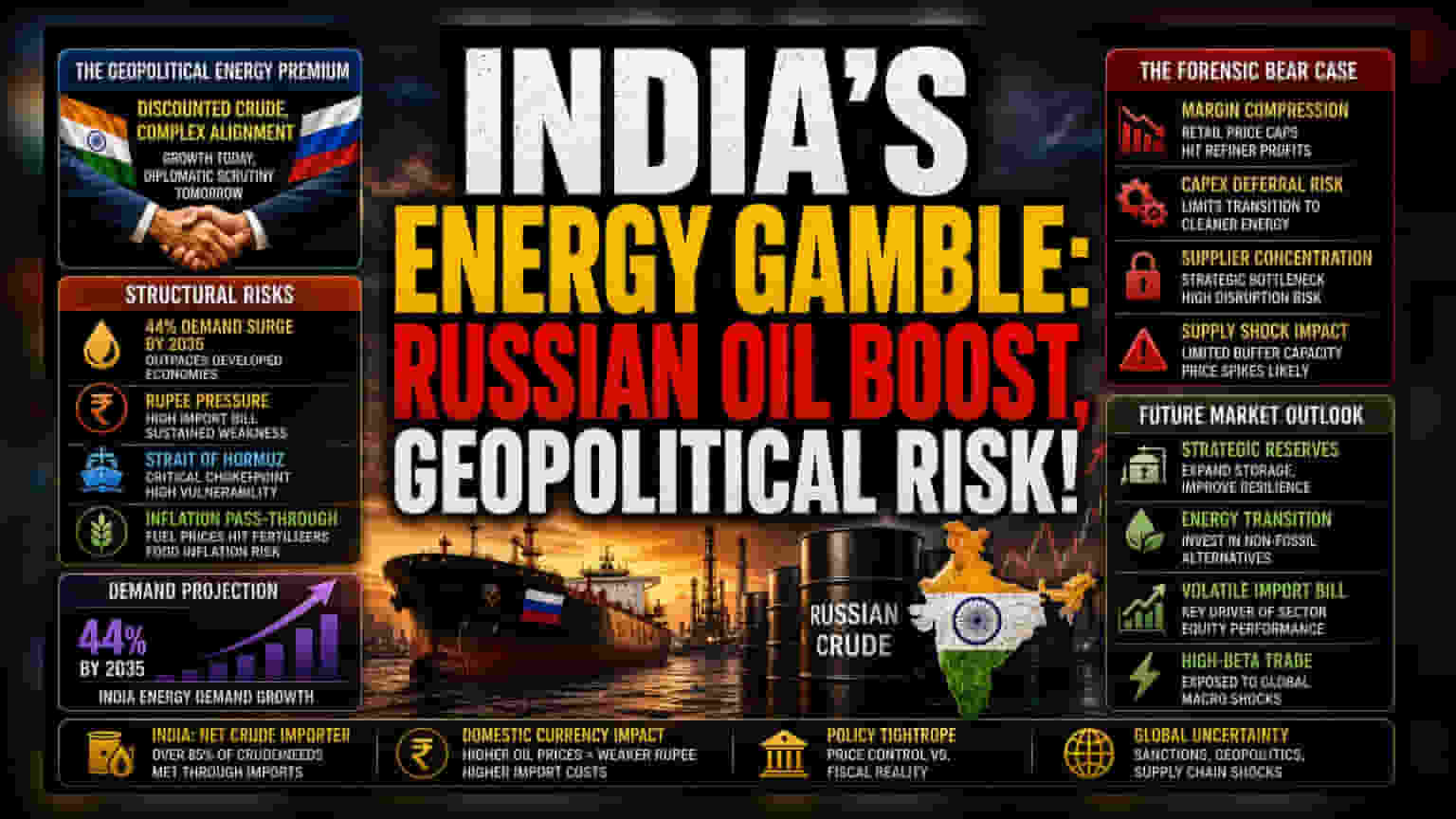


The Geopolitical Energy Premium
The narrative surrounding India's rapid energy expansion frequently overlooks the underlying costs of its pivot toward discounted Russian crude. While Igor Sechin of Rosneft frames the relationship as a stable partnership, the reality is a complex alignment that forces India to navigate the fine line between aggressive growth and global diplomatic scrutiny. By deepening this dependency, India assumes substantial exposure to the geopolitical friction currently affecting energy corridors. Any tightening of sanctions or enforcement mechanisms could force a rapid, costly diversification that the current domestic infrastructure is ill-equipped to handle efficiently.
Structural Risks and Import Sensitivity
India’s projected demand increase of 44 percent by 2035 stands in stark contrast to the stagnant growth anticipated in developed economies. This intensity of consumption places the rupee under persistent downward pressure, as the nation remains a net importer of crude. Unlike regional peers with more diversified energy portfolios or higher sovereign resource ownership, India’s reliance on seaborne crude leaves it particularly sensitive to events in the Strait of Hormuz. When factoring in the inflationary impact on downstream products such as fertilizers, the correlation between energy prices and broader domestic food inflation becomes a critical risk factor for the central bank’s monetary policy mandates.
The Forensic Bear Case
Critics of the current energy path point to the potential for severe margin compression among Indian oil marketing companies. As the government occasionally limits retail price hikes to quell social unrest, the burden of volatile input costs is often absorbed by state-run refiners. This creates a recurring cycle of potential capital expenditure deferral, hindering the necessary transition to more sustainable energy sources. Furthermore, the reliance on a single primary supplier creates a strategic bottleneck. If internal instability within the supplier’s home country leads to a sudden contraction in volume, India lacks the immediate reserve capacity or alternative logistics pipelines to offset the shock without a massive spike in localized energy pricing.
Future Market Outlook
Brokerage consensus suggests that while India will remain the dominant growth engine for refined petroleum products in Asia, the volatility of its import bill will likely dictate equity performance for the sector. Analysts are watching for signs of strategic storage expansion and increased investment in non-fossil fuel alternatives as a hedge against the inevitable price shocks inherent in such a highly centralized import model. Unless structural reforms in domestic supply chain logistics keep pace with demand, the energy sector remains a high-beta trade susceptible to external macro-shocks.