

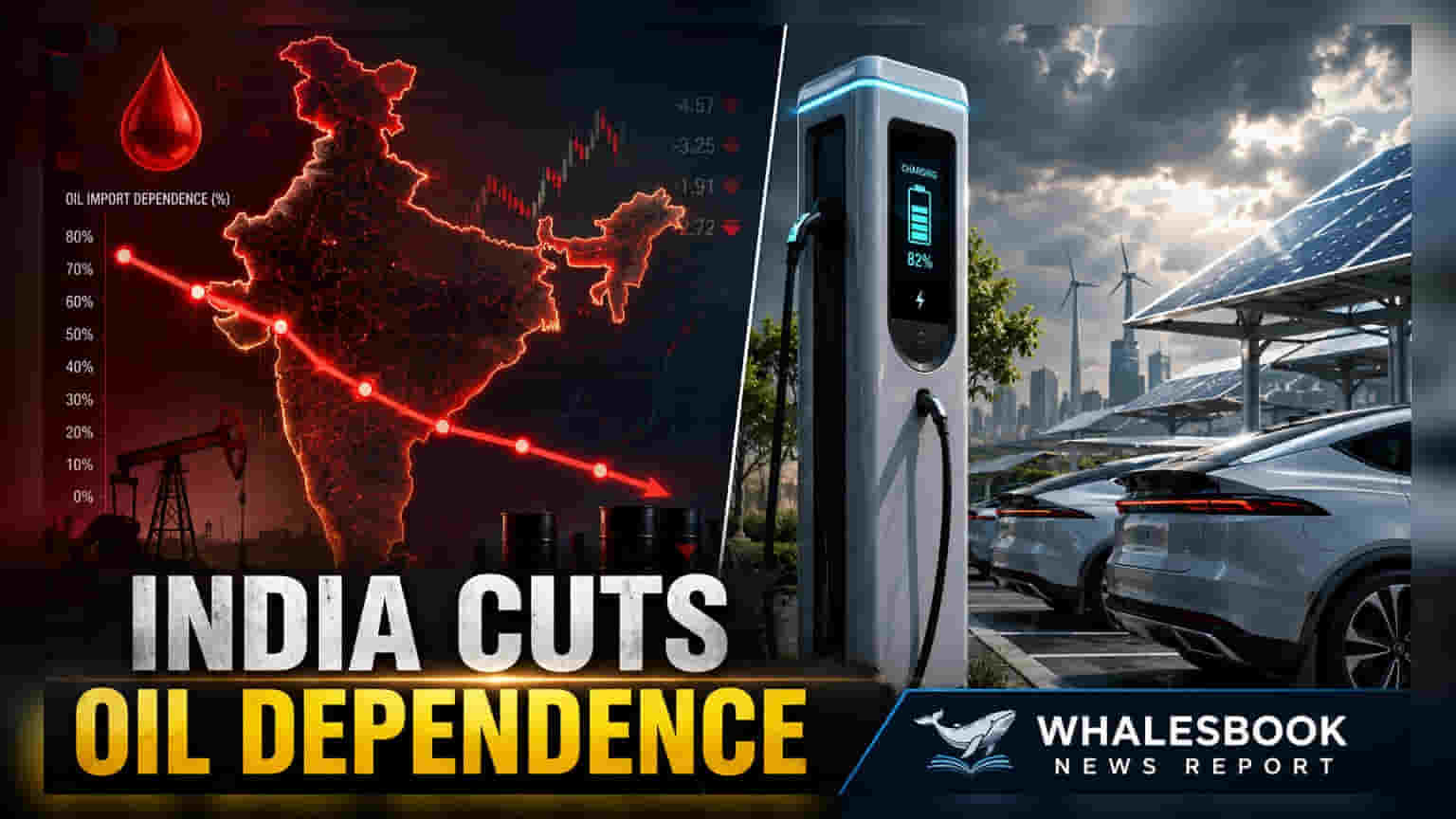
India's dependence on crude oil has significantly dropped, with oil-to-GDP intensity falling to 0.7% in FY26 from 1.4% in FY14. This shift is driven by rising electric vehicle adoption, renewable energy use, and public transport expansion. For investors, this transition highlights a long-term structural change away from oil-dependent sectors toward green mobility and energy infrastructure.
What Happened
India has significantly reduced its reliance on crude oil over the past 12 years. According to a recent SBI Research report, the country's oil intensity, measured as a percentage of GDP, has dropped from 1.4% in FY14 to 0.7% in FY26. Furthermore, crude oil imports as a percentage of GDP declined sharply to 3.1% in the second quarter of FY26, down from 8.6% in the same period of FY14. This reduction has occurred even as the economy has continued to grow, signalling a structural decoupling of economic expansion from oil consumption.
The Shift Toward Green Mobility
The decline in oil intensity is driven by several structural changes in the Indian economy. Key factors include the widespread transition from diesel-powered irrigation pumps to solar-powered systems, the expansion of metro rail networks in urban areas, and increased penetration of renewable energy. The growth in electric vehicle (EV) adoption, particularly in the three-wheeler and electric bus segments, has also played a crucial role in lowering fuel demand.
The EV Adoption Reality Check
While the momentum is positive, the transition is not uniform across all vehicle categories. SBI Research notes that while electric three-wheelers and buses are gaining traction, the adoption of electric passenger cars and trucks remains relatively slow. For comparison, China has seen electric trucks account for one-quarter of sales as of 2025, while India is still in the earlier stages of this transition. The government’s PM E-DRIVE scheme aims to provide incentives to bridge this gap, but the pace of adoption will depend on how quickly costs come down and infrastructure improves.
Infrastructure and Execution Risks
For investors, the infrastructure bottleneck is a key monitorable. While India has expanded its network to over 29,000 public charging stations, only about 30% of these are fast chargers. A lack of fast-charging capabilities in key corridors can slow down the adoption of electric passenger vehicles and commercial trucks. Investors should watch whether the rollout of charging points keeps pace with the growing number of EVs on the road. Regions like Karnataka and Maharashtra currently lead in charging infrastructure, but widespread national coverage remains a work in progress.
What Investors Should Track
The shift away from high oil dependence has long-term implications for the energy and auto sectors. If EV penetration reaches the target of 20% of all registered vehicles by 2030, the potential savings in the oil import bill could be significant, estimated at nearly ₹1 lakh crore. Key monitorables include the effectiveness of the PM E-DRIVE scheme in boosting electric truck sales, the pace of fast-charging infrastructure deployment, and whether the government introduces further measures like EV Credit Guarantee Funds to lower financing costs for green mobility.