

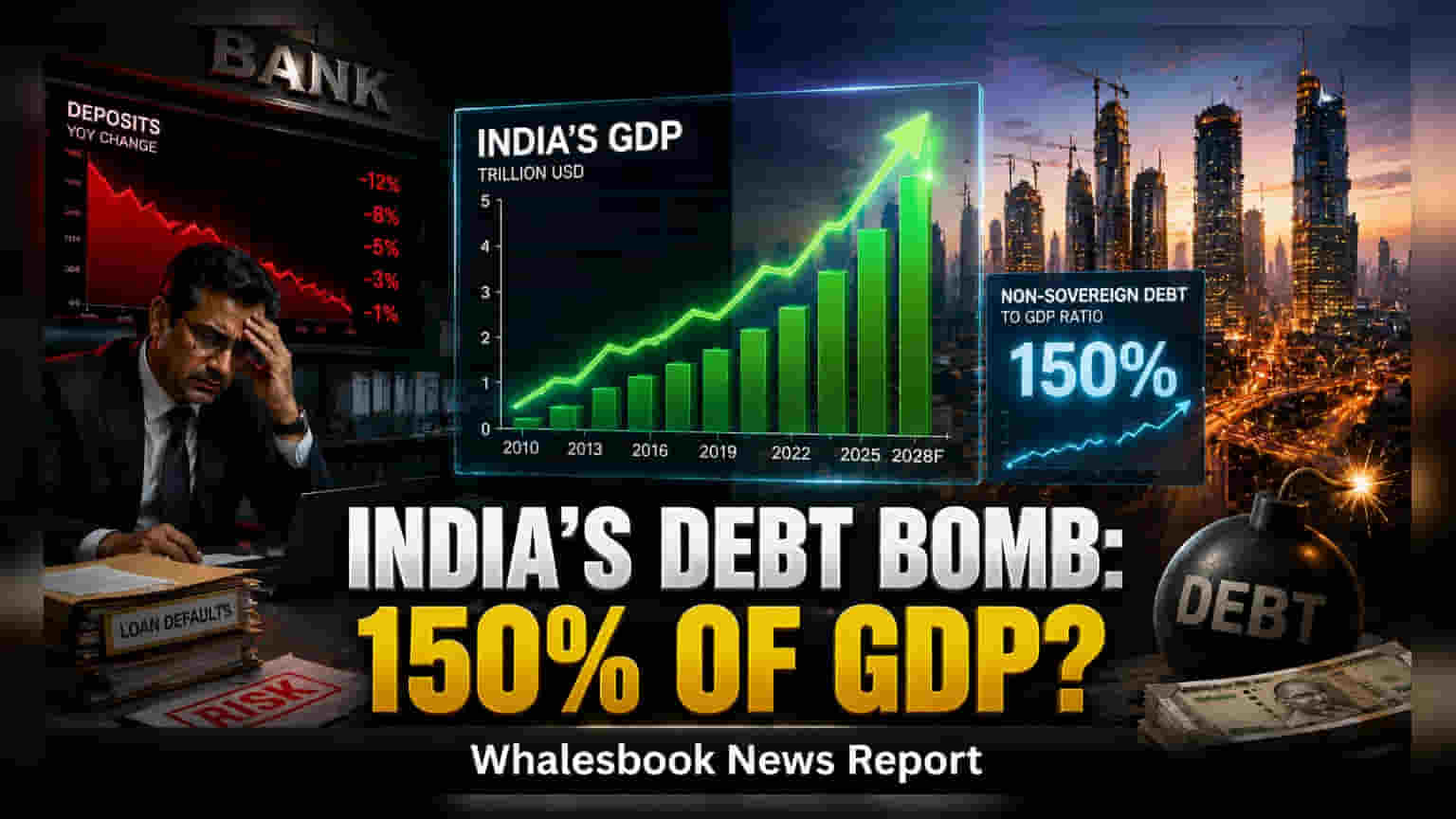
India needs to increase its non-sovereign debt to 150% of GDP by 2047 to support a $30 trillion economy, according to a Crisil report. As bank credit-deposit ratios tighten, the nation must shift toward a deeper bond market to fund infrastructure and growth. This transition requires attracting more diverse investors and expanding beyond top-rated corporate bonds.
To achieve the goal of becoming a $30 trillion economy by 2047, India requires a major shift in how its growth is financed. A new report from rating agency Crisil highlights that non-sovereign debt—which includes borrowing by companies, local governments, and households—needs to grow to approximately 150% of the country's GDP. This marks a significant jump from the current level of 84%.
Banking Sector Limits and Market Needs
For years, Indian banks have been the primary source of credit for the economy. However, this model faces growing pressure. As of March 2026, the credit-deposit ratio hit 82%, indicating that banks are reaching their capacity to lend. With deposit growth failing to keep pace with the demand for credit, the financial system faces a challenge in fueling future growth through traditional lending alone. Crisil notes that developed economies like the US and UK maintained non-sovereign debt ratios in the 140-150% range during their own periods of rapid development.
Developing a Deeper Bond Market
Currently, India’s debt capital market is relatively small compared to the banking sector. Data shows that as of the end of fiscal year 2026, the debt market represented only about 22% of GDP, while gross bank credit stood at roughly 62%. The corporate bond market is also highly concentrated, with more than 80% of outstanding bonds carrying top-tier AAA or AA ratings. This concentration limits options for many companies and restricts the variety of risk-adjusted investment products available to investors.
Expanding Investor and Issuer Bases
Building a robust bond market that can support long-term economic goals requires more than just new debt. Crisil points to the need for a broader base of both issuers and investors. Currently, retail and foreign investors together hold less than 10% of outstanding corporate bonds. Increasing participation from institutional investors like insurance companies and pension funds, alongside more trading in the secondary market, is essential to improve liquidity and help set fair market prices.
To move forward, the report suggests several structural changes. Encouraging investments in A- and BBB-rated bonds could provide better returns and help diversify the market. Additionally, the development of a securitization market and more active municipal bonds could provide stable funding for urban infrastructure projects. Achieving this will likely depend on continued regulatory reforms and the creation of stronger market infrastructure to channel India's household savings into these diversified financial instruments.