

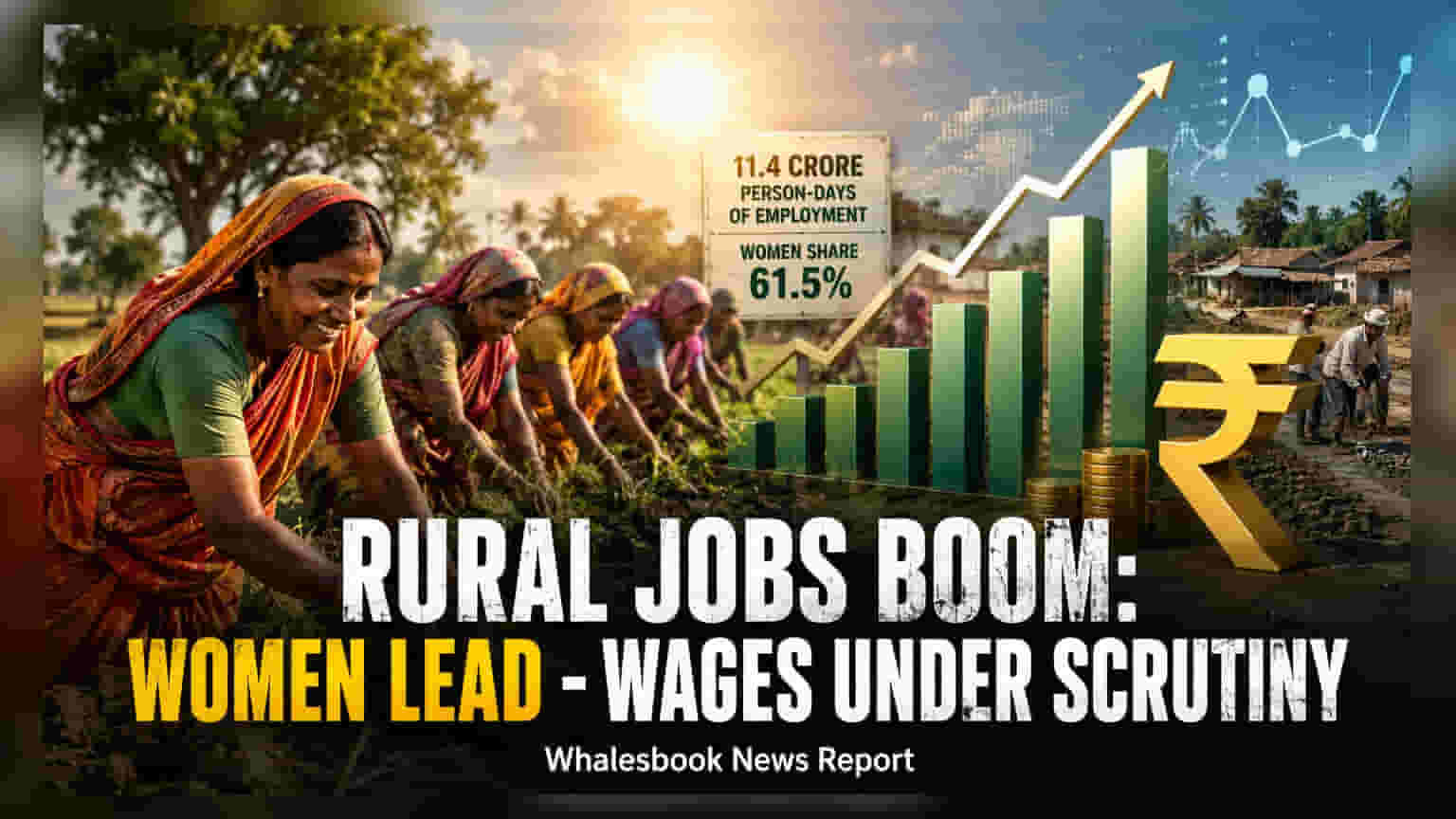
The Viksit Bharat-Guarantee for Rozgar and Aajeevika Mission (VB-G RAM G) has crossed 11.4 crore person-days since its July 2026 launch, with 61.5% female participation. While high engagement signals strong rural labor activity, a parliamentary panel is pushing for a wage hike to Rs 400 per day, citing inflation concerns that could impact future fiscal planning.
The Viksit Bharat-Guarantee for Rozgar and Aajeevika Mission (VB-G RAM G) has gained significant momentum since its nationwide launch on July 1, 2026. Replacing the long-standing Mahatma Gandhi National Rural Employment Guarantee Act (MGNREGA), the new scheme is designed to provide 125 days of guaranteed unskilled manual work to eligible rural households each year. Early data shows the scheme has generated 11.4 crore person-days of employment, with women accounting for 61.5% of the total workforce, continuing the trend of high female participation seen in the previous regime.
Wage Structure Under Scrutiny
While the high participation rate suggests a strong demand for work in rural areas, the scheme’s wage structure has become a point of contention. The government currently has an interim base wage of Rs 300 per day, with a national average of Rs 327.4 per day. However, a parliamentary standing committee on rural development has recently raised concerns that these rates do not adequately account for inflation and cost-of-living increases.
The panel has officially recommended a revision in the wage-determination methodology, noting that the current reliance on the 2011 base year for the Consumer Price Index for Agricultural Labourers (CPI-AL) is outdated. The committee has proposed increasing the minimum wage floor to Rs 400 per day to better align with current economic conditions. They have asked the department of rural development to submit an action-taken report within three months.
Impact on Rural Economy
For the broader economy, the success of this scheme and the final wage decision are important monitorables. Rural income is a critical driver for consumer demand in sectors such as fast-moving consumer goods (FMCG), two-wheelers, and tractors. If the government decides to raise wages to the recommended Rs 400 level, it could potentially boost disposable income for rural households, providing a tailwind for rural-focused businesses.
However, any significant hike in wages would also lead to higher fiscal pressure on the government, as it would increase the total outlay required for the program. The key monitorable for the coming months will be how the government balances the need for supporting rural purchasing power with its overall fiscal targets. Investors may watch for official updates on the wage methodology review and the government’s response to the parliamentary recommendations, as these will determine both the program's long-term budget and its impact on rural consumption patterns.