

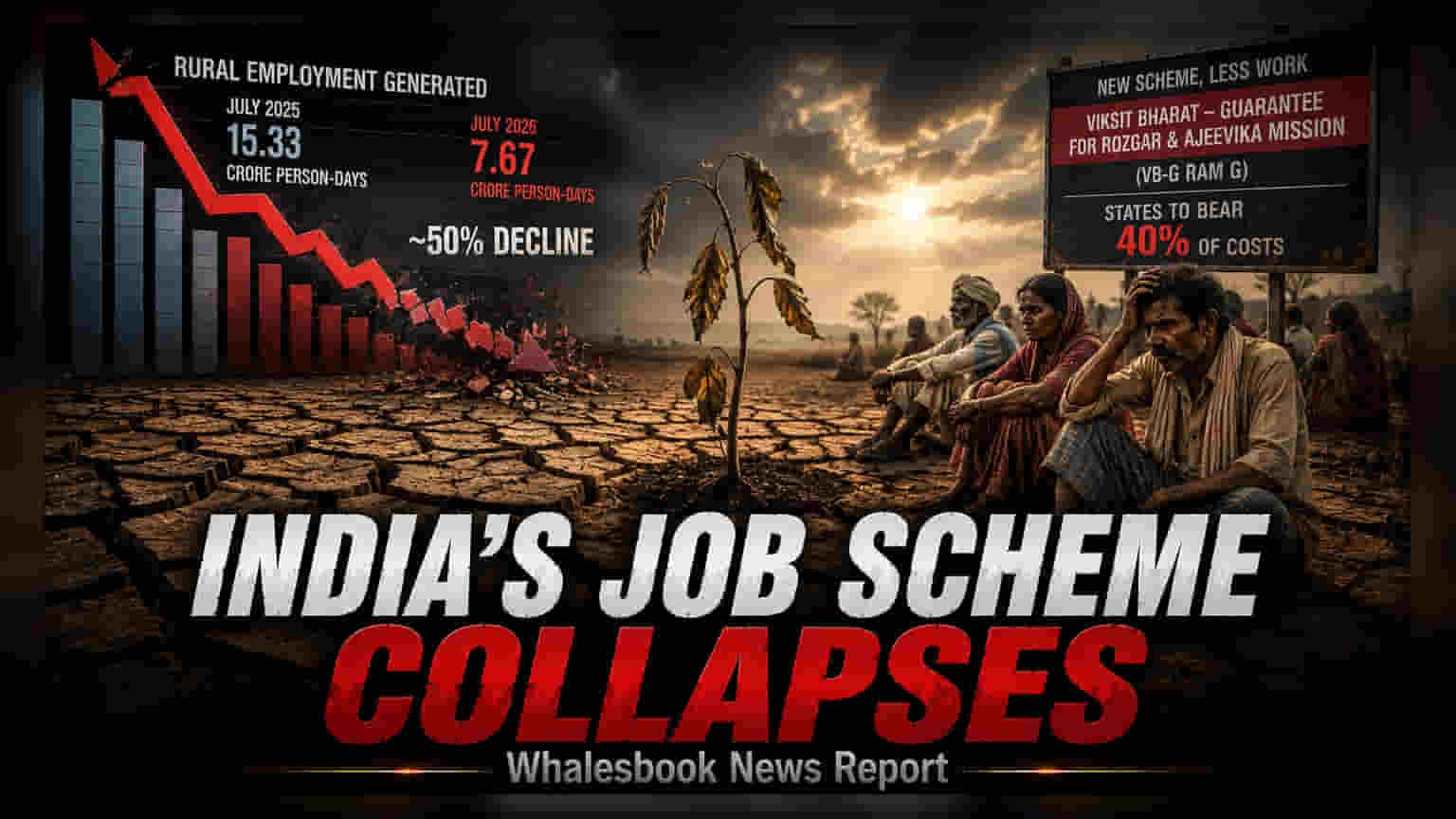
India’s rural employment program, now the VB-G RAM G, recorded a nearly 50% year-on-year decline in person-days for July 2026. Replacing MGNREGA, the new scheme faces challenges from a 13% rainfall deficit and a shift in cost-sharing between the Center and states, raising concerns about rural consumption levels.
India's rural employment landscape underwent a major change on July 1, 2026, with the rollout of the Viksit Bharat–Guarantee for Rozgar and Ajeevika Mission (VB-G RAM G). This new framework replaced the Mahatma Gandhi National Rural Employment Guarantee Act (MGNREGA), which had been the primary safety net for rural households for over two decades. In its first full month of operation, the data shows a significant drop in work generation, sparking questions about its impact on rural distress.
Data from July 2026 indicates that approximately 7.67 crore person-days of employment were generated, which is roughly half of the 15.33 crore person-days recorded in July 2025. While the government has attributed this decline to seasonal factors such as the kharif sowing period and temporary transition-related pauses in work approvals, the shift has coincided with growing concerns over the economic security of rural families.
Structural Funding Changes Impact States
A primary difference between the old and new system lies in how the program is funded. Under the previous MGNREGA, the central government provided nearly total funding for unskilled wages. The new VB-G RAM G structure shifts the burden, requiring states to bear 40% of the program costs in non-hill states, while maintaining a 90:10 ratio for Himalayan and North-Eastern regions. For many states, this increase in financial responsibility creates a new budgetary pressure. Economists are concerned that if states struggle to allocate these funds quickly, it could lead to delays in work approvals and wage payments, effectively reducing the program's reach.
Monsoon Deficit And Rural Demand
The timing of this transition is being closely watched due to weather patterns. As of August 18, 2026, India is facing a 13% rainfall deficit, with severe shortages reported in major agricultural states like Bihar, which has seen a 40% rainfall gap, and Eastern Uttar Pradesh, with a 24% shortfall. In past years, rural employment schemes acted as a crucial income buffer when crops failed or rains were delayed. With rural wages remaining stagnant, a reduction in the available work days can directly limit disposable income in rural areas.
For investors and market analysts, the performance of this scheme is a significant indicator of rural consumption trends. Rural demand is a key driver for sectors such as fast-moving consumer goods (FMCG), two-wheelers, and tractor manufacturing. If the rural workforce earns less due to reduced job opportunities, companies in these sectors may face headwinds in sales volume and revenue growth.
Looking ahead, the next few months will be critical. Market observers will track whether state governments increase their budget allocations to support the program and if the central government intervenes to address implementation bottlenecks, such as biometric attendance requirements. The actual spending figures in the coming quarters will provide a clearer picture of whether the new system can match the scale of the safety net provided by its predecessor.