

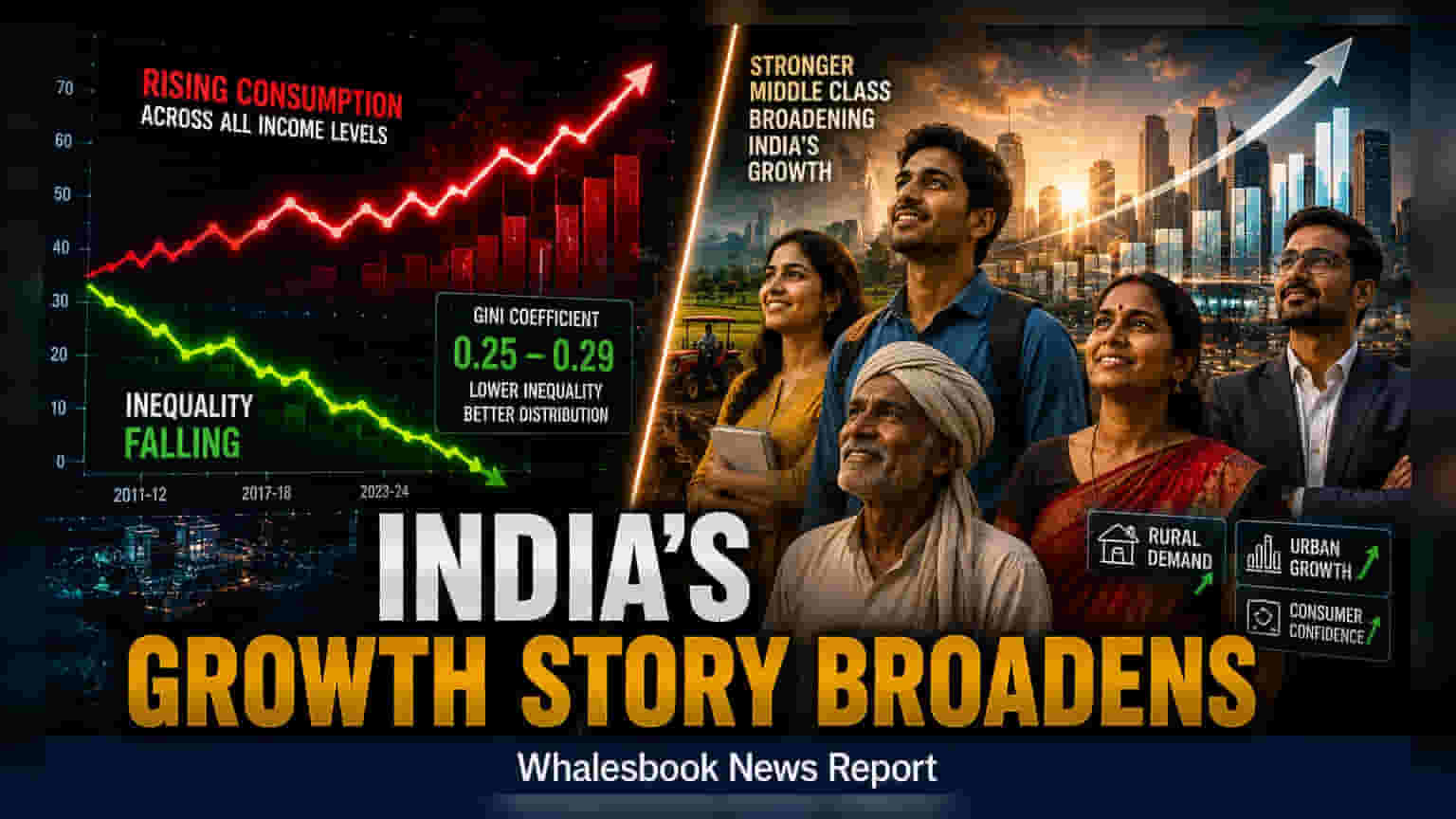
New household spending data for 2023-24 shows a rise in real consumption across income groups in India. While the data suggests more equitable growth, investors should weigh these findings against risks like inflation and varied demand patterns in rural versus urban markets.
The latest Household Consumption Expenditure Survey (HCES) 2023-24 has sparked a debate on the state of the Indian economy. The data indicates that real household spending has increased across various income levels over the last decade, suggesting that economic growth is not only reaching more people but is also becoming more evenly distributed. This shift is being closely watched by market analysts as they assess the health of the Indian consumer base.
At the heart of this discussion is a change in the Gini coefficient—a standard measure of inequality. Recent estimates place this figure between 0.25 and 0.29, suggesting a compression in inequality compared to earlier years. For investors, this is a significant indicator. Traditionally, economic growth in India was often viewed as concentrated in urban centers or top-tier income brackets. However, if this data holds true, it suggests that the middle class is strengthening, potentially supporting demand for a wider variety of goods and services.
The Reality of Market Demand
While the data points toward broader growth, stock market trends present a more nuanced picture. Over the recent quarters, companies have reported a distinct trend of 'premiumisation.' This means that while high-end products like SUVs, travel services, and premium electronics are seeing strong sales, mass-market consumption remains under pressure. This creates a divergence: the top end of the market appears resilient, while the base of the pyramid is more sensitive to price hikes.
Investors are seeing this in quarterly earnings. Fast-moving consumer goods (FMCG) companies often note that rural demand is heavily tied to weather patterns and agricultural income, which can fluctuate. The HCES data suggests that while the foundation is improving, the translation of this 'spending power' into immediate profit growth for companies depends on whether the consumer chooses to spend on essential items or discretionary goods.
Macroeconomic Risks to Track
Looking ahead, the economic trajectory remains sensitive to external and internal pressures. India’s GDP growth for FY27 is projected by rating agencies like India Ratings & Research to be around 6.8%. However, this forecast carries risks. Inflation, particularly in food and fuel, remains a primary concern that could erode the purchasing power of lower-income households.
Additionally, geopolitical uncertainties, such as conflict in West Asia, continue to threaten energy prices. If crude oil prices rise, it may impact transportation and manufacturing costs, leading to margin pressure for companies. Climate-related events like El Niño also remain a variable, as they directly influence agricultural output and rural incomes. For shareholders, the key will be to monitor management commentary in future earnings calls. Companies will likely address how they are managing these inflationary headwinds and whether they see a meaningful recovery in mass-market demand alongside their growth in premium segments.