 Whalesbook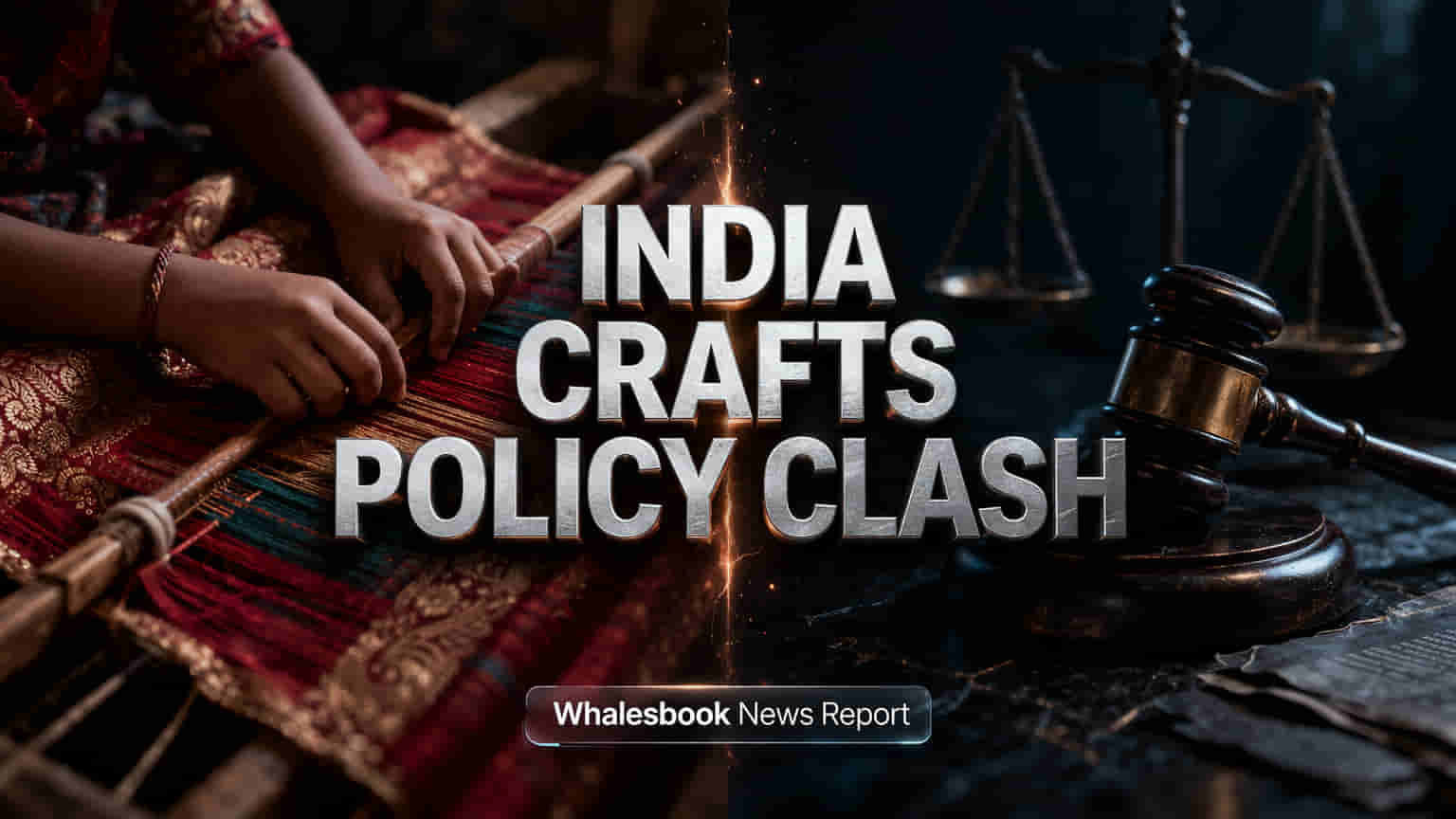
NEP 2020 Links Education to Craft Skills
The National Education Policy (NEP) 2020 is introducing practical skills, including traditional crafts, into India's school curriculum. This is a key strategy for the country's future workforce, aiming to connect education directly with jobs and preserve India's rich cultural heritage. However, this integration immediately clashes with existing labor laws and the demands of global trade, creating a complicated situation for policy and markets.
Boosting India's Craft Exports Through Skills
The NEP 2020 emphasizes vocational learning in traditional crafts such as weaving, pottery, and carpentry, recognizing their significant economic and cultural importance. These sectors employ millions, mostly in rural areas, and are major contributors to India's GDP and exports, totaling about $4.35 billion in 2021-22. With increasing global demand for handmade and authentic goods, India has a chance to boost its economy by using its heritage. By integrating these skills into education, the policy seeks to streamline how knowledge is passed down, potentially reviving these industries and securing their future economic success.
Child Labor Laws vs. Artisan Training Clash
A major conflict emerges between the policy's goals and India's strict child labor laws, made tougher by international audit standards needed for exports. The NEP 2020 suggests supervised skill learning within family businesses as vocational training. However, strict child labor laws often see any child involvement in production as a violation. India's laws, evolving from earlier acts to the Child Labour (Prohibition and Regulation) Act of 1986 (amended in 2016), prohibit employment for children under 14, with some exceptions for family businesses under strict conditions. This creates a difficult situation for industries focused on exports, where accusations of child labor can lead to strict import bans and harm reputation. Moreover, India's handicraft production is spread across many small village units, making it hard to monitor and potentially pushing work into hidden settings when compliance pressures rise.
Fewer Artisans Threaten Craft Legacy
A major concern is the risk that traditional craft skills will disappear as the artisan workforce shrinks. Younger generations are moving to cities for perceived better jobs, leaving behind long-standing family crafts. This is alarming because while India has many artisans, numerous traditional art forms are endangered. Government programs like the Prime Minister's Vishwakarma Yojana and the National Handicrafts Development Programme aim to help artisans. However, the sector struggles with limited access to funding, market information, and formal training, leaving artisans vulnerable. This loss threatens both economic growth and irreplaceable cultural heritage.
Challenges in Scattered Craft Workshops
India's handicraft sector is highly spread out and disorganized, presenting major operational challenges. Production occurs in thousands of home workshops and small clusters, making it hard to deliver consistent training, check working conditions, or ensure the quality needed for global markets. Unlike large factories, these scattered workshops lack strong supervision, making it difficult to distinguish between supervised learning and exploitative labor – a key issue for international compliance groups.
Finding Clarity: Policy vs. Practice
To align NEP 2020 goals with legal requirements, policymakers need more dialogue with international auditors. It's crucial to clarify that supervised skill learning for education within family settings, with strong protections, is not exploitative child labor. Government initiatives like Pehchan ID cards for artisans and Geographical Indication (GI) tagging aim to support the sector. Small businesses and startups are also helping by providing branding, design, and online sales platforms. However, getting these programs to local communities remains a persistent challenge.
Balancing Heritage and Global Trade Rules
The future of India's craft sector under NEP 2020 depends on its ability to modernize while meeting global ethical rules. The policy aims to create a skilled workforce, but success requires effective rollout that fixes infrastructure problems, trains teachers, and tackles the stigma around vocational jobs. Working with brands, obtaining eco-certifications, and using digital marketing can make Indian crafts more appealing to ethical global buyers. Ultimately, balancing cultural preservation with international trade rules and labor laws is key to realizing the full economic and social potential of India's craft sector.