

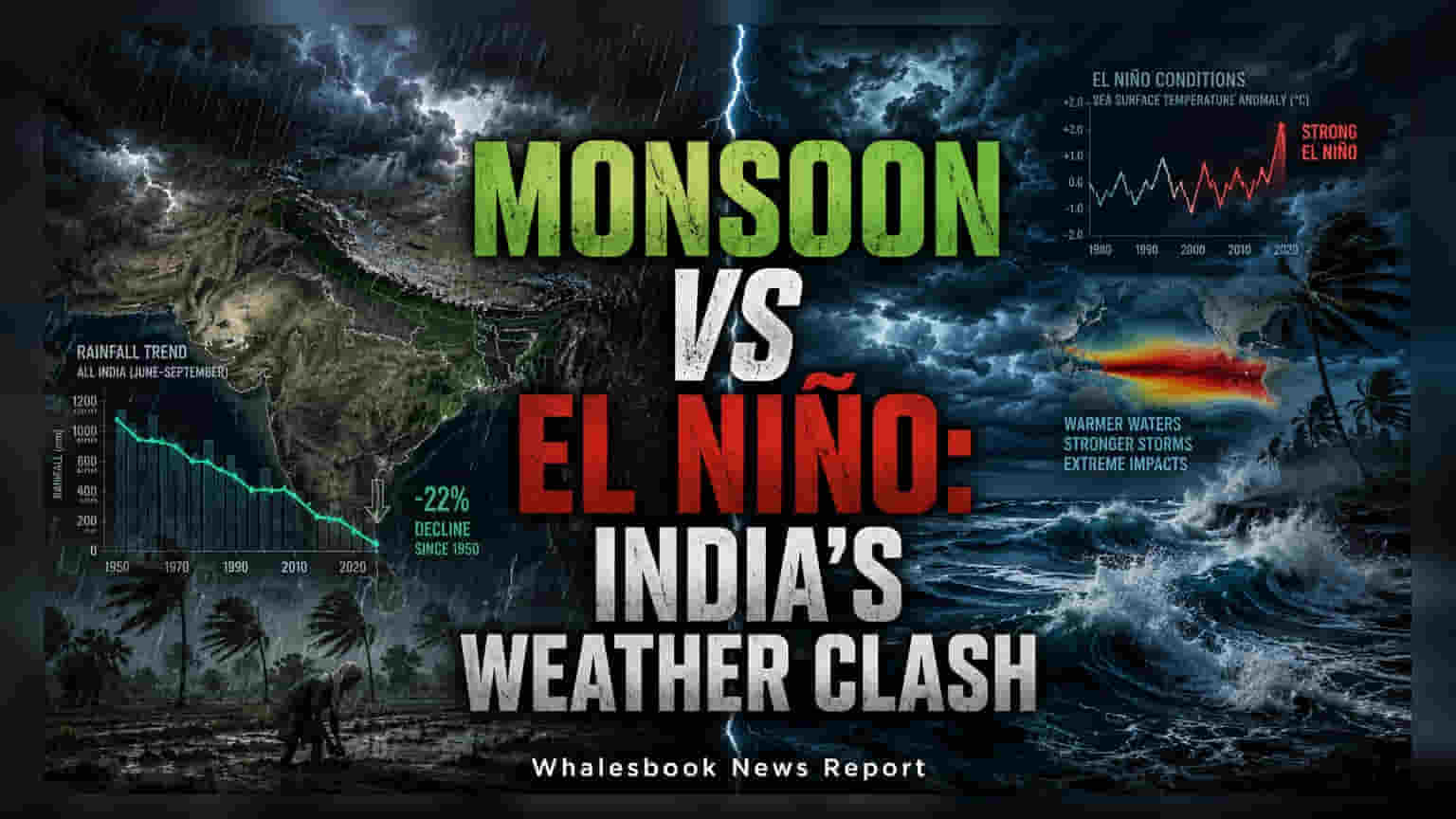
India's monsoon season is facing a split outlook, with localized floods clashing against the broader threat of a strengthening El Niño. On August 5, 2026, the Reserve Bank of India identified this climate uncertainty as a primary risk to the nation’s economic stability, warning investors of potential pressure on food inflation and rural consumption patterns that could impact corporate earnings.
The Indian monsoon has entered a complex phase as it struggles against a strengthening El Niño, a climate pattern that threatens to sap moisture and result in below-normal rainfall for the remainder of the season. While localized cyclonic systems are currently bringing heavy and sometimes extreme rainfall to parts of the Northeast, Uttar Pradesh, and the west coast, the broader climate picture remains a source of concern for the economy. On August 5, 2026, during the monetary policy announcement, Reserve Bank of India (RBI) Governor Sanjay Malhotra officially identified this weather trend as a key risk to India's economic outlook and the inflation trajectory.
For investors, this climate-driven uncertainty carries significant weight. A weakened or uneven monsoon historically correlates with agricultural deficits, which can lead to volatility in food prices. Since food items make up a substantial portion of India's inflation basket, persistent dryness in key producing regions may force the RBI to maintain a cautious stance on interest rates. This environment creates a challenging landscape for companies dependent on rural demand and those in climate-sensitive sectors.
The National Stock Exchange (NSE) has also highlighted the performance of the monsoon as a critical macroeconomic challenge for 2026. Companies in sectors such as FMCG, which rely heavily on rural purchasing power, are often the first to feel the impact of poor harvests. Reduced farm income can lead to lower discretionary spending, while manufacturers of agri-commodities—such as sugar, rice, and edible oils—face risks from supply chain disruptions and volatile raw material costs caused by unpredictable weather.
While some regions are currently experiencing extreme rainfall, which carries its own operational risks like potential flash floods, landslides, and infrastructure damage, the primary market concern remains the long-term impact of the El Niño pattern projected to persist into early 2027. This duality creates a complex scenario where excess rain in one area may not necessarily compensate for the broader moisture deficit in others.
Investors will likely track the India Meteorological Department’s (IMD) updated forecasts throughout August and September to gauge the actual impact on crop yields. Furthermore, upcoming corporate commentaries regarding rural sales volumes and data on food inflation will be essential indicators for assessing whether this monsoon uncertainty is beginning to hurt the bottom line of consumer-facing businesses.