

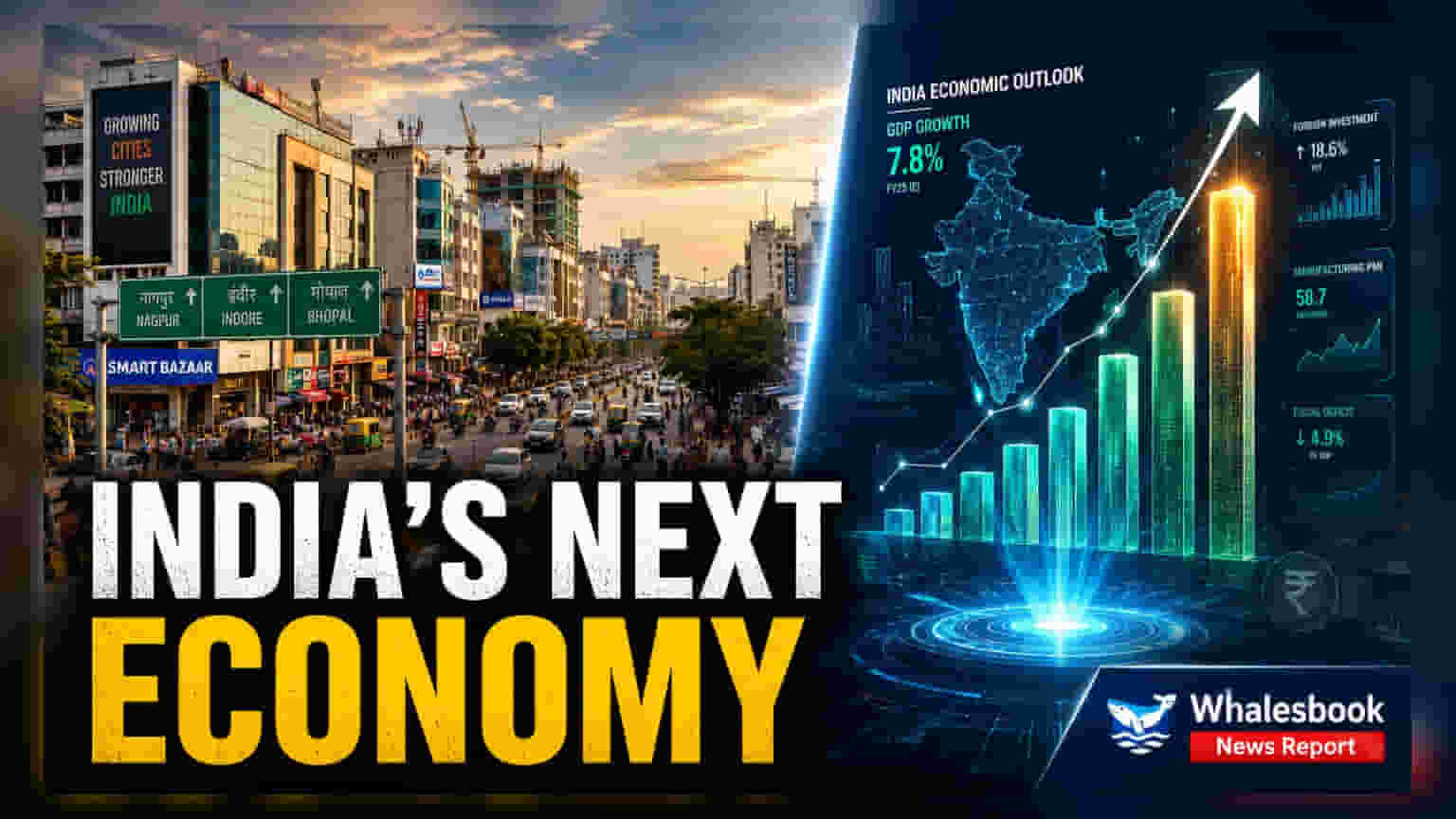
Finance Minister Nirmala Sitharaman projects the Indian middle class will drive 93% of consumer spending as economic activity spreads to 500 Tier 2 and Tier 3 cities. This shift highlights a decentralization of consumption that may influence investment strategies for consumer-facing businesses across the country.
The Shift Toward Tier 2 and Tier 3 Markets
Finance Minister Nirmala Sitharaman recently highlighted a significant transformation in India’s economic structure, identifying the middle class as the primary driver of national growth. During an address at the Rencontres Economiques d’Aix-en-Provence in France, the Minister noted that economic activity is moving beyond major metropolitan hubs. Nearly 500 cities across India are expected to emerge as key centers of economic activity, driven by a middle-class population that currently makes up 31% of the country.
Consumer Spending and Economic Impact
For investors, the most critical data point is the projection that this middle-class demographic will account for 93% of total consumer spending in India. With an annual expansion rate of 6.3% since the liberalization of the economy, this group is becoming a consistent force for demand. The decentralization of this demographic into smaller cities means that companies with retail, financial, and digital service footprints in these regions may see more stable demand compared to those restricted to high-cost metropolitan markets.
Long-Term Demographic Trends
Looking ahead, projections based on OECD data suggest that India’s middle-class population could surpass that of China in absolute numbers between 2030 and 2035. This demographic transition is often cited by economists as a reason for India’s sustained status as a fast-growing large economy. The government is also focusing on upskilling initiatives, specifically targeting Artificial Intelligence training, to prepare this workforce for evolving job market requirements and to mitigate concerns regarding automation-led displacement.
Why This Matters for Investors
This shift suggests that businesses focusing on product affordability and distribution networks in smaller cities may be better positioned to capture this spending growth. Historically, consumer goods companies, banks, and internet service providers have moved aggressively into Tier 2 and Tier 3 markets to tap into this rising purchasing power. The challenge for these companies remains maintaining profit margins while expanding operations into lower-cost, high-volume regions where competition for market share is increasing.
What Investors Should Track
Investors may monitor the performance of consumer-centric sectors such as Fast-Moving Consumer Goods (FMCG), retail, and digital financial services. The key monitorable will be how effectively companies expand their distribution networks in these 500 emerging city centers and whether they can maintain pricing power as competition intensifies. Additionally, government policies related to digital infrastructure and skills training will be important indicators of how the state intends to support this growth in the coming years.