

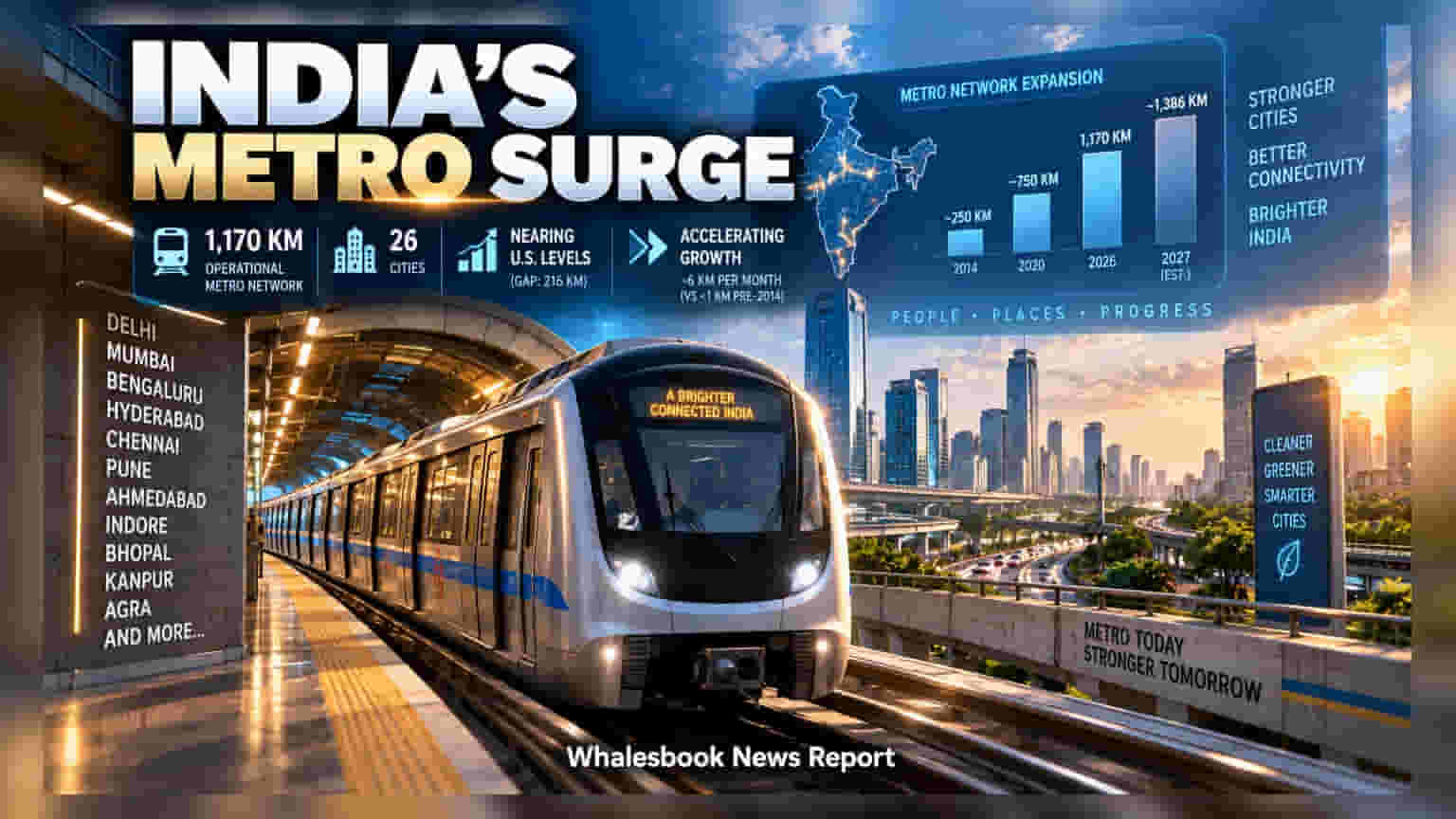
India’s operational metro network has reached 1,170 km, narrowing the gap with the US to 216 km. Supported by a ₹30,000 crore budget for FY27, expansion is shifting toward Tier-II cities. While this infrastructure growth provides significant opportunities for construction and rolling stock companies, investors are tracking the financial sustainability and ridership performance in these smaller urban hubs.
India has reached a significant milestone in urban infrastructure with its operational metro network extending to 1,170 km across 26 cities. This puts the country within reach of the US, which currently operates approximately 1,386 km of track. The gap, now narrowed to 216 km, is expected to be bridged by 2027 as construction continues to accelerate nationwide.
The current pace of development marks a sharp increase from the pre-2014 period. While the country previously added less than 1 km of metro track per month, that speed has increased to nearly 6 km per month. This expansion is supported by substantial government spending, with over ₹30,000 crore allocated for metro infrastructure in the 2026-27 fiscal year.
This infrastructure push is a major factor for India’s engineering and manufacturing sectors. Companies like Larsen & Toubro (L&T) are heavily involved in the civil construction and system integration of these large projects. Meanwhile, rolling stock manufacturers such as BEML, Titagarh Rail Systems, and Alstom India are key beneficiaries of the growing demand for new metro coaches and signaling systems as the network reaches into newer urban territories.
A key shift in recent years is the expansion beyond major metropolitan hubs. While Delhi remains the center of the network, new projects in Tier-II cities like Indore, Bhopal, Agra, and Kanpur are now operational. This decentralization is aimed at easing traffic congestion in secondary economic hubs, where road infrastructure is struggling to support growing populations. These projects are utilizing specialized regional funding to connect dense urban corridors efficiently.
However, the focus is not just on laying tracks but also on ensuring the long-term financial health of these projects. Unlike established, high-traffic corridors in cities like Delhi, new projects in smaller cities face the challenge of achieving daily ridership numbers that justify the high cost of maintenance. To manage this, the government is increasingly relying on non-fare revenue streams, such as real estate development around metro stations and transit-oriented development, to ensure that the infrastructure does not become a permanent fiscal burden.
For investors, the long-term outlook for the sector will depend on how efficiently these new routes are executed and whether they can attract enough passengers to cover operating costs. The key monitorables for the sector include the order flow for equipment manufacturers, the pace of land acquisition for pending lines, and the financial performance of state-run metro corporations as they balance ambitious expansion with debt management.