 Whalesbook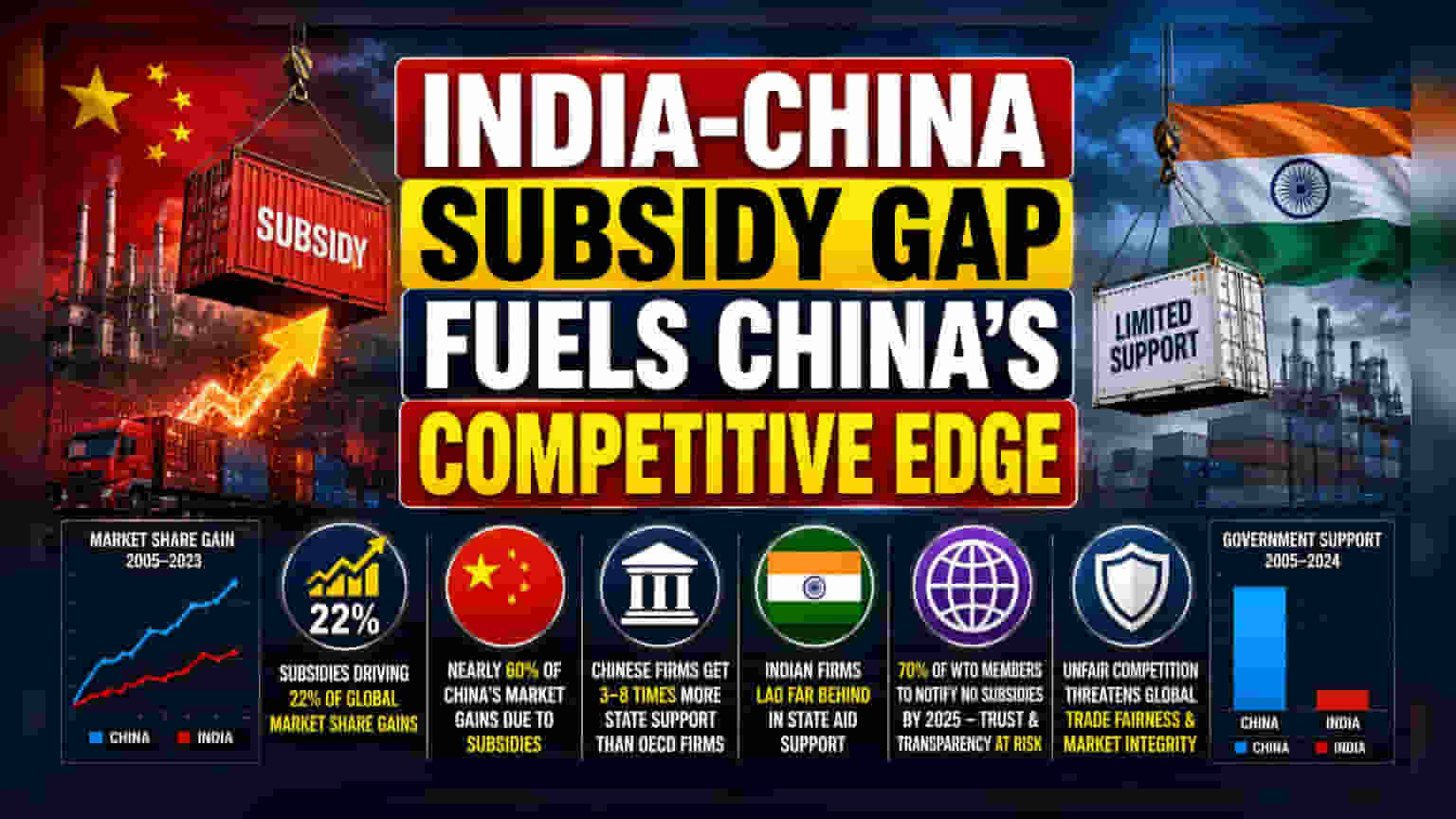


1. THE SEAMLESS LINK
This disparity in state aid is a critical factor behind China's formidable manufacturing competitiveness on the global stage. The OECD report posits that government subsidies explain approximately 22% of the global market share gains achieved by expanding firms between 2005 and 2023. For Chinese firms alone, subsidies accounted for nearly 60% of their own market share expansion, underscoring the strategic role of state support in their growth.
2. THE STRUCTURE (The 'Smart Investor' Analysis)
Subsidy Gap Fuels Competitive Edge
New findings from the Organisation for Economic Co-operation and Development (OECD) highlight a stark disparity in government support for manufacturers between India and China over the past two decades. The OECD's MAGIC Database, which measures actual industrial subsidies received by firms, indicates Chinese companies have consistently benefited from substantially higher levels of state backing compared to their Indian counterparts. This support, encompassing grants, income tax concessions, and below-market-rate loans, has been a primary driver of China's ability to capture global market share. The report covers 525 major global manufacturers across 15 sectors from 2005 to 2024.
Global Trade Transparency Concerns
The OECD report also casts a shadow on global trade trust, noting a significant increase in World Trade Organization members making no subsidy notifications. This trend, from 26 members in 1995 to a projected 117 by 2025, represents a substantial drop in transparency and potentially fosters unfair competition. India is noted as a significant player in sectors like steel, cement, and fertilizers, operating as a 'clean player' relative to the subsidy-driven expansion of Chinese firms. The data suggests Chinese firms, on average, received three to eight times more government support than firms based in OECD member countries, a conservative estimate, while support for Indian firms lagged significantly behind.
3. THE FORENSIC BEAR CASE (The Hedge Fund View)
Eroding Trust and Unfair Competition
The increasing lack of subsidy notifications by WTO members raises serious concerns about the integrity of global trade practices. With a projected 70% of members making no disclosures by 2025, the playing field is becoming increasingly uneven. This lack of transparency masks the true extent of state intervention, allowing countries like China to leverage significant subsidies to gain market share. For Indian firms, particularly those in sensitive sectors like steel, cement, and fertilizers, competing against heavily subsidized Chinese rivals presents a formidable challenge. This subsidy gap not only distorts markets but also erodes trust among trading partners, potentially leading to increased trade disputes and protectionist measures as nations attempt to level the playing field. The OECD's findings suggest that the substantial difference in state aid is a critical factor behind China's formidable manufacturing competitiveness, directly impacting global market share dynamics.
4. THE FUTURE OUTLOOK
The substantial difference in state aid between India and China is likely to continue influencing global market dynamics. The OECD's focus on actual subsidies, rather than disclosed amounts, provides a clearer picture of competitive advantages. As more countries fail to notify subsidies, the potential for trade friction and the need for greater transparency within international trade frameworks will likely intensify. Indian manufacturers will face ongoing pressure to enhance their own competitiveness, possibly through different policy avenues or by focusing on niche markets where subsidy impacts are less pronounced.