

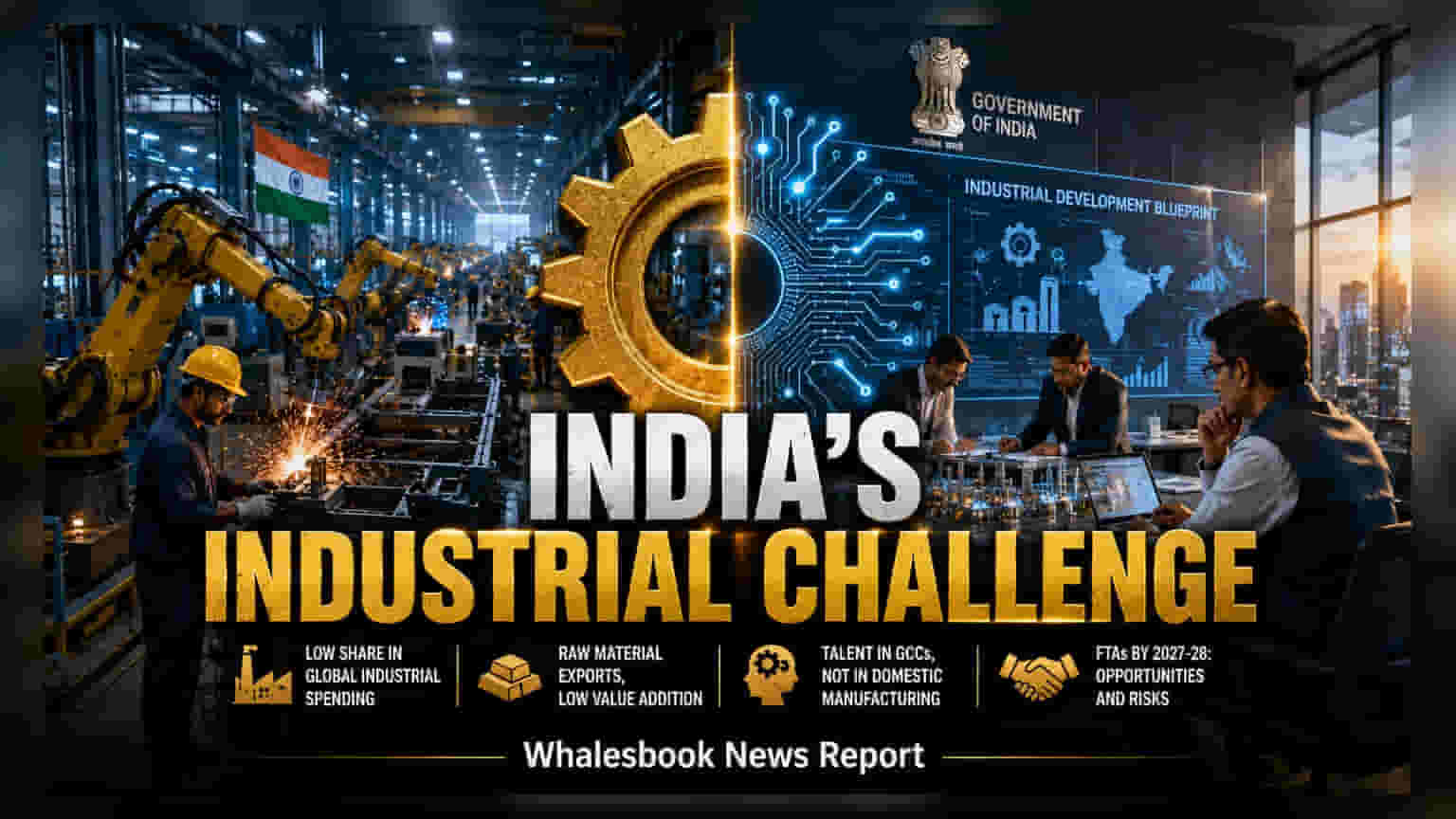
India is navigating a challenging landscape to scale its manufacturing sector against global rivals due to a subsidy gap and structural bottlenecks. For investors, the ability of local industries to transition from raw material output to high-value production remains a critical monitorable for long-term growth.
India is currently facing a significant challenge in the global industrial landscape. As major economies like the United States, China, Japan, and the European Union allocate record amounts of capital to industrial policies, India finds itself in a competitive race where its share of global industrial spending remains relatively small. This disparity in financial support creates a hurdle for local firms trying to compete on price and scale against well-funded global manufacturing giants.
Moving From Raw Materials To Value-Added Products
A persistent structural issue within the Indian manufacturing sector is the difficulty of converting raw capacity into finished, high-value goods. Data from the United Nations Industrial Development Organization (UNIDO) points to a distinct trend: while India is a major producer of basic raw materials like metals and textiles, it often ranks lower in the production of finished, downstream goods.
For investors, this trend highlights a key area of focus. Moving from upstream production—such as creating basic metal or raw fabric—to downstream production—such as manufacturing high-end machinery or finished apparel—is essential for improving profit margins. Companies that can successfully make this transition often benefit from higher-value products, whereas those stuck in raw material production remain vulnerable to commodity price fluctuations and lower margins.
The Human Capital And Ecosystem Gap
India has a strong research base, particularly in critical areas like high-specification machining and materials science. However, a significant portion of this talent is currently funneled into Global Capability Centres (GCCs) rather than being deployed within domestic manufacturing firms. This creates a disconnect where advanced intellectual property is used to serve global corporate interests rather than strengthening India’s own local assembly lines. The challenge for policymakers and industry leaders is to create an integrated ecosystem that encourages this expertise to drive domestic industrial innovation, which could support higher efficiency in local manufacturing.
Navigating Trade Agreements And Future Risks
Looking ahead, India’s push for Free Trade Agreements (FTAs) by 2027-28 presents both opportunities and risks. While these pacts are intended to provide wider market access for Indian goods, they also expose local industries to greater international competition. If the domestic cost of doing business remains high, there is a risk that foreign firms might choose to supply the Indian market from their own overseas hubs rather than investing in local factories.
For market participants, the future performance of the manufacturing sector will likely depend on targeted fiscal support and the removal of bureaucratic hurdles. Investors may monitor how specific industries—particularly those focused on precision manufacturing like advanced ceramics and nanomaterials—adapt to these global shifts. The ability of companies to improve productivity and scale their operations while managing rising competition will be the primary indicator of long-term success in this evolving environment.