 Whalesbook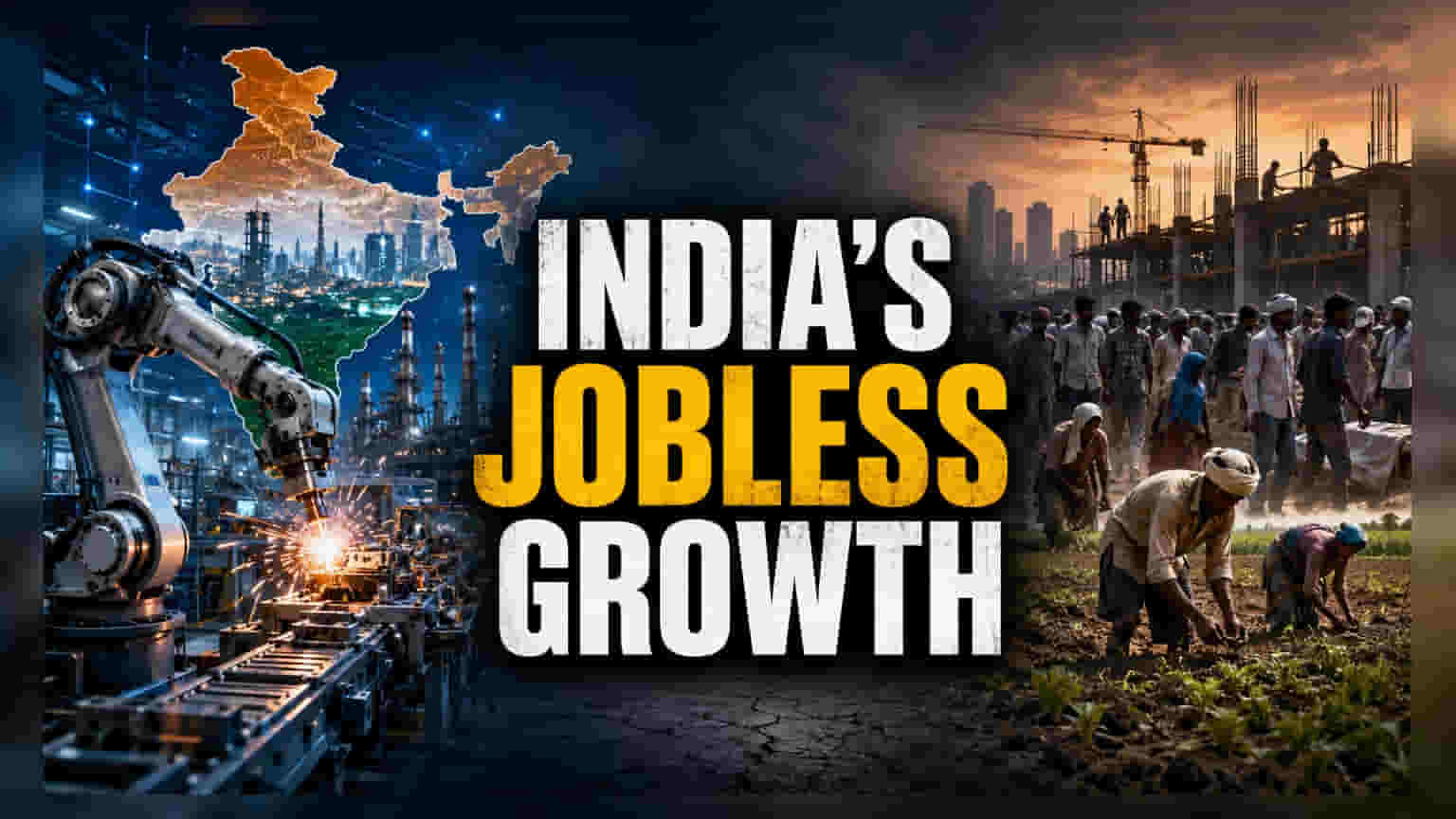


The Efficiency Trap
While the expansion of India’s manufacturing footprint to 16.1% of Gross Value Added (GVA) serves as a baseline indicator of industrial progress, the headline figure masks a structural inefficiency. The reliance on Production Linked Incentive (PLI) schemes has successfully attracted capital, yet the conversion of this capital into labor-intensive output remains underwhelming. The economy is currently characterized by a K-shaped industrial maturation where high-tech, capital-intensive manufacturing segments thrive, while the mass-market job creation necessary to migrate labor from low-productivity agriculture remains stalled.
The Productivity Disconnect
The central tension in the current data lies in the divergence between sectoral GVA and headcount. With agriculture still anchoring over 41% of the workforce despite contributing less than 18% of GVA, the transition of human capital is failing to reach the threshold required for significant middle-income economic evolution. Peer economies like Vietnam and Thailand demonstrate that a 24% manufacturing share is not merely an aspirational benchmark but a functional requirement for labor-market stabilization. India’s current trajectory suggests that its industrial growth is disproportionately favoring automated processes and high-skilled services, leaving the vast majority of the population trapped in the informal or low-productivity construction and trade sectors.
Structural Constraints and The Bear Case
From a macroeconomic risk perspective, the obsession with manufacturing GVA figures may be misaligned with the reality of India’s demographic profile. The push for industrialization through capital subsidies risks creating a "jobless growth" loop. Unlike the service sector, which has shown agility in absorbing professional talent, the manufacturing sector faces significant headwinds including infrastructure bottlenecks, complex land acquisition hurdles, and a persistent skill gap that limits mass employability. Institutional investors remain wary of the duration of PLI effectiveness, noting that if fiscal incentives are withdrawn prematurely, the capital-intensive projects may struggle to maintain competitiveness against more mature regional exporters who benefit from better integrated supply chains and lower logistical overheads.
Future Outlook
The viability of India’s manufacturing strategy depends on the ability to shift from input-led growth to productivity-led expansion. Market analysts increasingly point to the need for a secondary wave of reform targeting labor market flexibility and vocational training to bridge the gap between industrial output and employment potential. Without a clear mechanism to pull agricultural workers into high-value manufacturing, the reliance on service-led GDP expansion will likely continue to exacerbate wealth inequality, even as headline GVA numbers move closer to the government’s revised 20% target.