 Whalesbook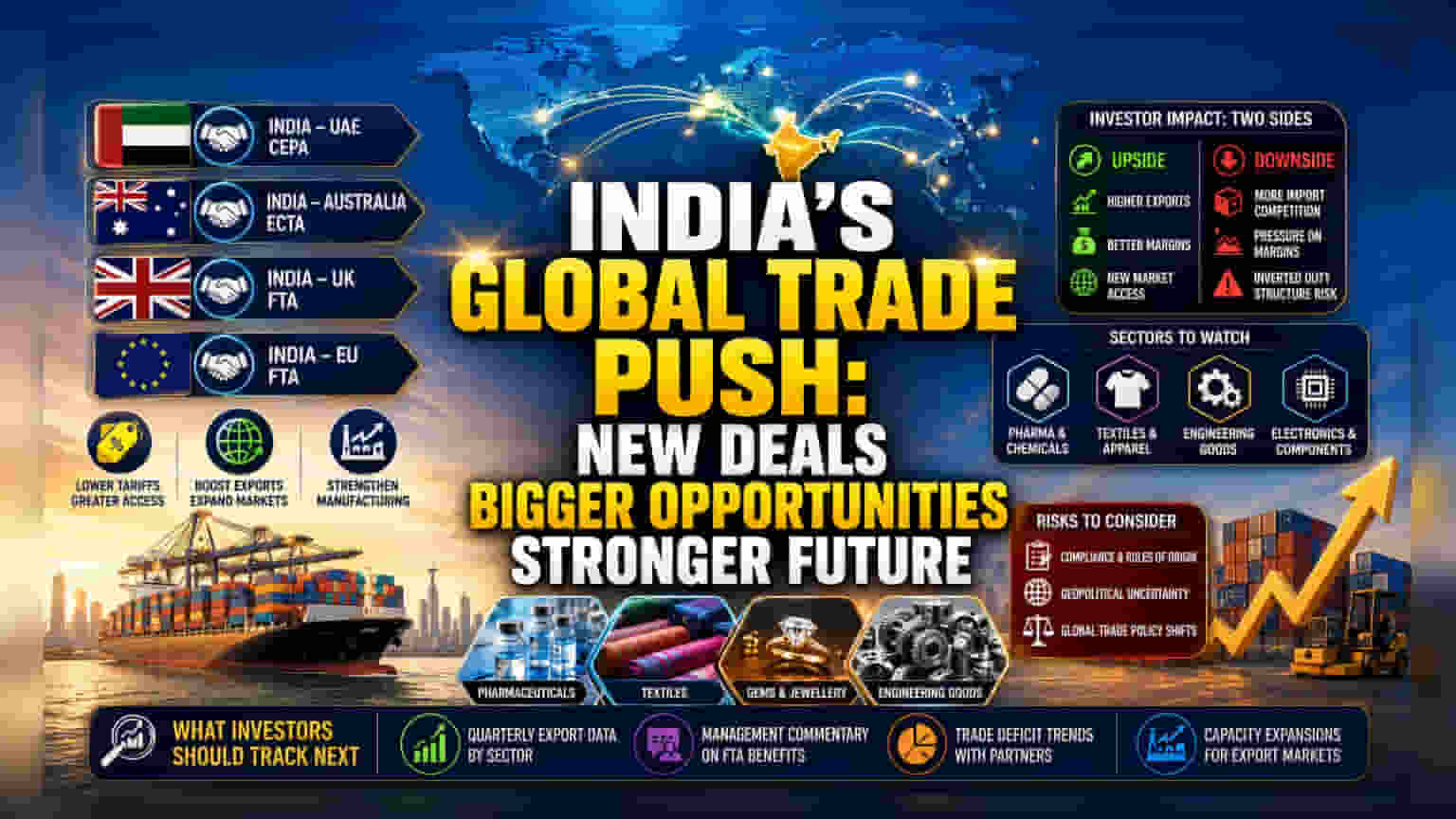


India’s aggressive expansion of Free Trade Agreements (FTAs) with major economies is aiming to boost local manufacturing and exports. For investors, this shift offers potential growth for export-heavy sectors, but also brings competition from cheaper imports. We look at the risks, rewards, and what this means for the manufacturing sector.
What Happened
India has significantly accelerated its global trade strategy, signing a series of Free Trade Agreements (FTAs) and economic partnerships with major economies, including the UAE, Australia, the UK, and the European Union. These agreements are designed to reduce or eliminate tariffs on goods, making Indian products more competitive abroad. The objective is to boost India's manufacturing sector and help the country achieve its economic targets by 2047, while also securing supply chains for essential raw materials.
Why This Matters For Investors
The impact of these agreements on the stock market is two-sided. On the positive side, companies in sectors like textiles, pharmaceuticals, gems and jewellery, and engineering goods gain preferential access to large international markets. This can lead to higher profit margins and increased export volumes for firms that successfully tap into these new opportunities.
Conversely, these trade deals also open the domestic market to foreign competition. When trade barriers are lowered, Indian companies—especially those in manufacturing—might face tougher competition from cheaper or higher-quality imports. This requires domestic companies to improve their operational efficiency and quality standards to remain relevant.
The Balancing Act: Exports vs. Competition
While the goal is to increase exports, a critical investor monitorable is the trade balance. In recent times, India has faced trade deficits with several FTA partners. If a company relies heavily on domestic sales but faces intense competition from imported products that now enjoy lower tariffs, its profit margins could come under pressure.
Another point of concern is the "inverted duty structure," where duties on raw materials are sometimes higher than duties on finished goods. This can make it more expensive for Indian manufacturers to produce goods locally compared to importing finished items, potentially hurting domestic production capabilities. Investors should monitor whether the government’s trade policy successfully addresses these structural issues in upcoming quarters.
Sector Check: Where to Watch
- Pharmaceuticals and Chemicals: These sectors often benefit from easier export norms and faster regulatory clearances in partner countries, potentially boosting revenue.
- Textiles and Apparel: With improved access to Western markets, companies with strong export footprints could see volume growth, though they remain sensitive to global demand fluctuations.
- Engineering and Electronics: These sectors are increasingly focusing on integrating into global supply chains. The success here depends on the company's ability to utilize FTA benefits, such as cheaper import costs for intermediate components.
Risks to Consider
Investors must be aware that trade pacts are not a guaranteed win for every company. Execution is key. Many firms struggle to utilize these agreements due to complex compliance requirements, such as "Rules of Origin," which dictate where a product is made. If a company cannot navigate these regulations, it may not reap the expected benefits.
Additionally, geopolitical tensions and sudden changes in global trade policies can create volatility. Companies heavily reliant on a single region or a specific set of trade partners may be more vulnerable to shifts in diplomatic relations or trade rules.
What Investors Should Track Next
Moving forward, the primary things to watch are the quarterly export data for specific manufacturing sectors and management commentary on how companies are utilizing these FTAs to lower input costs or enter new markets. Keep an eye on trade deficit trends with key FTA partners, as this could lead to future regulatory adjustments or policy tweaks. Finally, track whether companies are expanding capacity specifically to cater to these new export markets, as this would indicate confidence in long-term demand.