 Whalesbook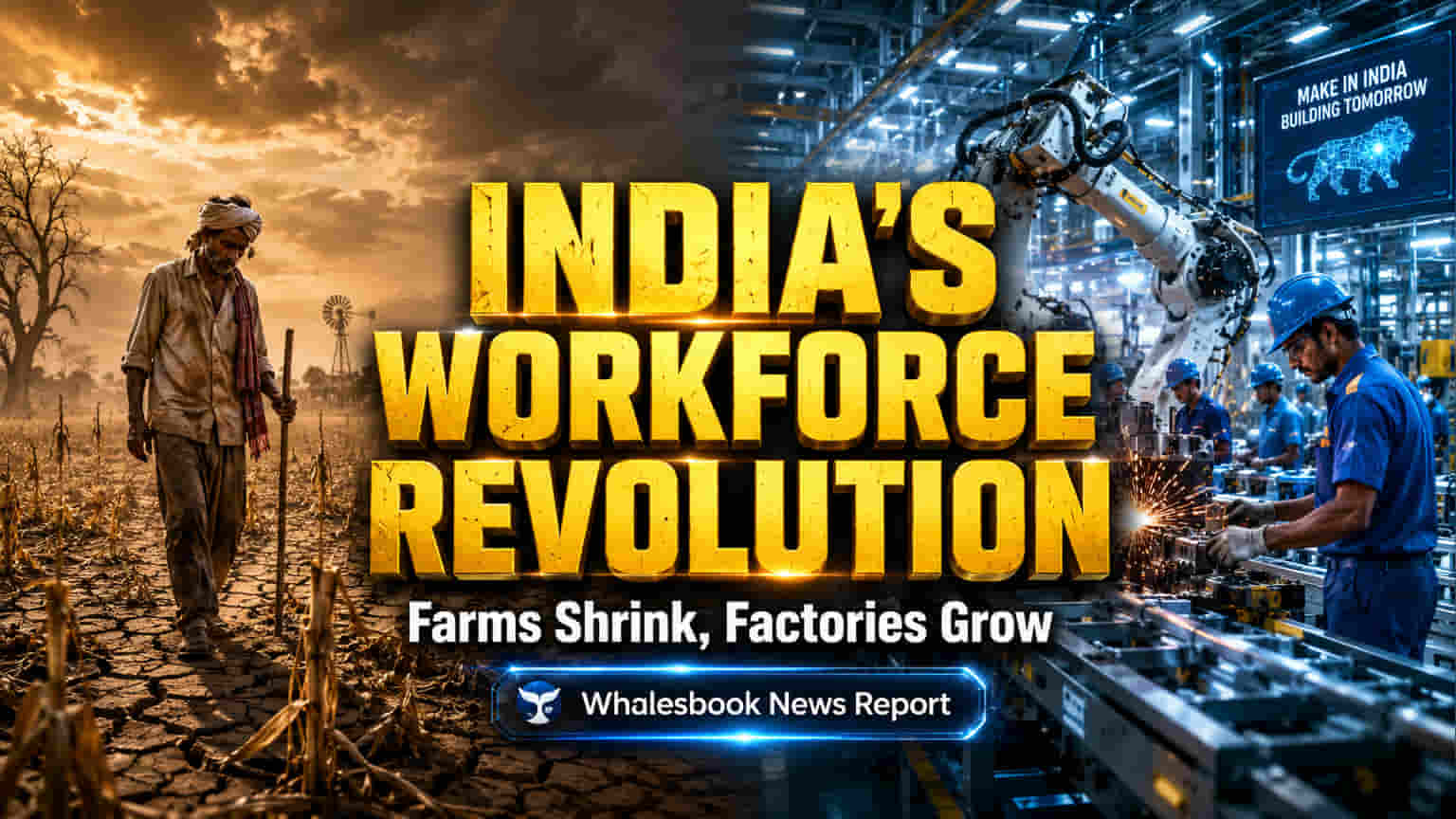


The Gradual Shift Away from Farming
India's workforce is gradually moving away from farming. Agriculture now employs about 43% of workers, down from 66% in the late 1980s – a slow shift over 37 years. While this trend mirrors global industrialization, India's farm employment share is still much higher than the world average of 22.33%. This continued reliance highlights the challenge of shifting jobs away from farming. Manufacturing and service sectors are growing, but India's economic change is slower than in rapidly industrializing Asian nations.
Manufacturing Growth Meets Informal Sector Challenges
Government efforts, especially manufacturing pushes and Production Linked Incentive (PLI) schemes, are helping larger businesses grow. Jobs in companies with over 20 workers are up to 13.7% from 10.8%. This shows growth in formal manufacturing. But, over 42% of workers remain in small, informal businesses, which still dominate employment. These small and medium enterprises (SMEs) are vital to India's economy. However, they struggle with financing, infrastructure, technology, and skilled workers. The PLI scheme, while drawing investment, has faced criticism for favoring large firms over many SMEs. This split means big companies expand, but most workers stay in smaller, less productive units.
The Major Hurdle: Low Female Job Participation
A more significant worry is the persistently low female job participation rate, which remains at just 40%. This is very low compared to global and many emerging market rates. India's overall job participation rate is 59.3%, also lagging behind many countries. Social norms, heavy domestic duties for women, safety worries, and a lack of childcare are major obstacles. Not using women's full potential is a huge missed economic chance. Estimates suggest improving female participation could add $2.9 trillion to India's GDP by 2025. This underuse impacts household earnings, national output, and fair economic growth.
Key Challenges Hindering India's Labor Market
Despite changes, India's job market has major weaknesses. The slow move from farming means many workers produce less economic value. Small, informal businesses struggle to grow and increase productivity because they lack scale, capital, and technology. The very low female job participation rate significantly limits potential GDP growth and national output. While PLI schemes boost manufacturing, questions remain if they create widespread, quality jobs, especially with automation trends. Uneven job growth across regions also means economic opportunities are not spread equally.
Outlook for India's Job Market
Looking ahead to 2026, manufacturers expect continued growth and demand, though input costs are rising. Policy support like PLI schemes should keep driving investment in large industrial sectors. However, India can only reach its full economic potential by tackling the difficulties of scaling up informal businesses and, crucially, by increasing female job participation. Without strong actions in these areas, the economy's changes may bring modest improvements rather than major leaps.