 Whalesbook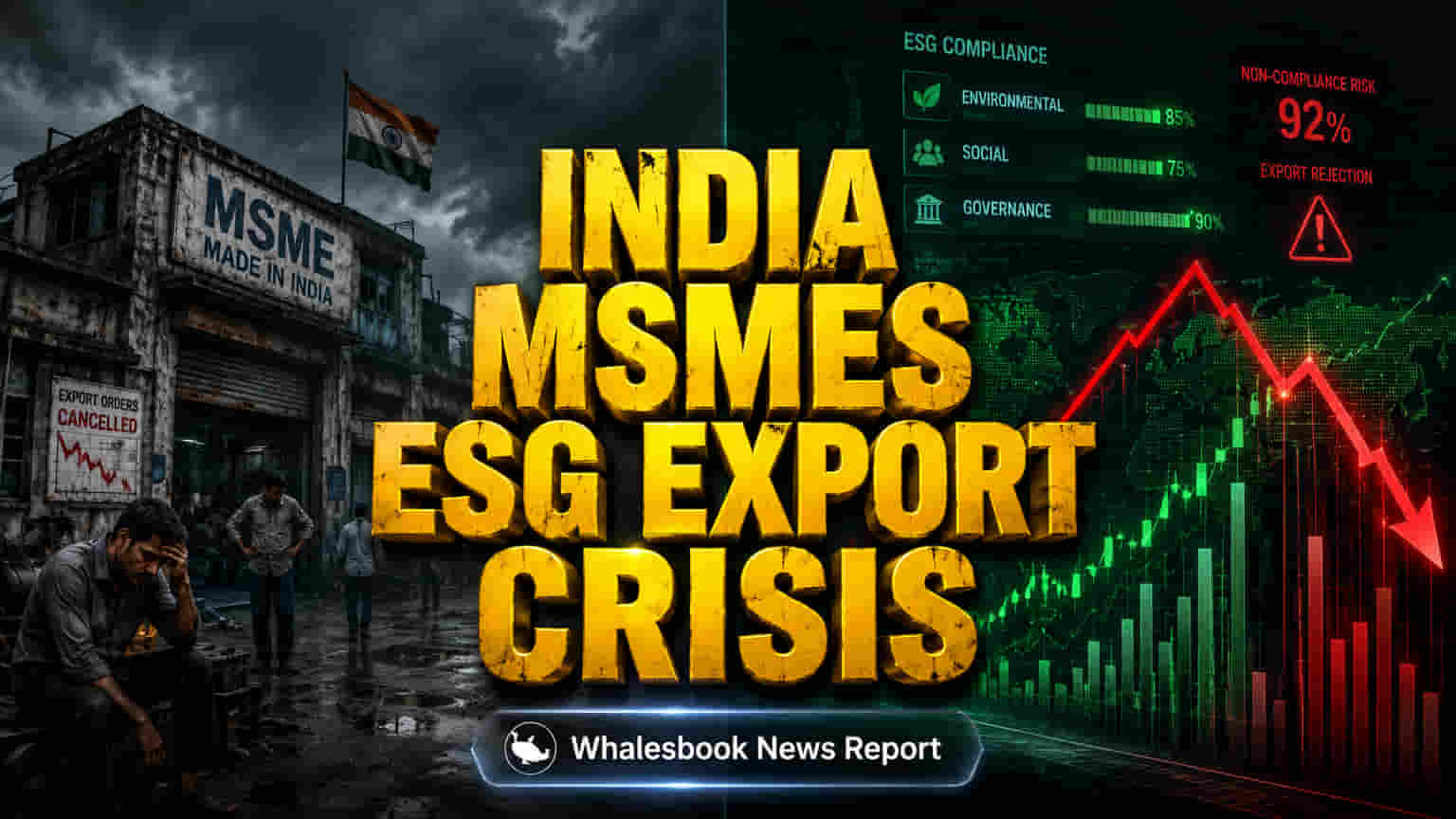


Trade Barriers Emerge Despite FTAs
India's recent Free Trade Agreements (FTAs) with New Zealand, the UK, and the EU aim to boost exports. These pacts promise lower tariffs, a key benefit for India's Micro, Small, and Medium Enterprises (MSMEs). These businesses contribute significantly to exports, making up about 45.79% of total exports in FY2024-25. However, the immediate tariff benefits are increasingly overshadowed by new non-tariff barriers (NTBs). The global focus on Environmental, Social, and Governance (ESG) standards is changing market access. This creates tough challenges for MSMEs, which often have low profit margins and limited cash reserves.
Rising Costs of Meeting Global Rules
Indian MSMEs face a new reality: competitiveness is now driven by NTBs, not just tariffs. Buyers and regulators worldwide require adherence to strict ESG standards, such as carbon reporting, sustainable sourcing, and fair labour practices. For example, the EU's Carbon Border Adjustment Mechanism (CBAM), operational since January 1, 2026, adds carbon costs to imports, potentially raising prices by up to 22% for high-carbon goods. Sanitary and Phytosanitary (SPS) measures also create major hurdles for food exports, often demanding significant changes to meet compliance. These evolving standards pressure MSMEs to invest in cleaner tech, wastewater treatment, and supply chain tracking. Many MSMEs lack the funds for such investments due to limited resources.
Funding Gaps and Market Risk
The financial impact of this compliance gap is significant. Banks and NBFCs now assess ESG risks. Non-compliance can result in higher loan rates, lower credit limits, or rejected loan applications. While government programs offer some financing help, accessing affordable 'green finance' remains a big hurdle. Many MSMEs are unaware of options or find the application process confusing. This financial pressure, plus tough global price competition, makes it hard for MSMEs to stay profitable while meeting new demands. Competitors in countries with less strict rules or better support systems may have a cost advantage, further hurting Indian firms' competitiveness. The NIFTY SME EMERGE Index, representing smaller listed firms, trades at a P/E of 21.35, and the BSE SME IPO Index has a P/E of 256.36. These high-growth, high-risk sectors now face added challenges from compliance demands.
Structural Weaknesses Hinder Trade
Indian MSMEs' ability to use FTAs is severely limited by their own structural weaknesses. Many MSMEs lack advanced technology, have small capital reserves, and focus on short-term survival, making large ESG investments difficult. Larger Indian companies might handle complex ESG reporting, but smaller firms often lack the expertise and clear frameworks, causing confusion and implementation problems. The Indian Rupee's depreciation to around Rs93-94 per dollar in 2026 adds complexity. While usually good for exports, it raises dollar-linked costs for imports and shipping for MSMEs, many without currency hedging. Without focused government help like blended finance, shared infrastructure, and training, MSMEs risk being excluded from global supply chains not for quality or price, but for failing to meet ESG rules. This struggle also poses a risk domestically, as exporters unable to compete abroad may find it hard to remain profitable at home where cost is key.
Policy Needed for MSME Future
For India's trade strategy to succeed, MSMEs must be equipped to meet global compliance standards. A clear policy plan is needed. This could include easier financing options, shared infrastructure for facilities like effluent treatment, and partnerships for knowledge sharing. Tiered ESG rules, based on company size and risk, could help larger firms guide their smaller suppliers to meet standards. Not addressing these NTB challenges could weaken FTAs, slow MSME growth, and prevent India from joining higher-value global supply chains.