

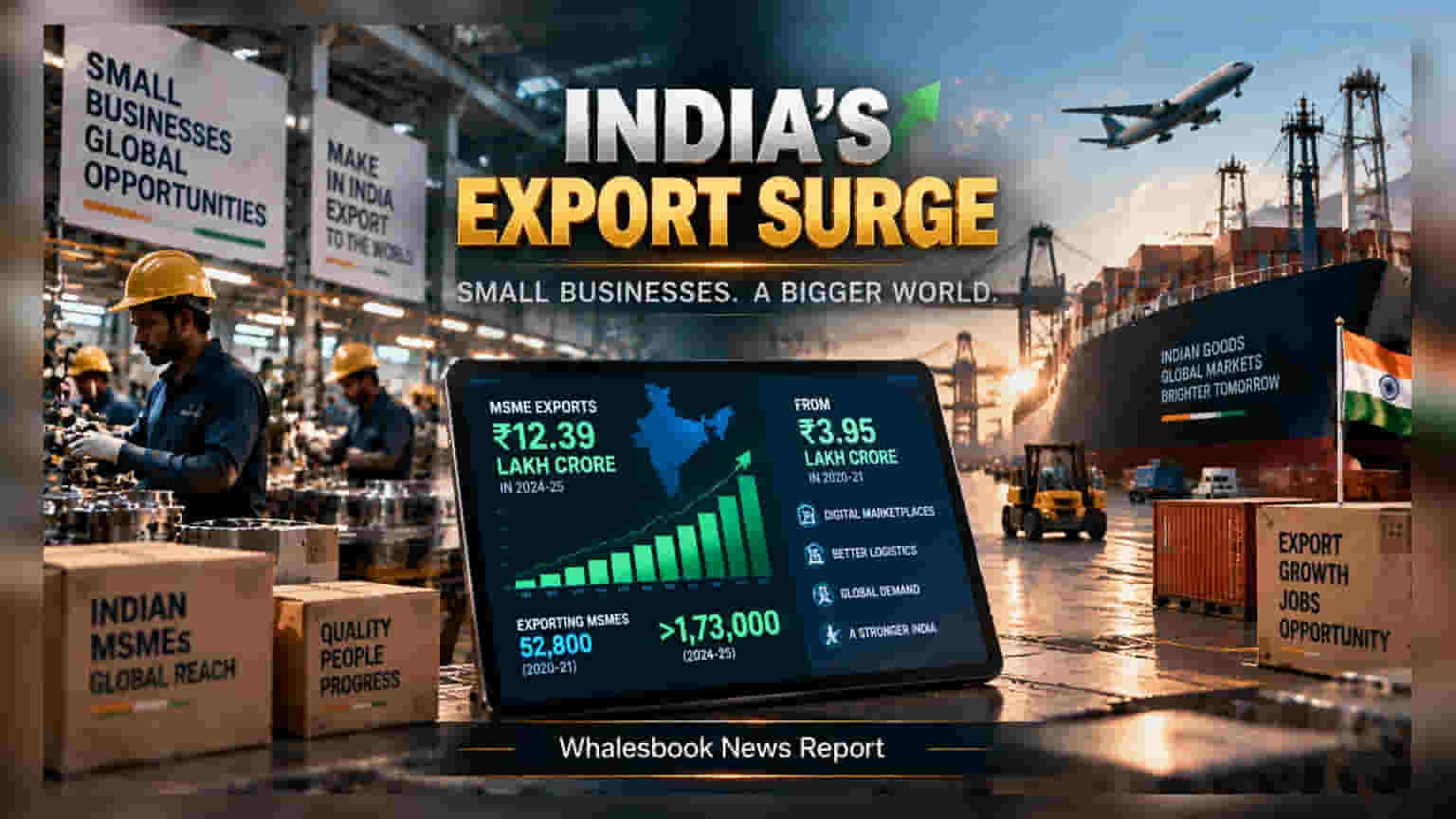
India’s MSME exports reached ₹12.39 lakh crore in 2024–25, up from ₹3.95 lakh crore in 2020–21, as participation increased to over 1.73 lakh firms. While digital adoption and logistics improvements are supporting this growth, investors should track challenges regarding credit access, payment delays, and international compliance costs.
Indian micro, small and medium enterprises (MSMEs) are playing an increasingly active role in the country’s export economy. Official data shows the sector's annual export value climbed to ₹12.39 lakh crore in the 2024–25 fiscal year, marking a significant rise from ₹3.95 lakh crore in 2020–21. This growth is supported by a surge in the number of exporting MSMEs, which has expanded from approximately 52,800 to over 1,73,000 in the same period.
The export expansion is backed by better digital access and logistics. With India reaching the 38th rank on the World Bank’s Logistics Performance Index, the physical cost of moving goods internationally has become more predictable. Digital marketplaces are assisting small firms by helping them list their products globally, offering a way to reach foreign buyers without the heavy upfront costs previously required to set up international offices or distribution networks. Programs like Walmart Vriddhi have further supported this by training thousands of businesses in digital operations.
However, the sector shows a high concentration of output. Medium-sized firms, which make up only 0.3% of the total MSME population, generate nearly 40% of the total exports. This concentration suggests that the next phase of national export growth depends on helping smaller, micro-entities scale up their production and meet global quality standards.
Investors tracking this sector should note that scaling exports brings specific business risks. While digital platforms lower entry barriers, MSMEs continue to face challenges with access to formal credit and working capital. Timely payments from buyers remain a recurring issue for small suppliers, which has led to government initiatives like the MSME Samadhaan portal to track and resolve payment delays. For businesses, the ability to comply with complex international packaging, quality, and environmental standards is just as important as the ability to produce goods.
For companies in the logistics, fintech, and shipping sectors, this export trend offers potential, as more small businesses now require reliable transport, trade financing, and digital transaction support to maintain global operations. Investors should watch how the sector manages the transition of micro-units into medium-sized enterprises, the stability of global demand, and the impact of government schemes on compliance costs and credit flow to these smaller exporters.