

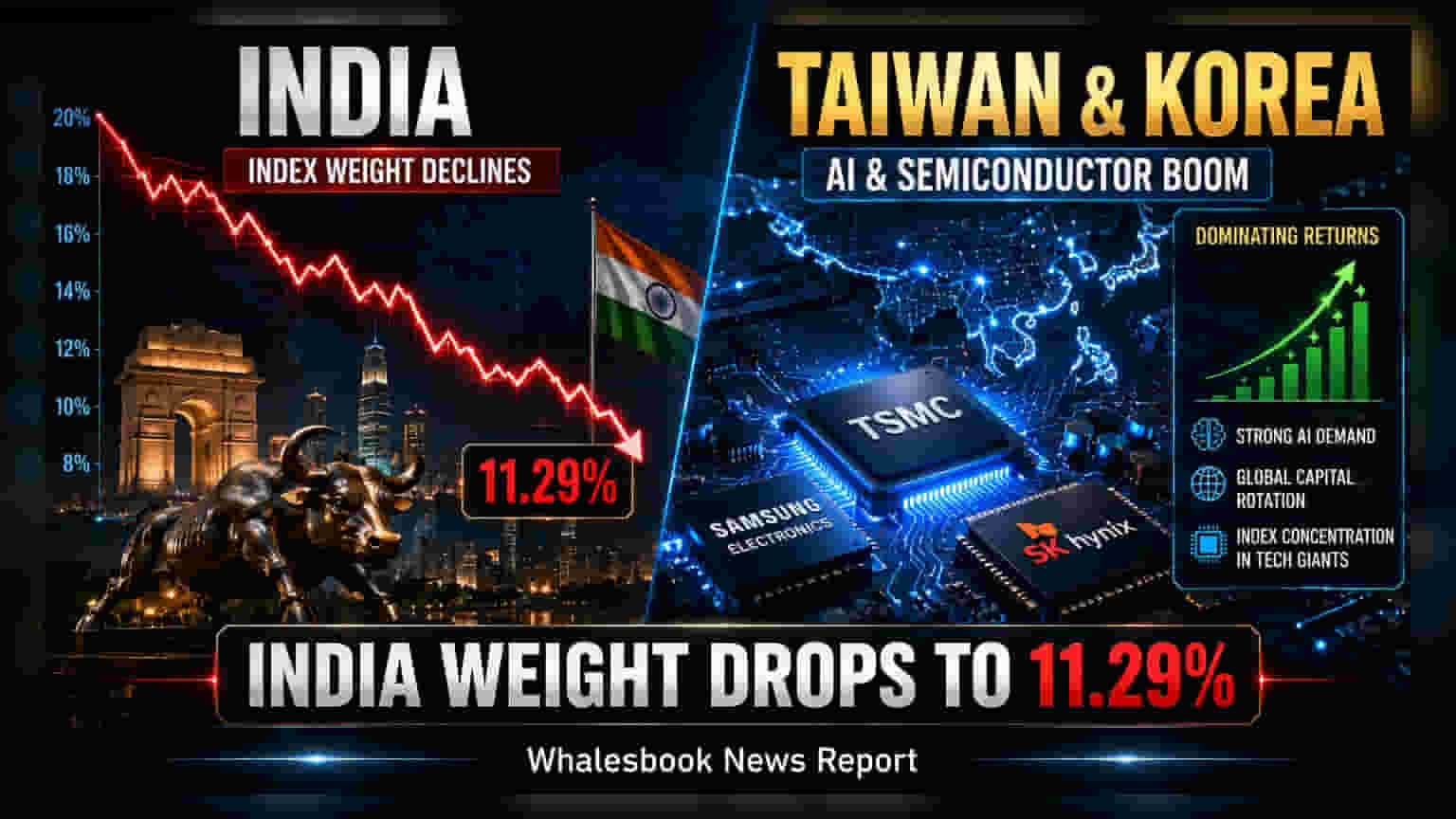
India’s representation in the MSCI Emerging Markets Index has declined to approximately 11%, down from highs near 20% in 2024. This contraction is driven by a massive rotation of global capital into semiconductor and AI-hardware-heavy markets like Taiwan and South Korea. For investors, this shift highlights potential pressure on passive institutional inflows and underscores the impact of high domestic valuation premiums.
India’s standing in the MSCI Emerging Markets Index has seen a notable decline throughout 2026, with its weight falling to approximately 11% as of early September. This shift marks a departure from the index composition in 2024, when India’s representation approached 20%. The reduction comes as global institutional capital moves aggressively toward semiconductor and AI-infrastructure-heavy markets, fundamentally altering the index's concentration.
The primary driver behind this change is the intense global investor demand for firms at the center of the artificial intelligence hardware cycle. Major semiconductor manufacturers in Taiwan and South Korea, including TSMC, Samsung Electronics, and SK Hynix, have dominated market returns this year. These companies now account for a significant portion of the index's total market capitalization, drawing liquidity away from other regions. As a result of this capital rotation, Indian blue-chip companies, such as HDFC Bank and Reliance Industries, have slipped from the top 10 list of the MSCI Emerging Markets Index.
For Indian investors, the decline in index weighting carries structural implications. Many global emerging market funds are passive, meaning they track the index composition automatically. When a country’s weight in the index drops, these funds often adjust their holdings, which can lead to selling pressure by Foreign Institutional Investors (FIIs). This movement has been compounded by valuation concerns; earlier in 2026, the MSCI India index traded at a premium exceeding 70% relative to its Asian peers, making it less attractive for global managers seeking value.
The high concentration of the MSCI Emerging Markets Index in a few technology giants also creates a new risk profile for international investors. While the index is now more exposed to the growth of AI, it is also more vulnerable to sector-specific shocks within the semiconductor industry. For India, the challenge remains to attract sustained capital flows through earnings growth that can compete with the rapid expansion seen in AI-leveraged economies.
Moving forward, investors may track the trend of FII activity, as consistent outflows can put pressure on dollar-denominated returns. Additionally, market participants will likely focus on whether Indian corporate earnings can justify current valuation premiums or if price adjustments are necessary to regain relative appeal. The stability of the currency and the pace of domestic manufacturing output will be key factors in how India re-positions itself within the global index in the coming quarters.