 Whalesbook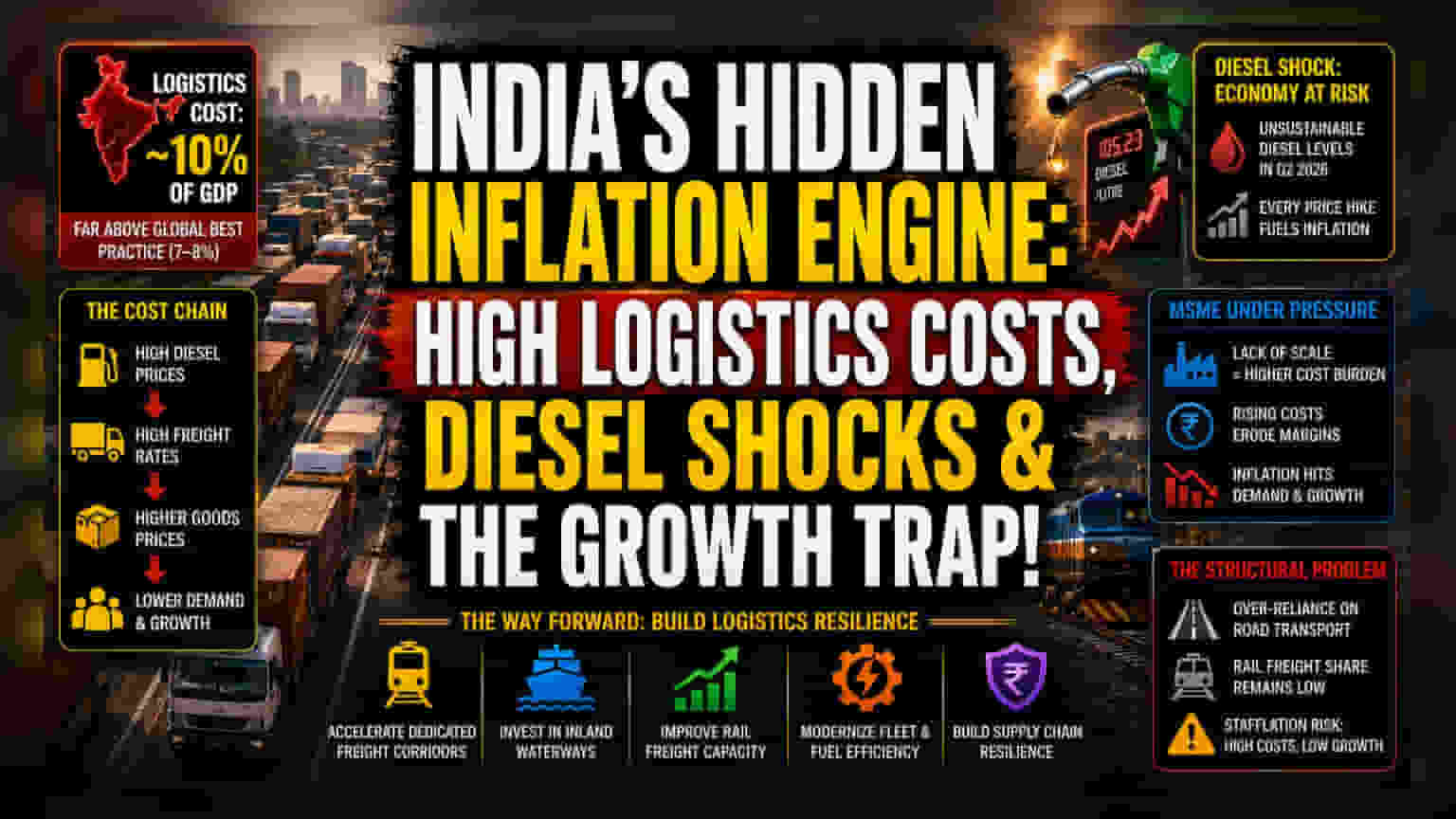


The Structural Cost Escalation
Beyond the volatility of food baskets, India faces a more entrenched economic challenge rooted in its high logistics intensity. By maintaining a logistics-to-GDP ratio near 10%, the economy remains tethered to diesel prices that have reached unsustainable levels in the second quarter of 2026. This is not merely a momentary price shock; it is a permanent efficiency tax that compounds as goods travel from rural production centers to urban consumption hubs. When freight carriers adjust rates to offset fuel volatility, the cost is not absorbed by the logistics provider but is layered into the final price of every manufactured good and consumable item.
The Competitive Disadvantage
Unlike larger, capitalized corporations that utilize sophisticated logistical management or long-term fuel hedging to stabilize overhead, India’s vast network of Micro, Small, and Medium Enterprises bears the full weight of these price oscillations. These entities function as the shock absorbers of the economy, yet their lack of scale prevents them from negotiating better rates with logistics firms. As these small businesses pass rising transport costs onto consumers, they inadvertently fuel the very inflation that constrains household spending power. This creates a feedback loop where reduced consumer demand, dampened by higher retail prices, further suppresses the growth of the MSME sector, exacerbating the nation's broader productivity stagnation.
The Forensic Bear Case
From a macroeconomic perspective, the reliance on road transport over rail represents a significant structural failure. While developed economies have shifted toward low-cost, high-volume rail freight, India remains hampered by infrastructure bottlenecks that prioritize trucks. This reliance introduces a dangerous sensitivity to international crude oil benchmarks and domestic excise policies. Should global energy prices remain elevated, the Reserve Bank of India (RBI) faces a classic policy dilemma: raising interest rates to curb demand-side inflation may fail to address the supply-side, cost-push pressure derived from transport. If the government fails to expedite the completion of dedicated freight corridors, the persistent 'network inflation' could lead to a prolonged period of stagflationary pressure, where growth targets are missed despite restrictive monetary conditions.
Future Outlook and Policy Drift
Long-term macroeconomic stability hinges on a transition toward multimodal logistics. Government initiatives focusing on inland waterways and expanded rail capacity are critical, yet their implementation speed has historically lagged behind industrial requirements. Investors should note that until logistics costs as a percentage of GDP move toward the 7-8% range, the Indian economy will remain abnormally vulnerable to localized fuel shocks. Future monetary policy decisions will likely emphasize the need for supply-chain resilience, signaling that the era of ignoring transport-induced inflation has effectively reached its limit.