

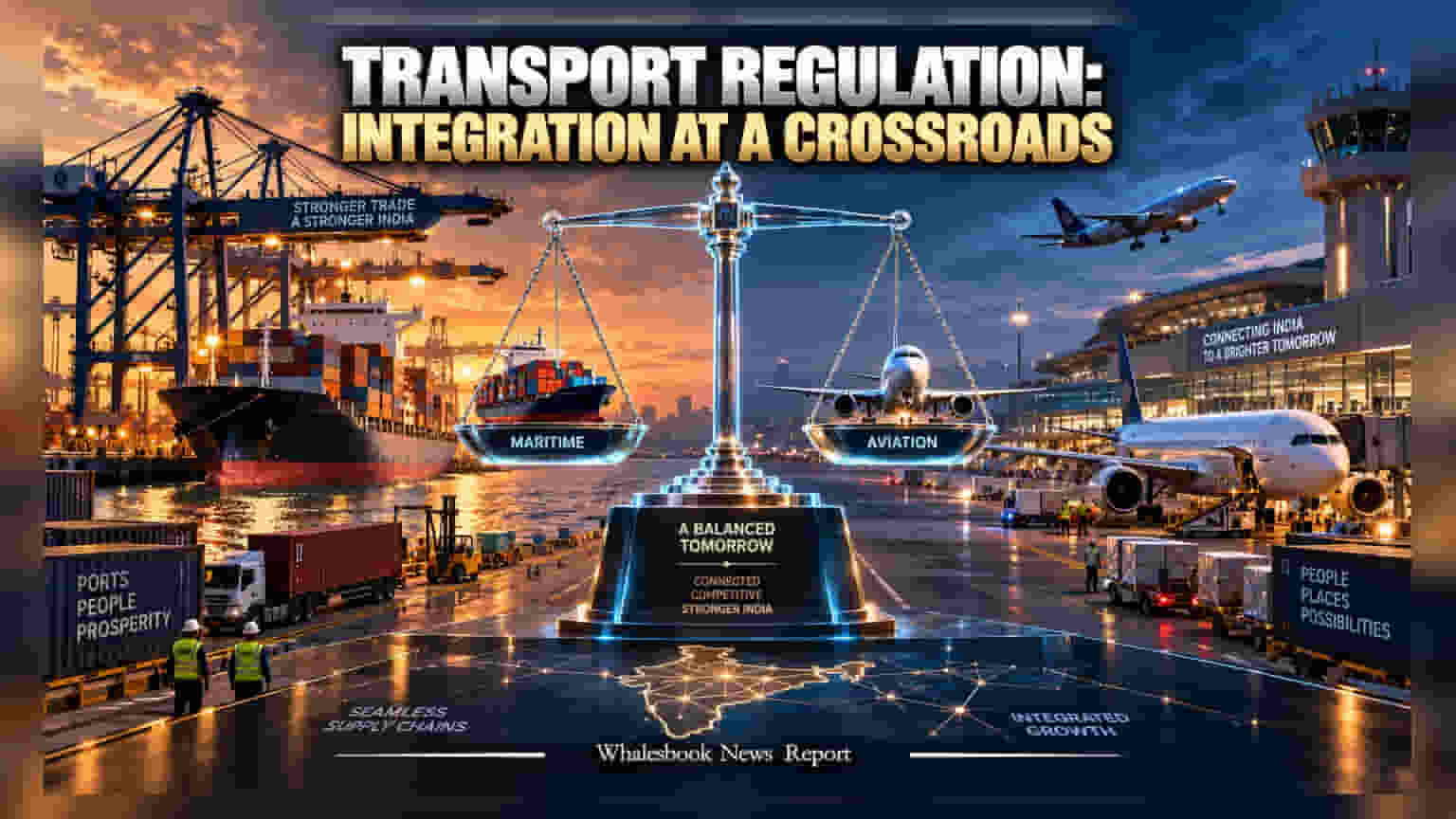
India’s transport sector is navigating a regulatory divide where shipping lines freely own port terminals while airport-airline cross-ownership remains strictly banned. As the nation pushes for multimodal logistics efficiency under the National Logistics Policy, policymakers are debating whether to harmonize these rules. Investors should note that a shift toward competition-focused oversight could reshape how infrastructure firms manage asset access and expansion.
India’s ambition to build a seamless, multimodal logistics network is hitting a regulatory roadblock: the starkly different rules governing the maritime and aviation sectors. While the country pushes for integrated planning under initiatives like PM GatiShakti, the underlying regulatory environment remains fragmented. This disparity forces companies operating across different transport modes to navigate two completely different rulebooks, creating uncertainty for long-term infrastructure investment.
The Maritime Model
In India’s maritime sector, vertical integration—where shipping companies also own or hold stakes in the port terminals they use—has become the industry standard. Global giants like Mediterranean Shipping Co. and Hapag-Lloyd have invested heavily in Indian port infrastructure. For the industry, this model is attractive because it guarantees steady cargo volumes and funds necessary port upgrades. However, it also introduces clear risks. When a terminal operator is also a major shipping line, there is an inherent danger of unfair practices. These operators might prioritize their own fleets for berthing slots or charge higher prices to independent competitors, potentially creating monopolistic bottlenecks that reduce overall efficiency.
The Aviation Divergence
Conversely, the Indian aviation sector operates under a philosophy of strict separation. Airport operators are largely prohibited from holding significant ownership in airlines, and vice versa. This restriction is designed to protect fair competition. In aviation, critical resources like flight slots and terminal gates are scarce. Regulators have long feared that if an airport owner also controlled an airline, they would favor their own flights, squeezing out other carriers and limiting consumer choice. While this ensures a level playing field, it also limits the ability of airport operators to experiment with integrated business models that could drive operational efficiency.
The Regulatory Dilemma
As India pushes toward an integrated multimodal logistics framework, the current mode-specific approach is proving insufficient. The challenge for policymakers is to create a unified doctrine that encourages private investment without allowing a few large players to control the entire supply chain. A potential shift could involve moving away from blanket ownership bans toward stronger, competition-focused oversight. This would mean focusing on transparent pricing and non-discriminatory access to infrastructure rather than simply preventing firms from owning assets.
For investors and companies in the infrastructure space, the next steps from regulators will be critical. Any change in policy toward a harmonized, competition-based approach could influence how infrastructure companies structure their future expansions and partnerships. Monitoring regulatory updates regarding cross-sector ownership and the enforcement of competition laws will be essential, as these decisions will dictate the future of market access and the profitability of large-scale logistics assets.