

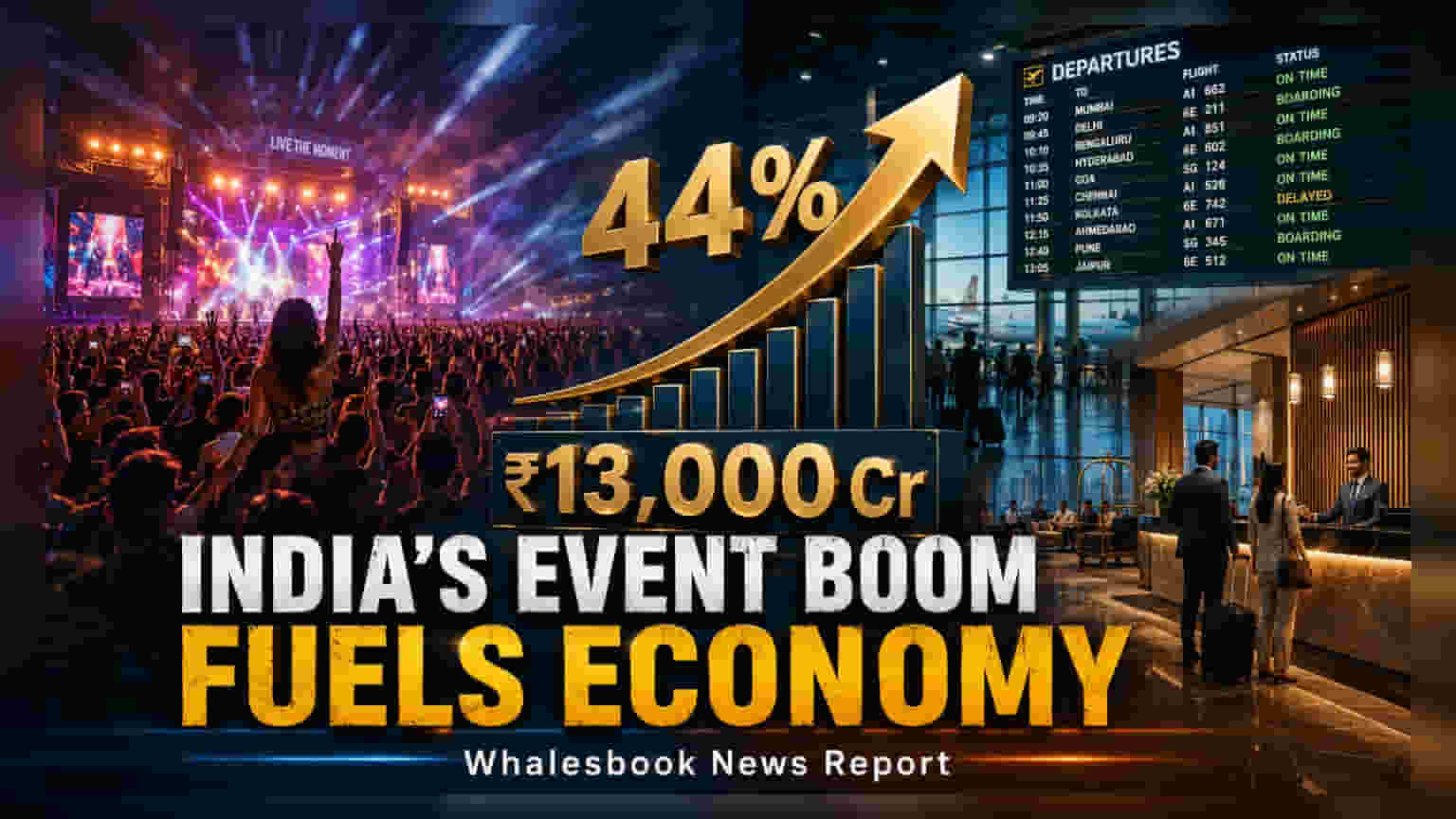
The Indian live events market surged 44% in 2026, creating a major boost for tourism. With over half of attendees traveling between cities, this trend is driving high demand for flights, hotels, and local dining. For every rupee spent on an event, an extra ₹1.46 enters the wider economy, though the rapid expansion is also placing pressure on travel and hospitality infrastructure.
The live events industry in India has emerged as a major economic force, recording a sharp 44% growth in 2026. According to recent industry reports, this segment has become a core pillar of the country's 'experience economy,' driven by a surge in concerts, large-scale festivals, and major public events. The impact of this growth extends far beyond ticket sales, creating a strong ripple effect throughout the economy.
The Economic Ripple Effect
This trend is significantly changing travel patterns. Data shows that over 50% of event-goers now travel between cities to attend these occasions. This behavior creates a multiplier effect: for every rupee spent on event tickets or entry, an additional ₹1.46 is generated in the broader economy. This secondary spending is directed toward travel, accommodation, dining, and local transport, providing a consistent revenue stream for airlines, hotels, and hospitality businesses during event periods.
For investors and market observers, this shift highlights how live events can revitalize local economies. The rise of these events is acting as a catalyst for domestic tourism, with bookings for flights and hotels often showing strong correlation with major concert or festival schedules.
Infrastructure and Economic Risks
While the growth is robust, it brings specific challenges. The rapid surge in demand for travel and accommodation during major events has exposed infrastructure bottlenecks. In several host cities, hotel occupancy rates have soared, and room prices—along with airfares—can fluctuate significantly during peak event windows. This volatility is a point of concern for travelers and the broader travel sector, as high costs can potentially limit the audience for future events.
Another important factor to monitor is the nature of this spending. Because these activities are part of the 'experience economy,' they rely heavily on consumer discretionary spending. This means the sector is sensitive to macroeconomic shifts. If inflation rises or household budgets come under pressure, consumers may prioritize essentials over travel and entertainment, which could impact the sustainability of this growth.
Moving forward, the primary monitorable for this sector will be how efficiently India’s infrastructure can handle this increased mobility. Whether the government and private sector can continue to support this growth with better transportation, expanded hotel capacity, and organized event management will determine if this 44% growth rate can be maintained in the long term.