

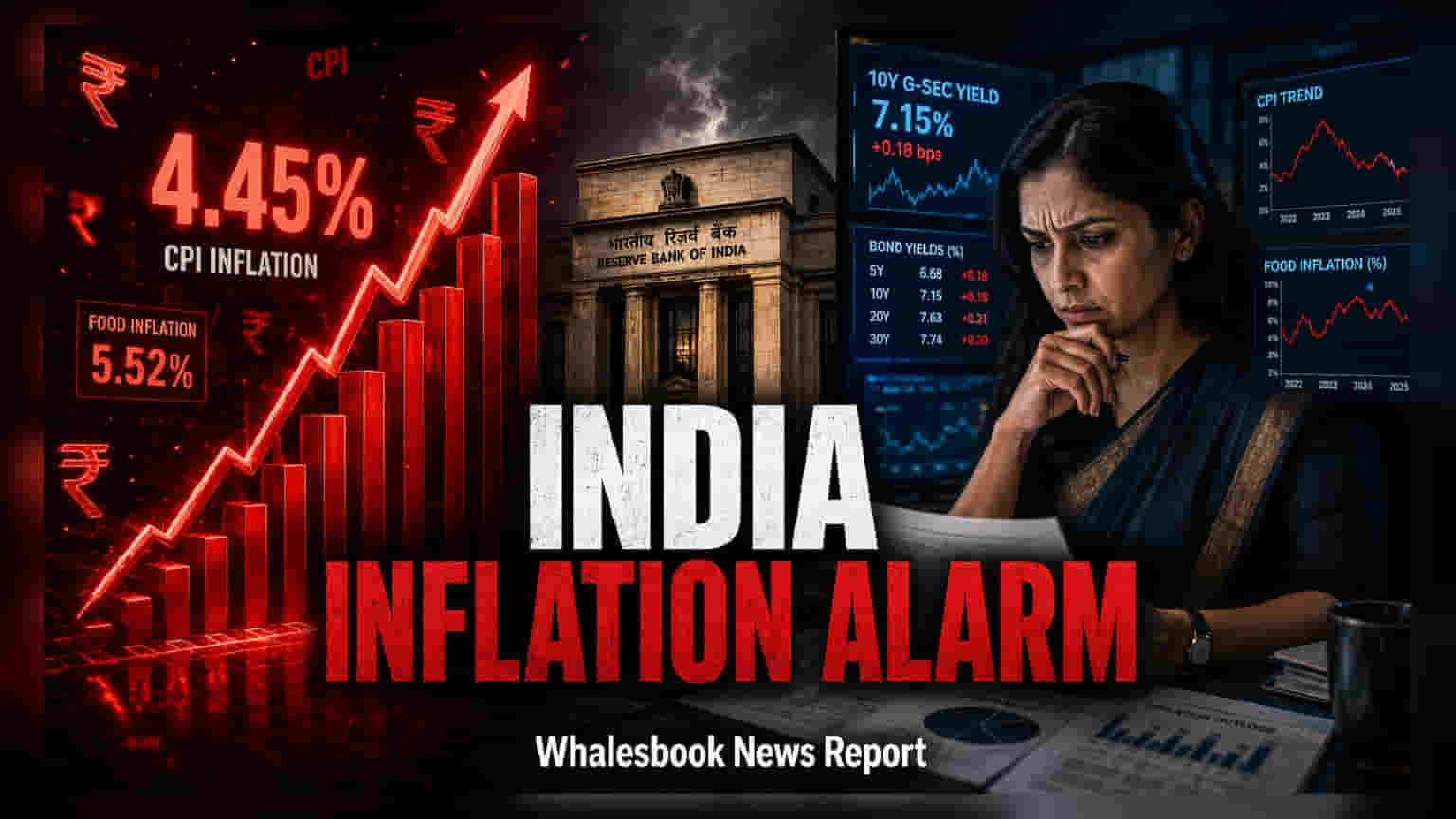
India's consumer inflation rose slightly to 4.45% in July, driven primarily by higher food prices, while core inflation remains a focus for economists. The Reserve Bank of India recently kept the repo rate unchanged at 5.25%, keeping a watch on price stability for the fiscal year.
India’s retail inflation rate, measured by the Consumer Price Index (CPI), increased to 4.45% in July 2026, compared to 4.38% in June. This uptick was largely influenced by rising food prices, which reached 5.52% for the month. While the reading remains within the broader expectations of market observers, it highlights the ongoing challenges in managing household expenses, particularly for essential items like cereals and pulses.
RBI Stance and Economic Outlook
The Reserve Bank of India (RBI) continues to navigate these price pressures with caution. In its recent August 2026 policy meeting, the Monetary Policy Committee decided to keep the repo rate—the rate at which the central bank lends money to commercial banks—steady at 5.25%. The central bank has adopted a neutral stance, emphasizing a data-driven approach to future policy decisions. As part of this assessment, the RBI also lowered its full-year inflation forecast for the 2026-27 fiscal year to 5%.
Economists note that while food prices are a visible challenge, "core inflation," which excludes volatile items like food and fuel, is also being monitored. There is concern that stronger domestic demand could allow companies to pass on higher input costs—such as rising metal and crude oil prices—to consumers in the coming months. This could potentially create a spillover effect where wholesale price increases eventually influence retail prices later in the year, particularly around the festive season.
Impact on Bond Markets
For investors, particularly those in the bond market, the current inflation data and the RBI's steady interest rate policy have provided some clarity. Bond yields for the 10-year government security are expected to trade within a range of 6.75% to 6.90%. Experts from firms such as Axis Mutual Fund suggest that near-term yields may have bottomed out, though they could trend higher over time depending on external factors. Global influences, such as crude oil price fluctuations and inflation data from the United States, remain significant factors that could influence Indian bond yields.
Investors may continue to track future inflation prints and RBI commentary to understand the timeline for any potential rate adjustments. While some economists anticipate no rate changes for the rest of the fiscal year, others are watching for potential shifts in early 2027, depending on how global commodity prices and domestic demand evolve.