 Whalesbook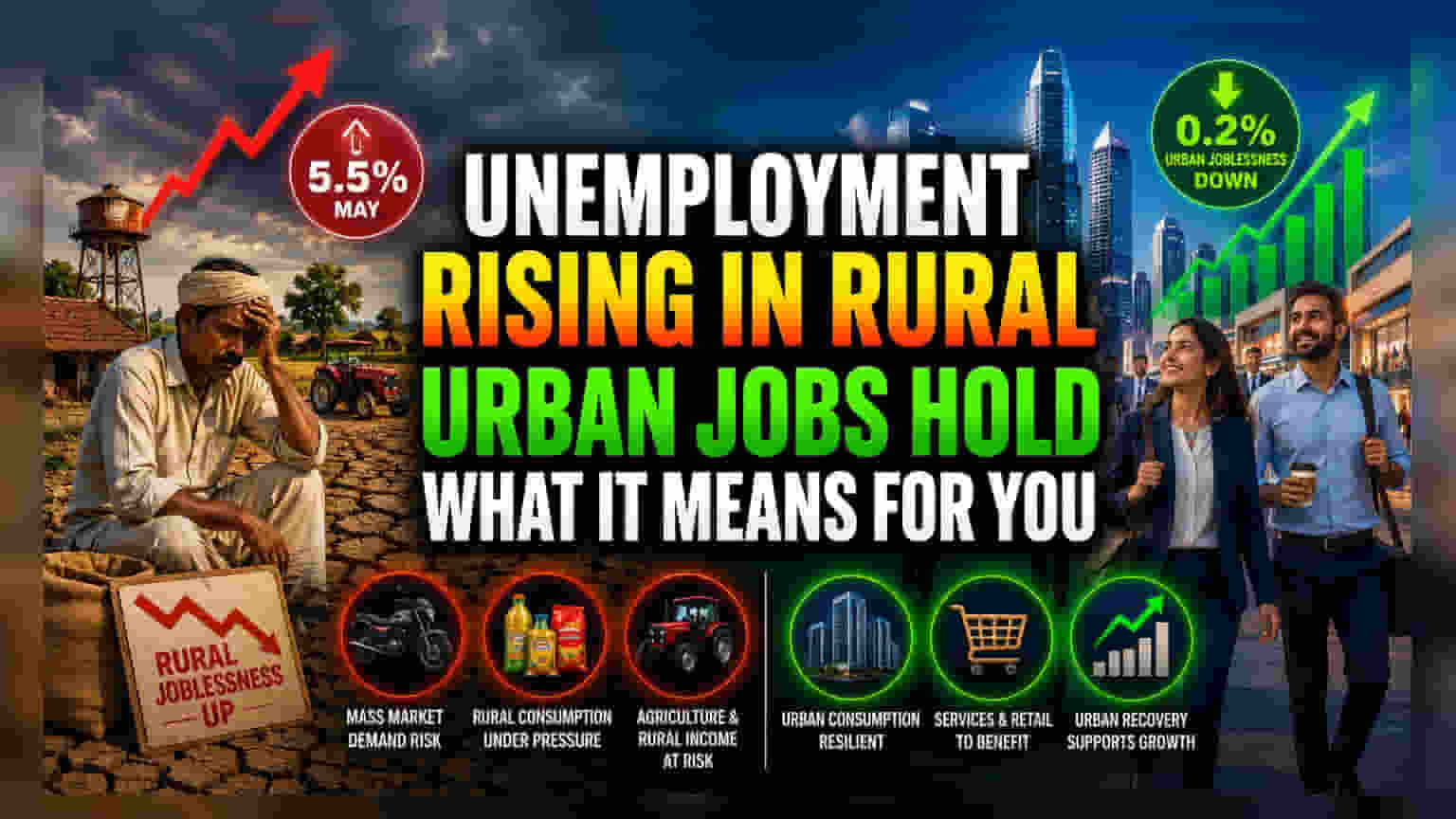
India’s unemployment rate remained steady at 5.5% in May, but a rising trend in rural joblessness is emerging. While urban employment shows signs of recovery, pressure on rural incomes could impact consumption patterns. Investors should monitor how this split affects sectors focused on rural versus urban demand.
What Happened
India's unemployment rate stood at 5.5% in May, showing stability when compared to the same month last year, according to data from the Periodic Labour Force Survey. While this annual figure suggests a steady job market, a closer look at month-to-month trends reveals a different reality. Since late February, the country has seen a persistent increase in joblessness, particularly within rural areas. This recent shift contrasts with the historical trend of employment growth typically seen during the agricultural sowing season.
The Rural-Urban Consumption Split
The most important takeaway for investors is the growing divide between rural and urban employment. Urban areas are showing resilience, with unemployment numbers dipping by 0.2% recently. This improvement in city-based jobs, particularly for women, suggests that urban consumption—which includes spending on services, retail, and premium products—may remain stable or even grow.
However, the situation in rural areas is more concerning. Rural men saw their unemployment rate climb by 1 percentage point to 5.2% in May, while rural women faced a 0.7% increase. When people in rural areas have fewer job opportunities, their ability to spend on goods and services naturally declines. This divergence is critical because many Indian companies rely heavily on the rural market for a large share of their sales.
Impact on Business Sectors
The health of the job market is directly linked to the performance of different business sectors. Companies that focus on mass-market products, such as entry-level motorcycles, affordable FMCG goods, and tractor manufacturers, often see their sales volume tied to rural purchasing power. If rural unemployment remains high, these businesses may face slower demand.
On the other hand, the urban recovery provides a different narrative. Sectors that cater to urban consumers—such as real estate, high-end electronics, dining, and financial services—might perform better if the urban job market continues to improve. Investors often look at this data to understand which companies are likely to face demand pressure and which might see growth.
Macro Factors and Risks
Several external factors are contributing to this uncertainty. The conflict in West Asia, which has persisted since early 2026, continues to influence global markets and potentially affects the cost of imports and fuel. For the Indian economy, these global pressures, combined with the risk of a below-normal monsoon, create a complex environment. A weak monsoon could further pressure agricultural productivity and rural income, creating a double whammy for rural demand. If the rural job market does not recover, it could act as a drag on overall economic growth, even if urban centers show strength.
What Investors Should Track
Going forward, the key is to watch how companies perform in their upcoming quarterly results, specifically regarding their volume growth in rural versus urban markets. Investors may monitor the monsoon progress, as it remains a vital factor for agricultural health and rural spending. Additionally, management commentary during earnings calls regarding demand trends in the hinterland will be essential to gauge if the rural job market weakness is translating into slower sales. The focus should be on whether the urban consumption recovery is strong enough to offset potential sluggishness in rural demand.

