

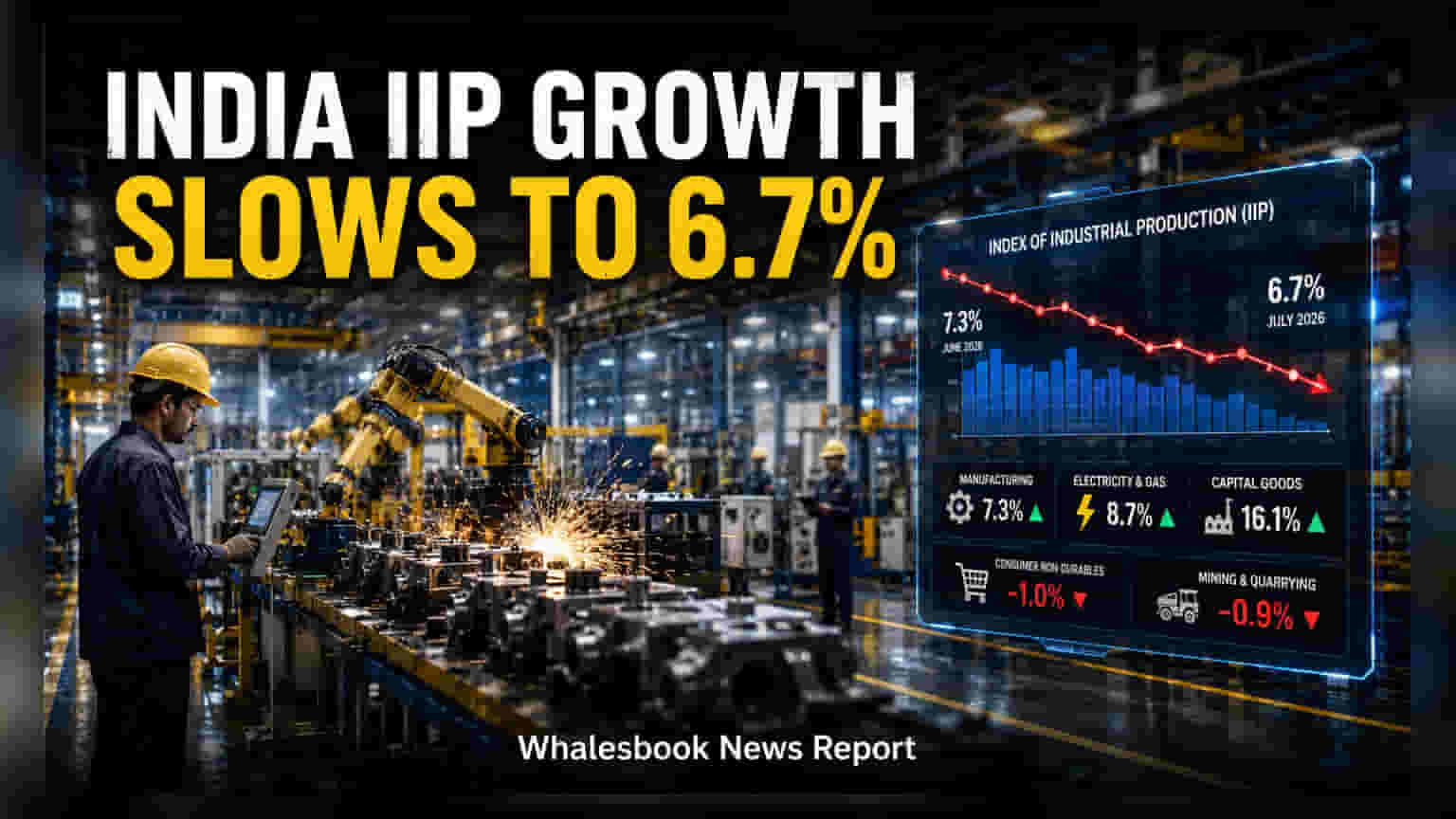
India’s industrial growth, measured by the Index of Industrial Production (IIP), slowed to 6.7% in July 2026 compared to 7.3% in June. While capital goods output surged, a contraction in mining and weak demand for consumer non-durables point to an uneven economic recovery. Investors are closely watching these mixed signals to gauge the sustainability of domestic industrial momentum.
India’s industrial activity saw a slight moderation in July 2026, with the Index of Industrial Production (IIP) registering a growth of 6.7%. This figure marks a deceleration from the 7.3% expansion recorded in June 2026, reflecting shifting dynamics within the broader economy. While the overall trend remains positive, the data highlights a distinct gap between the performance of heavy industrial segments and consumer-facing sectors.
The data reveals a two-speed recovery across the industrial landscape. On one side, the manufacturing sector, which holds the largest weight in the index, grew by 7.3%. This expansion was supported by a strong push in the production of electrical equipment and motor vehicles. The electricity and gas utility sectors also provided stability, posting an 8.7% growth, indicating that basic industrial and residential power demand remains steady.
Investment-Led Growth vs Consumer Caution
One of the most significant insights from the July data is the strength in investment-related output. Capital goods production, which tracks spending on machinery and infrastructure, climbed by 16.1%. This suggests that corporate India continues to spend on building new capacity and upgrading facilities. Furthermore, core sector growth, which encompasses infrastructure-related industries, eased to 5.4% in July from 6.0% in June, showing continued, albeit slightly slower, infrastructure activity.
In contrast, the consumer side of the economy showed signs of hesitation. The consumer non-durables segment, which includes items like food, fuel, and everyday household products, contracted by 1.0%. This decline, alongside a 0.9% contraction in the mining and quarrying sector, highlights the risks of uneven growth. The dip in non-durables suggests that households may be becoming more selective with their spending, likely due to concerns over inflation or broader economic uncertainty.
Monitoring Industrial Risks
For investors, the recent industrial figures must be viewed alongside other economic indicators. The Manufacturing Purchasing Managers' Index (PMI) for July declined to 53.5, signaling that while the sector is expanding, the pace of growth is moderating. This aligns with the IIP data and suggests that companies are navigating a more challenging environment.
Looking ahead, the sustainability of industrial growth will depend on several external and domestic factors. Businesses continue to navigate potential pressure from global energy prices, freight costs, and ongoing geopolitical disruptions that impact raw material supply chains. The key monitorable for the coming months will be whether the strong investment in capital goods can successfully offset the caution seen in consumer spending, or if the moderation in industrial activity continues. Investors will also watch for signs of recovery in the mining sector and a stabilization in consumer demand to determine the durability of this industrial trend.