 Whalesbook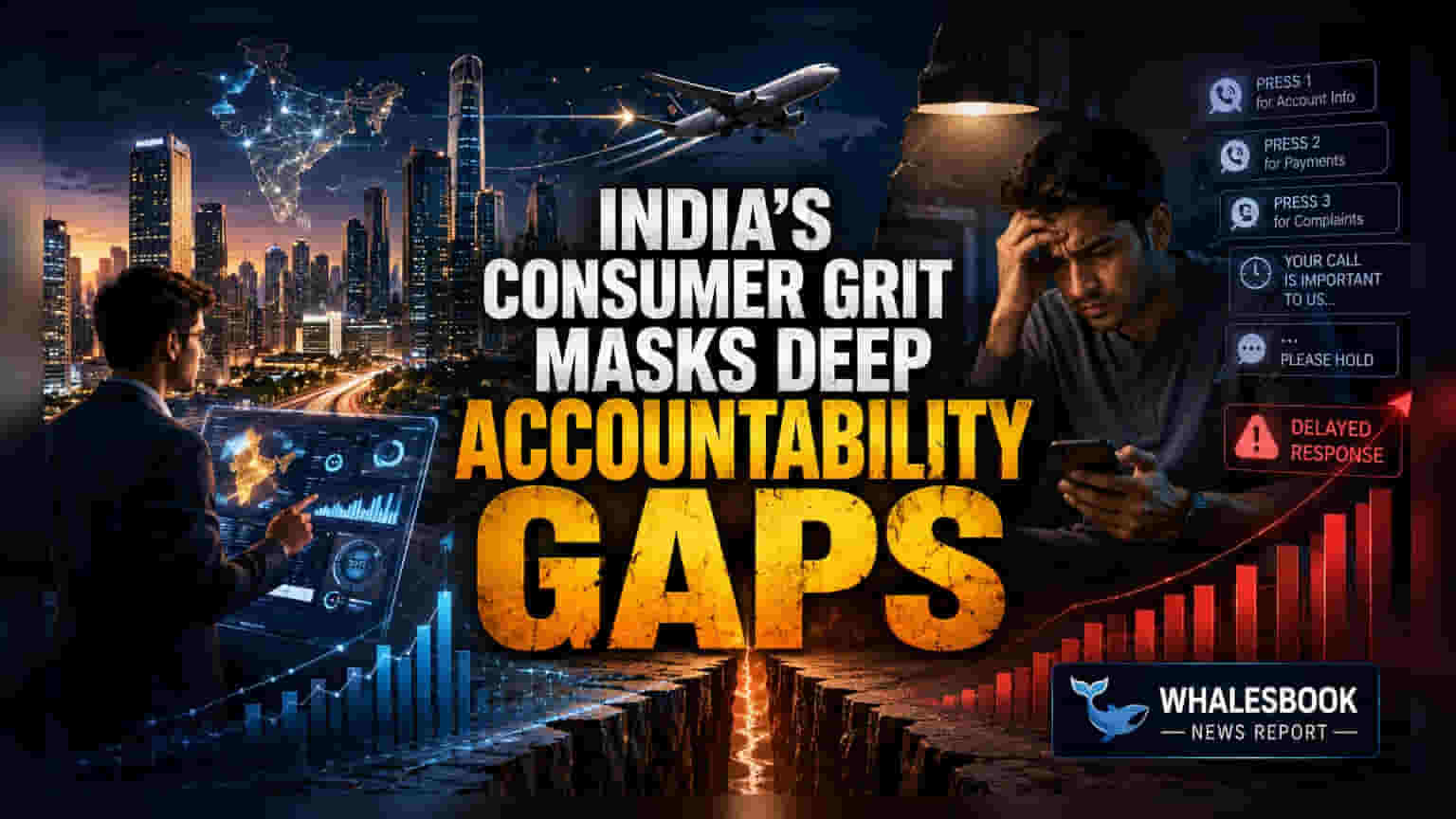


The Institutional Efficiency Gap
The prevailing narrative of Indian economic vitality is increasingly challenged by the operational reality faced by its urban consumer base. While aggregate consumption data reflects confidence, the mechanics of service delivery suggest a structural misalignment. Institutional response times for service recovery remain significantly longer than global benchmarks, often requiring social media escalation to bypass standard support channels. This reliance on public shaming to achieve basic contractual fulfillment reveals a lack of internalized governance within the private sector, where customer retention is prioritized through marketing rather than procedural reliability.
The Hidden Cost of Scalability
Rapid corporate scaling has frequently come at the expense of standardized service quality. In sectors like aviation, real estate, and private healthcare, the disconnect between front-end digital interfaces and back-end fulfillment processes creates a high-friction environment. Investors often overlook this as a temporary cost of acquisition, yet the data suggests otherwise. Companies that fail to institutionalize consumer dignity are observing higher churn rates in segments where premium options exist. Unlike mature markets where service-level agreements are treated as core financial obligations, many Indian entities treat these as discretionary, leading to a precarious reliance on consumer inertia to maintain profitability.
Structural Risks and Margin Compression
The persistence of these accountability gaps introduces a distinct risk for institutional investors. As the regulatory environment slowly matures, bolstered by more stringent oversight from bodies like the Consumer Protection Authority, the cost of non-compliance is likely to rise. Firms currently operating with high structural friction are vulnerable to future margin compression if they are forced to re-engineer service workflows to meet shifting legal standards. Furthermore, the reliance on automated systems without human oversight—a common shortcut for cost-reduction—has proven insufficient in managing complex service disruptions, leading to a loss of brand premium that is difficult to recapture once market maturity sets in.
The Future Outlook
Expectations are shifting as the demographic profile of the Indian investor and consumer becomes more globally aligned. The normalization of frustration is an unsustainable growth strategy. Companies that proactively audit their grievance redressal mechanisms and prioritize operational transparency will likely command higher valuation multiples over the next decade. Reliability is transitioning from a competitive advantage to a fundamental prerequisite for sustained institutional investment, as global capital increasingly filters out entities that cannot demonstrate long-term stakeholder stewardship.