

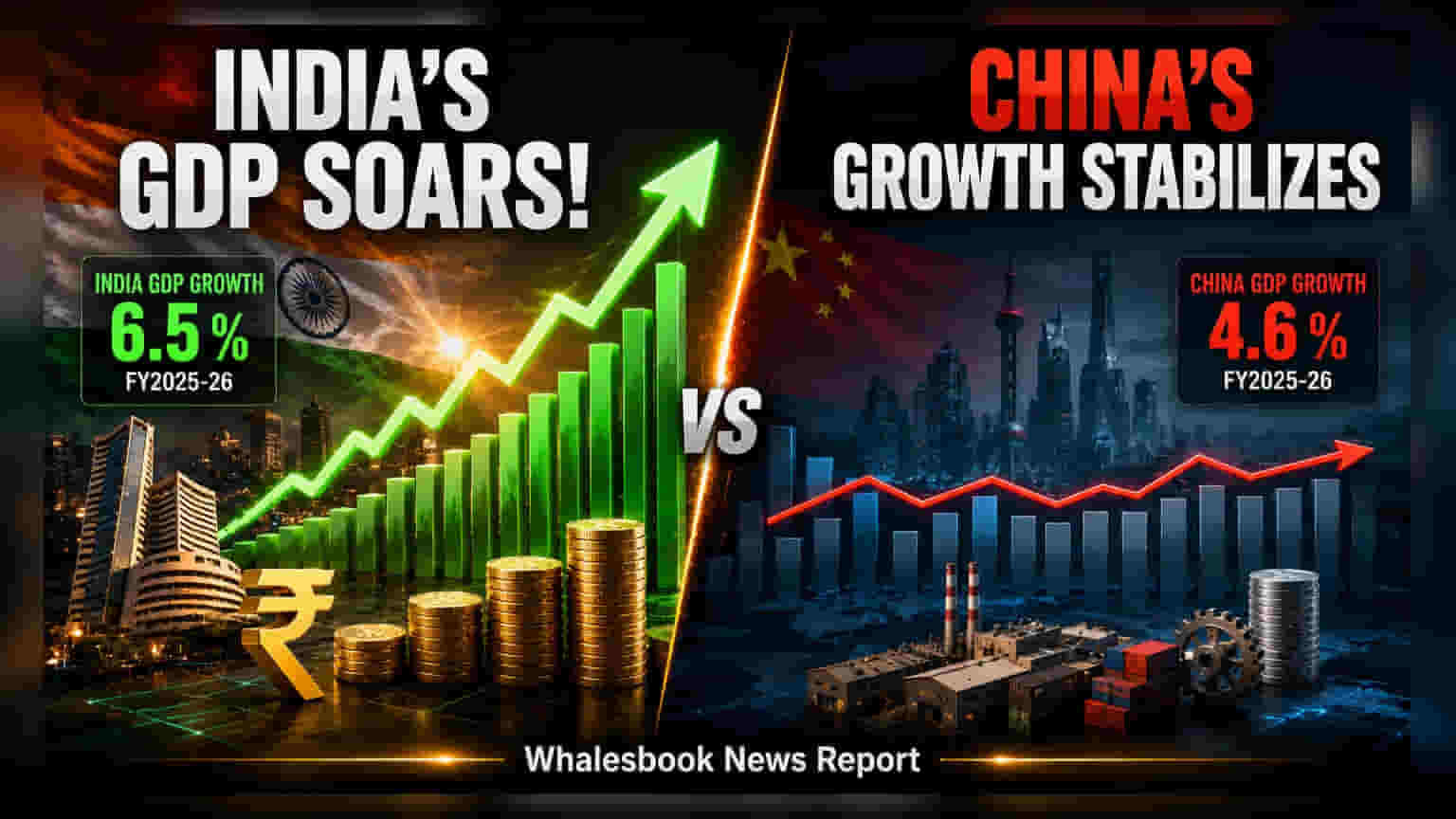
India’s economy continues to grow at a faster percentage rate than China’s, but a large gap in absolute economic size remains. For investors, this growth story must be weighed against current market risks like commodity price volatility, weak corporate earnings, and global geopolitical pressures that are affecting sentiment.
India has consistently recorded higher GDP growth rates compared to China over the last decade, with current projections suggesting this momentum will likely continue through 2030. While this is a significant economic milestone, understanding the true impact on the market requires looking beyond just the percentage growth rates. The divergence in economic trajectory is clear, but the absolute size difference between the two economies remains substantial.
While India is currently among the fastest-growing major economies, China’s economy is estimated to be roughly five times larger in nominal terms. This disparity is critical for investors to understand. Even if China grows at a lower percentage, its massive base means it still adds a significant amount of economic value in dollar terms each year. For India to close this absolute gap, it must sustain high growth rates for a much longer period while successfully navigating global and domestic hurdles.
Different Economic Models
The two nations operate on fundamentally different engines of growth. India’s expansion is heavily driven by domestic consumption and services, which account for about 61% of its GDP. This focus makes the economy more resilient to global export slumps but also ties growth closely to internal demand, inflation levels, and consumer confidence. In contrast, China’s growth has historically relied on state-led investment, industrialization, and exports, though the country is now attempting a difficult transition toward higher-tech manufacturing amidst a struggling property sector.
Current Risks and Market Realities
Investors should be aware that the broader growth narrative does not eliminate short-term risks. The Indian market is currently navigating several headwinds that could dampen the benefits of this high-growth environment. Geopolitical tensions, particularly in West Asia, have created uncertainty regarding global supply chains and energy security. This is directly linked to commodity price volatility, which can put pressure on corporate profit margins and inflation.
Furthermore, the Indian stock market has faced pressure in recent times due to weak domestic corporate earnings and volatility caused by foreign institutional investor (FII) outflows. When corporate profitability is under pressure, even a high GDP growth rate may not immediately translate into stock market performance. Additionally, monsoon-related uncertainties and potential agricultural output fluctuations remain factors that can impact rural consumption, a key pillar of India's growth story.
What Investors Should Monitor
The key to India's continued outperformance lies in its ability to convert high GDP growth into tangible industrial and job growth, rather than just consumption. Investors should closely track upcoming quarterly corporate earnings to see if companies can protect their profit margins amidst high input costs. Additionally, movements in global commodity prices, the trajectory of inflation, and any policy updates from the Reserve Bank of India regarding interest rates will be important indicators of how sustainable this growth momentum will be in the coming quarters.