 Whalesbook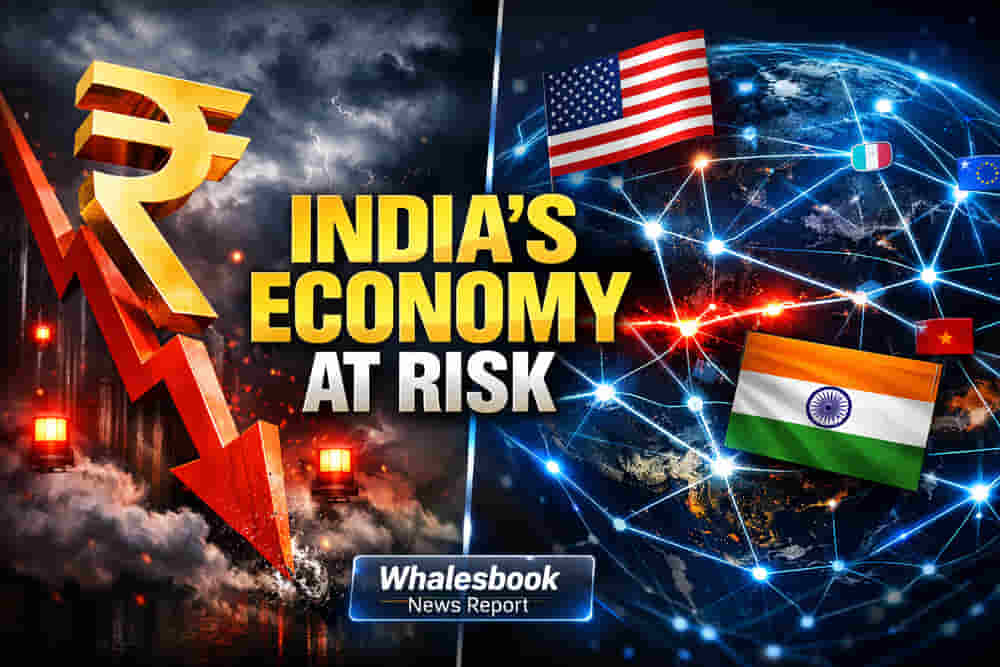
Diplomacy Crucial for India's Economic Future
Former Governor of the Reserve Bank of India and Chairman of the Prime Minister's Economic Advisory Council, C. Rangarajan, has issued a stark warning regarding India's economic trajectory. He emphasized that addressing key diplomatic challenges, particularly the significant 50% tariffs imposed by the United States, is paramount to reducing the nation's economic vulnerability. Speaking at the 108th Annual Conference of the Indian Economic Association, Rangarajan stated that without effective diplomatic solutions, India faces a challenging economic situation.
The Peril of Over-Dependence
Rangarajan highlighted the risks associated with being overly reliant on exports to the United States. He argued that India must leverage its economic expertise to foster significant diplomatic advancements. This strategic shift is necessary to mitigate potential economic shocks and ensure stable growth.
Rupee's Fall and Investor Confidence
The depreciation of the Indian Rupee was also a key concern. Rangarajan attributed the recent fall to capital outflows, driven by international investors' lack of confidence stemming from strained India-US relations. He stressed that the decline in the Rupee's value cannot be overlooked, as it directly impacts investor sentiment and the broader economy.
Contextualizing GDP Growth
Regarding Gross Domestic Product (GDP) growth, Rangarajan advised viewing recent figures within the context of the COVID-19 pandemic. While India averaged 6.1% growth between fiscal years 2012-13 and 2023-24, he noted that an additional 1.3% growth is needed to reach desired development levels. The recent expansion of approximately 7.3% was partly to compensate for pandemic-induced losses.
Drivers for Future Growth
To achieve its ambitious development targets by 2047, Rangarajan indicated that India must sustain annual growth of 1-2% above current levels. He believes this exponential growth hinges on multiple factors. A significant increase in private sector investment, by at least 2%, is crucial. While public capital expenditure has supported recent gains, it cannot be the sole driver indefinitely. A revival in private investment, beyond mere interest-rate cuts, is essential.
Technology as a Competitive Edge
Furthermore, Rangarajan underscored the unavoidable role of technology adoption, including cutting-edge fields like Artificial Intelligence (AI), in maintaining competitiveness. He noted that AI, unlike previous industrial innovations, impacts all sectors simultaneously. While it may disrupt jobs, effective deployment could unlock substantial productivity gains.
Impact: 7
This news carries significant weight as it addresses macroeconomic vulnerabilities, international trade relations, currency stability, and growth drivers critical for Indian businesses and investors.
Difficult Terms Explained
- Tariffs: Taxes imposed by a government on imported goods, increasing their price for domestic consumers.
- Economic Vulnerability: The susceptibility of an economy to negative shocks or external pressures.
- Capital Outflows: The movement of financial assets out of a country, often due to decreased investor confidence.
- Gross Domestic Product (GDP): The total monetary value of all finished goods and services produced within a country's borders in a specific time period.
- Artificial Intelligence (AI): A branch of computer science focused on creating systems that can perform tasks typically requiring human intelligence.