 Whalesbook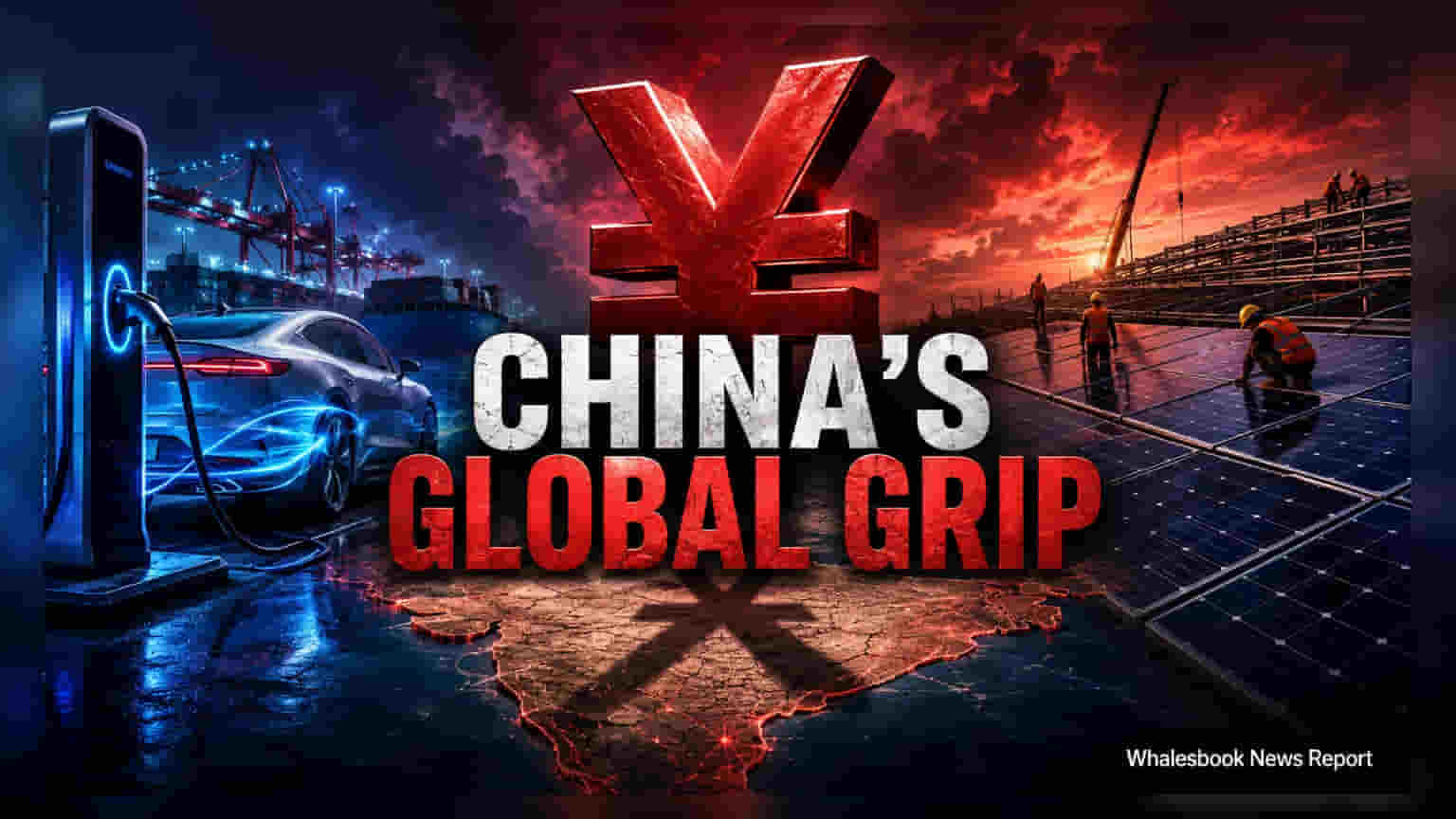


India's Deepening Reliance on China
India's imports from China have surged to $131 billion in FY26, highlighting a persistent and growing dependency across key sectors. This reliance poses a strategic vulnerability to India's goals of achieving technological and manufacturing self-sufficiency.
EV Battery Bottleneck
China dominates global EV battery production, with CATL and BYD controlling nearly 70% of the market. Indian companies like Reliance Industries and Adani Group are in talks with CATL for components. However, India's domestic battery manufacturing capacity lags far behind demand. The Advanced Chemistry Cell (ACC) Production-Linked Incentive (PLI) scheme has seen slow commissioning, with only 2.8% of its target capacity online as of October 2025. This forces continued reliance on imports, often from China, despite India's PLI scheme. Lithium imports alone reached $1.2 billion in 2025. India has also placed anti-dumping duties on Chinese solar cells, prompting some Chinese firms to export cells rather than finished modules to India.
Solar Supply Chain Under Chinese Control
China controls an estimated 80-85% of the global solar supply chain, including panels, wafers, cells, and polysilicon. In 2023, China produced 98% of solar wafers, 92% of cells, and 85% of panels worldwide. While India is increasing its solar manufacturing capacity, it still heavily relies on Chinese cells. India's June 2026 mandate for locally-made solar cells aims to reduce imports, but domestic cell production is insufficient. Imports of solar cells from China rose 47.17% year-on-year in the first 11 months of 2025, totaling over 49 GW. China also controls about 95% of global solar wafer capacity.
Smartphone Components: A Critical Nexus
India's smartphone manufacturing ambitions are also tied to China. While India's share of global iPhone assembly is set to reach 28% by 2026 and its component exports to China are growing, foundational components largely come from China, which supplies about 60% of the world's smartphones. Chinese brands like Huawei are strong in their domestic market, while Apple faces competition. India's government has eased some restrictions on Chinese imports for critical equipment in sectors like power and coal due to project delays and shortages.
Trade Imbalance and Competitive Challenges
The trade imbalance with China has grown significantly, with imports rising from $65 billion in FY20 to $131 billion in FY26. Government policies have struggled to overcome this structural dependence. While India's domestic manufacturing capacity is expanding, it's outpaced by demand. The ACC PLI scheme for battery production has faced delays, with beneficiaries requesting extensions due to supply chain issues, often involving Chinese equipment. China's massive industrial scale and state subsidies, totaling over $50 billion for solar manufacturers between 2011 and 2023, create a significant cost advantage, making it difficult for India to compete. Chinese firms have adapted to Indian anti-dumping duties by increasing exports of cells and wafers.
Geopolitical and National Security Risks
India's over-reliance on China for critical components creates substantial vulnerabilities. Geopolitical tensions or trade disputes could disrupt the flow of essential parts, impacting India's EV, solar, and smartphone industries. The large import bill signifies capital outflow, and China's pricing power can hinder domestic manufacturing. While Indian conglomerates are pursuing partnerships, China may be hesitant to share advanced technology. This concentration of critical manufacturing in China raises long-term national security concerns for strategic sectors.
Path Forward
India is pursuing localization through PLI schemes and solar cell mandates, with companies like Reliance and Adani expanding battery partnerships. However, China's manufacturing scale, cost competitiveness, and technological lead present a major challenge. Overcoming decades of supply chain dominance will be a lengthy process requiring sustained industrial policy, investment, and strategic maneuvering.