 Whalesbook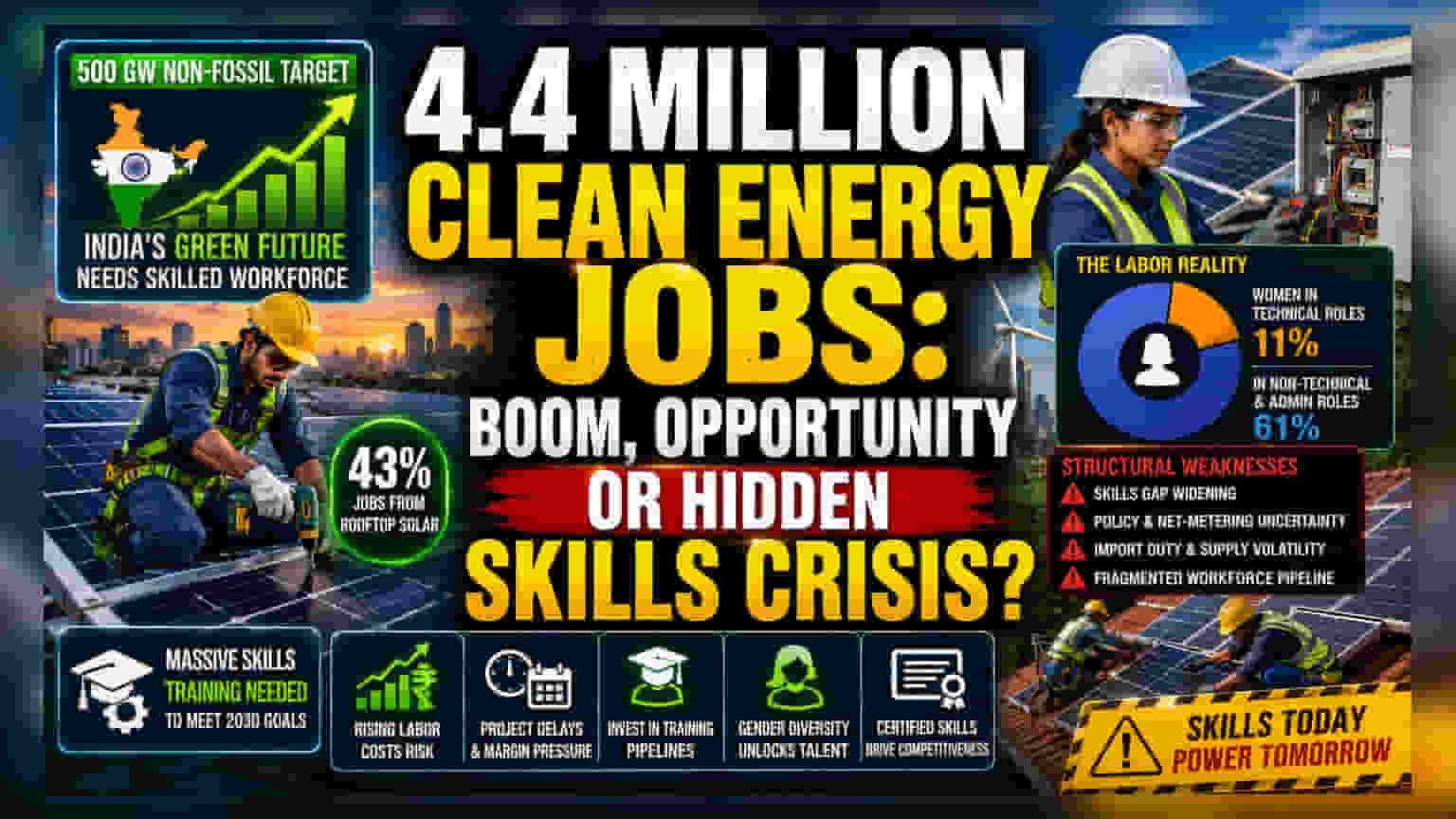


The Labor Reality of Energy Transition
While the headline figure of 4.4 million jobs provides a optimistic tailwind for India's 500 GW non-fossil capacity goal, the underlying economic mechanics reveal a more complex narrative. The heavy reliance on rooftop solar—projected to account for 43% of total workforce expansion—shifts the labor requirement from large-scale, centralized utility projects to a highly fragmented, geographically dispersed installation market. This transition demands a massive decentralization of technical training that current infrastructure is struggling to support.
Scaling the Skills Hurdle
Market data suggests that while clean energy jobs grew significantly between FY23 and FY26, the quality of these roles remains a point of friction. The sector is experiencing a divergence between the demand for certified technicians and the existing supply of skilled labor. Unlike utility-scale wind or hydro projects which utilize specialized, consolidated engineering teams, rooftop solar necessitates a high-volume, low-margin service model. If the workforce pipeline cannot keep pace with the aggressive installation targets mandated by federal policy, investors should anticipate rising labor costs and potential project delays, which would inevitably compress margins for the primary solar EPC players.
The Forensic Bear Case: Structural Weaknesses
Beyond the optimistic job creation projections, the sector faces a significant institutional barrier regarding labor demographics. With women occupying only 11% of the technical workforce, the industry is operating with a self-imposed talent constraint. The concentration of female employees in non-technical, administrative roles—61% according to recent findings—suggests that firms are failing to tap into a significant portion of the domestic human capital pool. Furthermore, the reliance on primary survey data for these growth projections often masks the volatility of the solar supply chain. Regulatory flux, particularly concerning net-metering policies and import duties on photovoltaic modules, creates a stop-start environment that discourages the long-term workforce retention required to meet 2030 targets.
Future Outlook and Operational Risks
Moving forward, the success of India's green employment narrative will depend less on nominal job numbers and more on the formalization of vocational training. Analysts remain focused on whether the Ministry of New and Renewable Energy can move beyond policy incentives toward creating a standardized credentialing system. Without this, the sector risks a persistent skills shortage that threatens to derail the efficiency of the rooftop solar rollout. Companies that invest in proprietary training pipelines or gender-inclusive recruitment will likely gain a competitive advantage in a labor-tight environment, while those relying on external, unvetted contract labor will face mounting operational risks as project scale intensifies.