

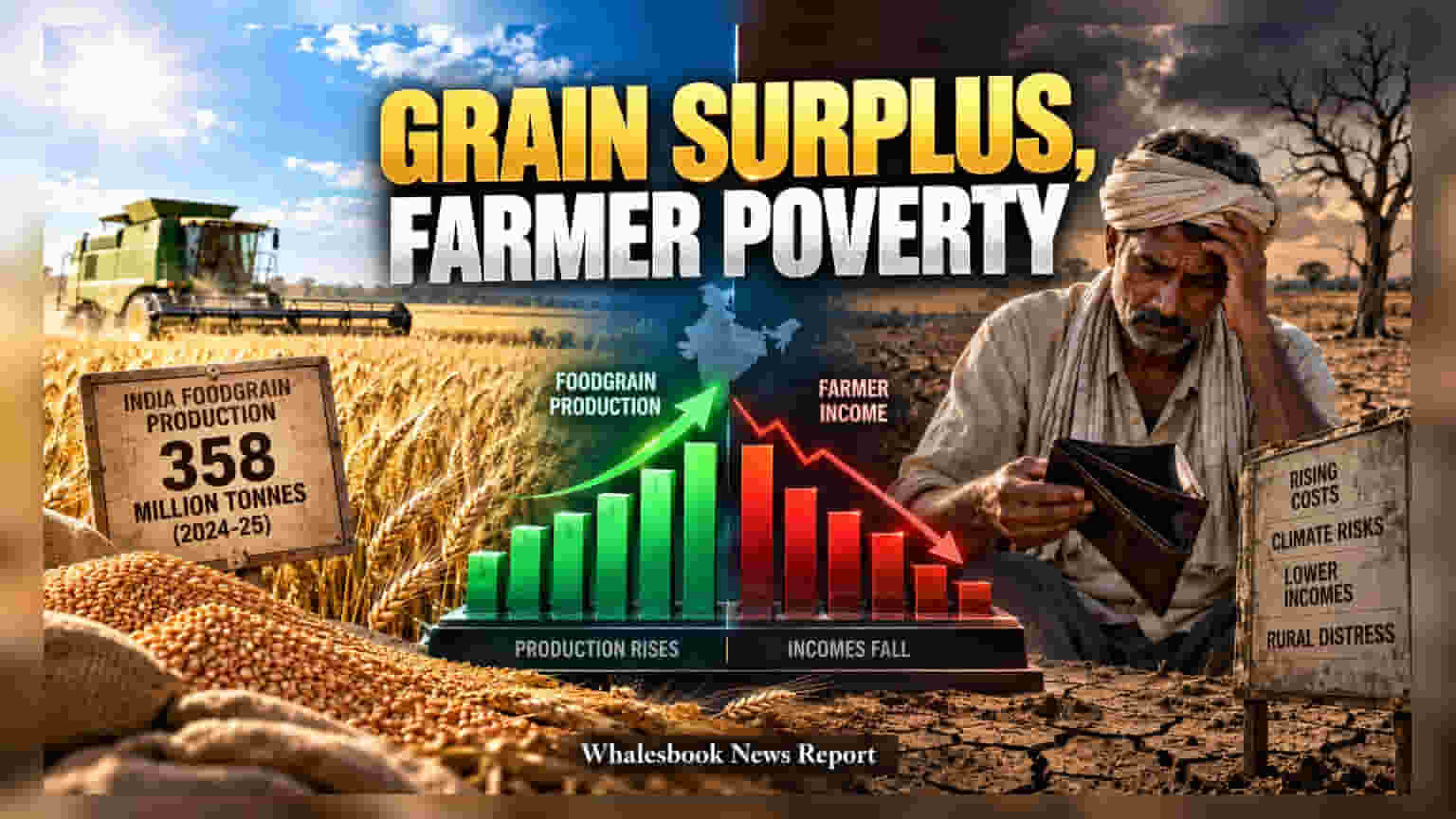
India’s foodgrain production reached 358 million tonnes in 2024-25, yet farmer income remains stagnant as cultivation costs rise. This shift toward climate-resilient farming is forcing agricultural input companies to prioritize high-value products over simple volume growth.
India’s foodgrain production reached a record 358 million tonnes in the 2024-25 period. While this massive output ensures national food security, it has not directly translated into higher prosperity for farm households. Current data shows that agricultural income remains under pressure, with many rural families now relying on non-farm earnings for a significant portion of their total income.
For investors tracking the agricultural sector, this creates a specific set of shifts. The traditional business model of selling high-volume, generic fertilizers or seeds is changing. Because farmers are struggling to manage income against rising climate risks, the demand is shifting toward products that offer better resilience and higher value.
The private sector has been quick to notice this shift. Major seed and chemical companies are moving away from simple yield-based products and focusing on hybrid varieties that can withstand unpredictable weather. This transition toward higher-value products is why private firms are gaining ground in segments like hybrid vegetables, where farmers are willing to pay for innovation that provides a safer harvest compared to traditional varieties.
Climate volatility remains a significant operational risk for the sector. Irregular monsoon patterns and recurring climate events like El Nino make the sales cycle for agri-input companies volatile. If a major crop fails due to weather, the demand for high-value inputs can drop sharply in that region, which directly impacts the quarterly revenue of these companies.
Moving forward, the focus for investors is not just on total national output. Instead, it is important to watch how agri-input firms adapt their research and development spending. Companies that successfully pivot toward climate-smart products are likely to maintain a competitive edge. Investors may monitor whether agricultural firms can successfully transition from selling basic inputs to providing integrated solutions that help farmers manage soil health and water usage, as these factors will determine the long-term sustainability of their business models.