

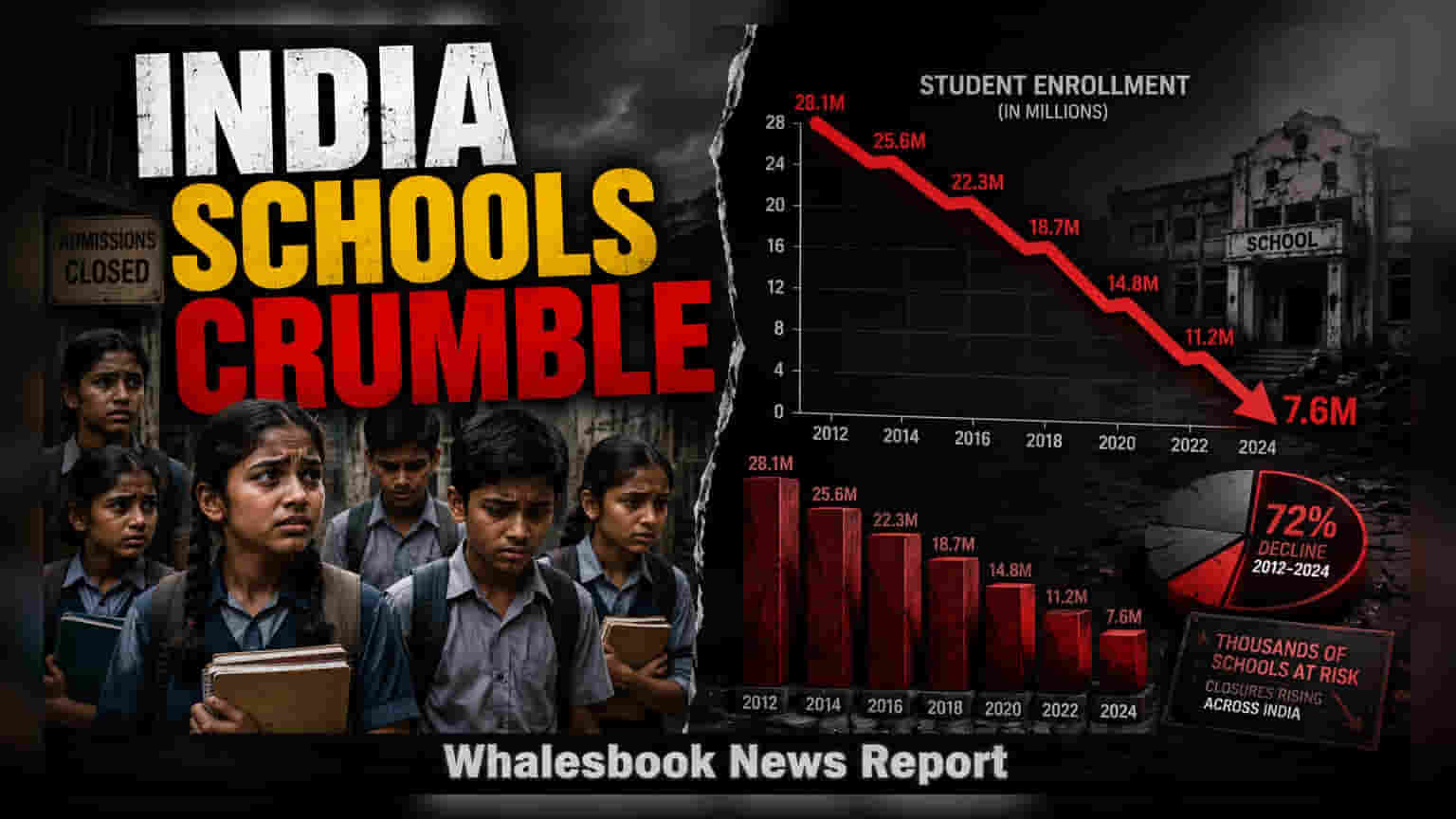
India’s government school system is seeing a significant decline, with enrollment dropping by 2.26 crore students and 94,000 schools closing over the past decade. While officials describe this as "school rationalization" to optimize resources, the trend highlights a major migration toward private institutions. This shift creates distinct implications for education accessibility and indicates a structural change in the Indian education sector that market watchers are closely tracking.
India is witnessing a significant structural shift in its public education system as thousands of government-run institutions close their doors. Data indicates that nearly 94,000 government and government-aided schools have shut down over the past decade, averaging about 25 closures every day. This contraction is part of a broader trend that has seen the share of total student enrollment in government schools fall from 71% in 2005 to 49.24% in 2024-25.
The official reasoning provided by government bodies, such as Niti Aayog, for these closures is "school rationalization" or "consolidation of schooling infrastructure." The objective is to combine smaller, under-utilised schools into larger, better-equipped institutions to improve efficiency and resource use. In the 2025-26 academic year alone, the number of elementary-level government schools declined by nearly 10,000 compared to the previous year.
For the education sector and the broader economy, this migration toward private education is a critical development. As public school enrollment has dropped by 2.26 crore students nationally, there has been a corresponding rise in demand for private schooling. This shift is reshaping the competitive landscape for private education providers, ranging from budget school chains to technology-enabled learning platforms, as parents increasingly turn to private institutions to seek better learning outcomes.
However, this transition is not without significant challenges. Experts and community advocates have raised concerns that closing local government schools increases the distance children must travel to reach the nearest institution. This is particularly difficult for families in rural or marginalized areas and is often cited as a key reason for higher dropout rates, especially among girls. Furthermore, the persistent infrastructure gaps in remaining government schools—such as shortages of clean water, functional toilets, and qualified teachers—continue to undermine the quality of education for the millions of students who remain in the public system.
From an economic perspective, the long-term impact of this shift remains a point of debate. While consolidation aims to save fiscal resources, the rising cost of private education places a heavier financial burden on low-income households. Moving forward, observers will be tracking how the government balances the need for fiscal efficiency with the mandate for equitable access to education. Key monitorables include the rate of private sector enrollment growth, the impact of these changes on literacy and mathematical skills in rural areas, and any potential policy adjustments to address the widening gap in educational infrastructure.