 Whalesbook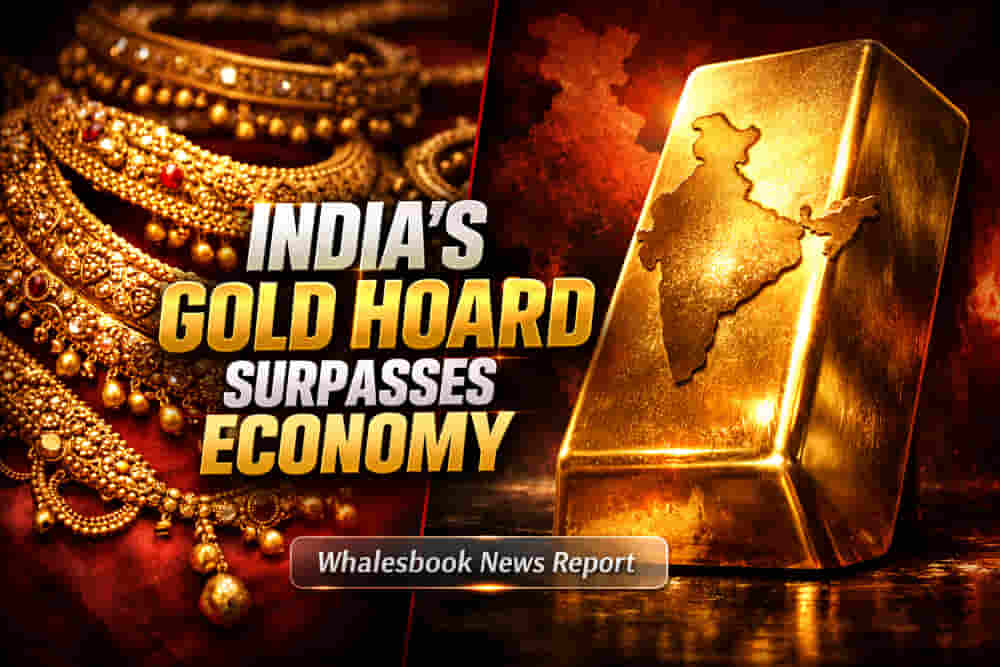


India's Dazzling Dilemma: Household Gold Exceeds National Economy
India's deep-rooted connection with gold has reached a monumental scale. Recent estimates suggest that the collective value of gold held within Indian households might have soared beyond $5 trillion, a figure that could now dwarf the nation's entire Gross Domestic Product (GDP). This extraordinary level of wealth, primarily comprising family heirlooms and jewellery, highlights a unique aspect of India's economic landscape where personal security and memory often take precedence over financial investment.
The Wealth Effect Paradox
As global gold prices climb, reaching peaks above $4,500 per ounce, the paper wealth of Indian households expands dramatically. Morgan Stanley research indicates that Indian families hold around 34,600 tonnes of gold. This vast accumulation, valued at over India's IMF-estimated GDP of roughly $4.1 trillion, theoretically contributes to a positive 'wealth effect'. This phenomenon suggests that increased perceived wealth can boost consumer confidence and spending.
However, the reality on the ground presents a more complex picture. A significant majority, estimated between 75% and 80%, of this household gold is held in the form of jewellery. This form is often cherished for its sentimental value and acts as a form of insurance, rather than being a readily liquidated asset for consumption or investment. Research by Emkay indicates that past surges in gold prices have not historically led to a substantial increase in household consumption, underscoring a behavioral tendency to preserve rather than spend.
India's Position in the Global Gold Market
Despite the behavioral nuances, India solidifies its status as a global gold powerhouse. It ranks as the second-largest consumer of gold worldwide, capturing approximately 26% of global demand, closely trailing only China. The World Gold Council notes a subtle shift in demand patterns: while jewellery remains dominant, investment demand for gold bars and coins has seen a notable rise. This segment now accounts for nearly a third of retail demand, up from about 24% five years ago, indicating a growing perception of gold as a financial hedge.
Adding to the national gold reserves, the Reserve Bank of India has been steadily increasing its holdings. Since 2024, the central bank has acquired around 75 tonnes, boosting its total reserves to approximately 880 tonnes. This represents nearly 14% of India's foreign exchange reserves, according to Morgan Stanley's analysis.
Drivers and Dilemmas
Geopolitical tensions, inflation concerns, and financial instability are perennial drivers that push both individual investors and nations towards the perceived safety of gold. Recent substantial purchases by central banks, particularly China's diversification away from dollar-denominated assets, have further fueled the rally. The gold market is thus influenced by a confluence of global anxieties and strategic economic maneuvers.
Yet, gold presents an economic paradox for India. It is a substantial store of value that largely remains economically idle, generating no income and contributing little to productivity or capital formation. Government initiatives like gold Exchange Traded Funds (ETFs), Sovereign Gold Bonds, and digital gold aim to redirect these household savings into more productive financial instruments. The success of these programs, however, has been limited by the deeply ingrained cultural role of gold as a tangible symbol of security and a readily accessible asset during times of need.
This creates a persistent dilemma: the immense value locked in household gold impacts the current account deficit and currency stability through imports, while simultaneously, gold acts as a vital liquidity source within a 'shadow financial system'. The tension between its role as idle wealth and essential security defines India's complex relationship with gold.
Impact
This news could have a moderate impact on the Indian stock market. A significant portion of household wealth tied up in non-productive gold assets means less capital available for investment in equities and other productive sectors. However, it also suggests potential for future consumption if gold is monetized or used as collateral. The sheer scale of this wealth could influence consumer spending patterns and demand for various goods and services. It highlights the importance of financial inclusion and channeling savings into the formal economy.
Impact Rating: 7/10
Difficult Terms Explained
Gross Domestic Product (GDP): The total monetary value of all the finished goods and services produced within a country's borders in a specific time period.
Wealth Effect: An economic phenomenon where a rise in the perceived value of assets (like gold, stocks, or real estate) leads to increased consumer spending because people feel wealthier.
Current Account Deficit: A country's balance of payments on its current account, which includes trade in goods and services, income, and direct payments. A deficit means a country is importing more than it exports.
Shadow Financial System: Financial activities and institutions that operate outside the traditional regulated banking system, often providing credit or investment opportunities but with less oversight.
Gold ETF: An Exchange Traded Fund that tracks the price of gold. Investors can buy shares of the ETF, which are backed by physical gold, allowing them to invest in gold without holding the physical metal.
Sovereign Gold Bonds: Government securities denominated in grams of gold, issued by the Reserve Bank of India on behalf of the Government of India. They offer an alternative to holding physical gold.