

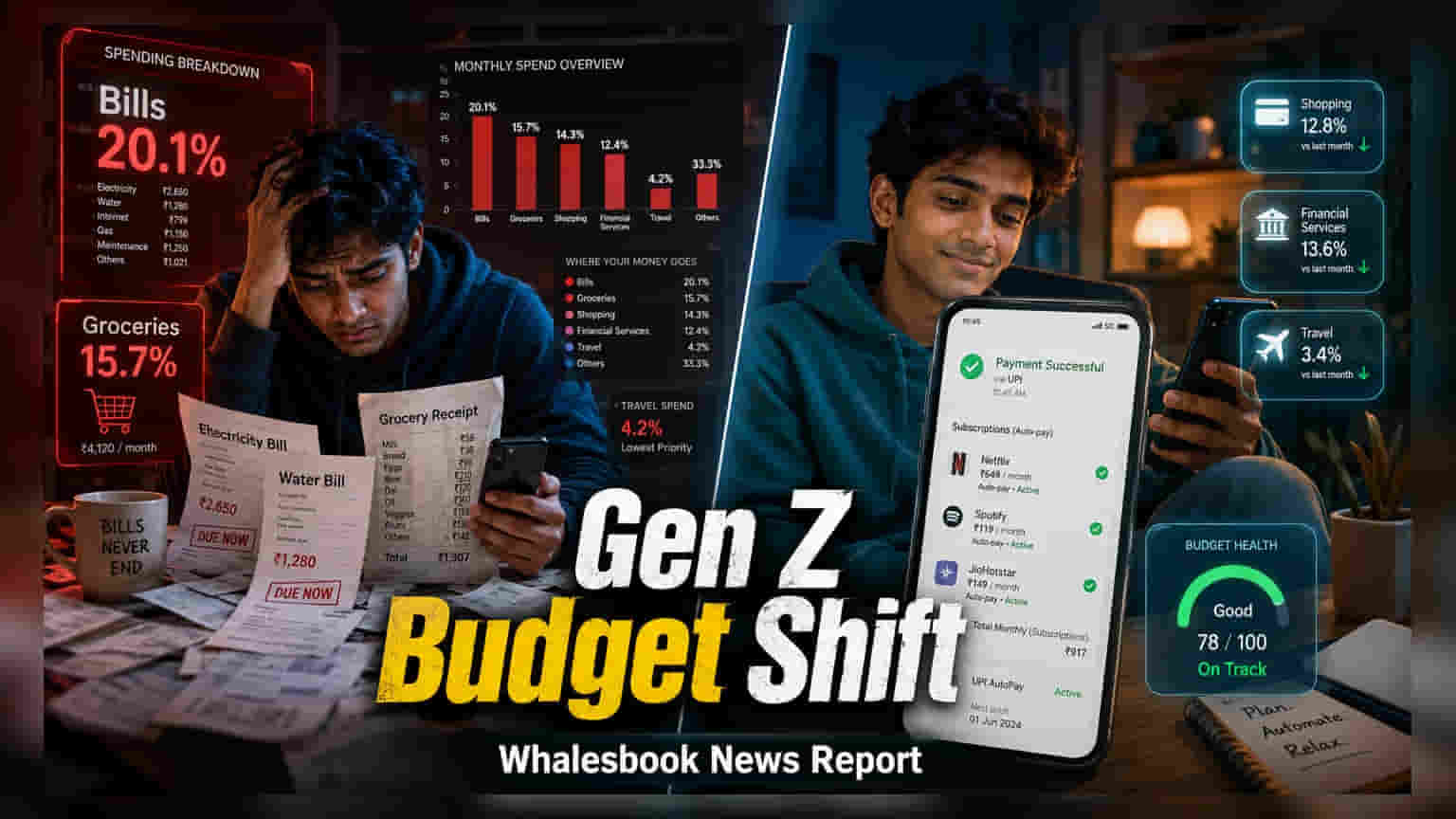
A study of 5.2 lakh salaried Gen Z users reveals that over 70% of their monthly income is spent on bills, groceries, and financial services rather than luxury or lifestyle splurges. This shift in consumer behavior offers key insights for FMCG, digital services, and consumer finance companies tracking India's youngest workforce.
India’s youngest salaried workforce is shifting its spending habits away from discretionary lifestyle purchases toward essential needs and digital financial commitments. A recent study analyzing UPI transaction patterns of over 5.2 lakh Gen Z users aged 18 to 29 reveals that nearly three-quarters of their monthly income is dedicated to survival and maintenance costs rather than entertainment or travel.
Where Gen Z Spends Monthly Income
The data shows that utility bills and recurring digital subscriptions are the largest expense category, taking up 20.1% of monthly spending. Groceries follow closely at 15.7%, while financial services and shopping take up 12.2% and 11.9% of the budget, respectively. Notably, traditional discretionary categories like travel account for only 5% of their monthly expenditure. This allocation indicates a generation that is deeply integrated into the digital economy, using UPI and automated payment systems to manage routine costs like subscriptions and utility bills.
The Rise of Digital Subscriptions
For investors and companies in the digital services sector, the data highlights a clear preference for consistent, low-cost digital consumption. Within the subscription space, JioHotstar leads with 12.4% of payments, followed by Netflix at 10.7% and Spotify at 5.6%. This reliance on digital entertainment suggests that while Gen Z may be frugal with physical lifestyle splurges, they are consistent spenders in the digital services ecosystem.
What This Means for Businesses
This trend provides significant context for companies in the FMCG, digital streaming, and financial services sectors. As Gen Z moves further into their careers, the study identifies a clear pattern of financial maturation. Older Gen Z workers (aged 24-29) allocate a significantly larger portion of their income—nearly 59%—to essential spending compared to their younger counterparts, whose essential spending hovers around 50%. Businesses that focus on subscription-based revenue models or essential consumer goods may find this demographic more resilient than those relying heavily on one-time luxury or travel purchases.
Potential Risks and Financial Watchpoints
While the shift toward essential spending may indicate financial discipline, it also introduces specific risks that investors and financial observers should monitor. The heavy reliance on UPI AutoPay and automated recurring payments can create a 'subscription trap,' where a large number of small, automated deductions mask the true level of ongoing debt or cash outflow. This behavior may lead to challenges in maintaining liquidity if overall income growth does not keep pace with the rising number of monthly essential commitments.
Additionally, as this generation becomes the primary driver of consumer demand, companies must balance the need for affordability with the high expectations of a digital-first user base. The key monitorable for the coming quarters will be how well consumer-facing firms can adapt their products to suit these evolving wallet priorities without losing margin to the rising costs of digital customer acquisition.