 Whalesbook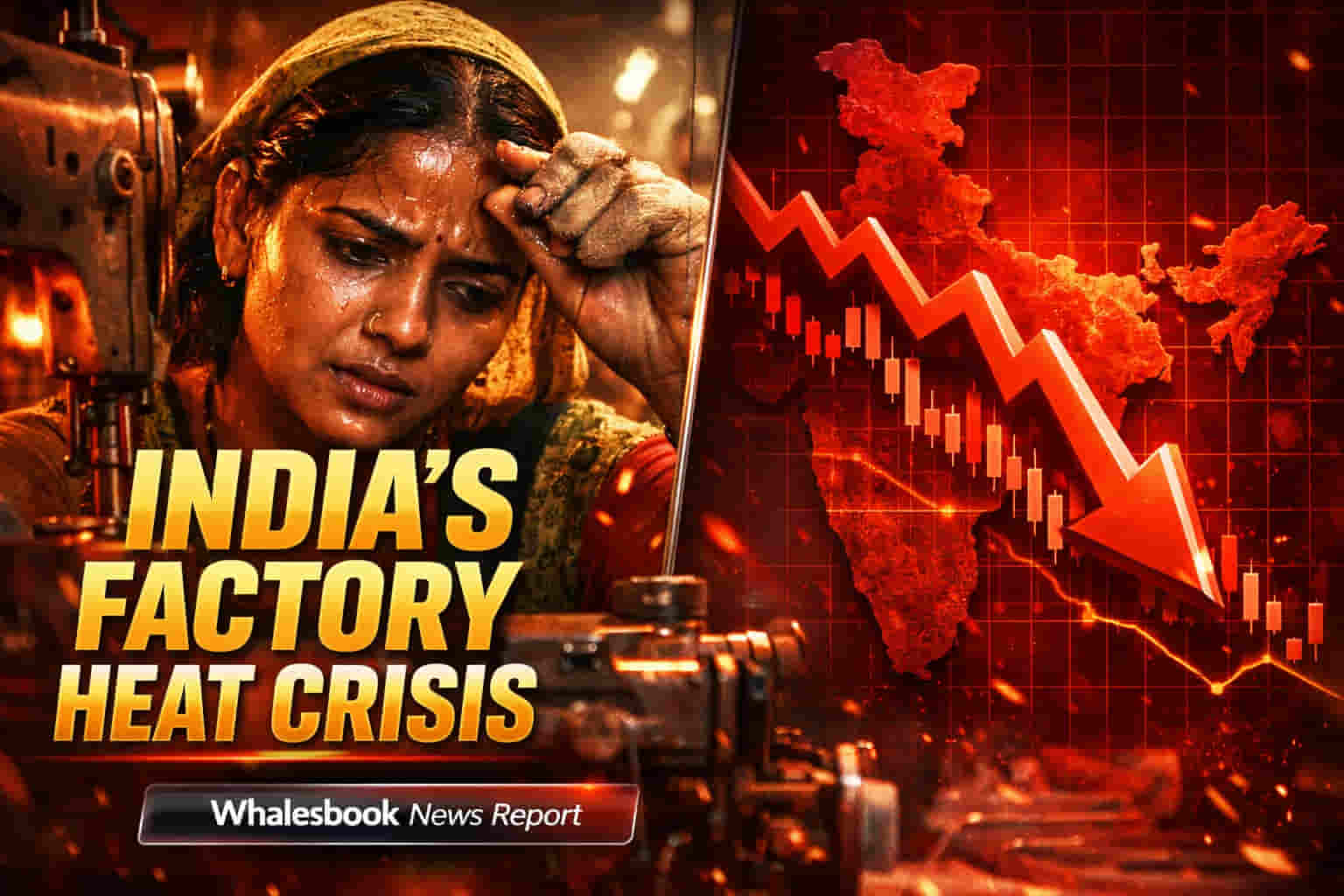


THE SEAMLESS LINK
The alarming findings of a new report detailing the widespread health impacts of extreme heat on India's garment workers underscore a critical systemic vulnerability. Beyond the immediate human cost and reduced productivity, this crisis illuminates significant policy shortcomings and governance failures, creating substantial Environmental, Social, and Governance (ESG) risks that directly challenge the long-term viability and international competitiveness of India's pivotal textile sector.
The Human Cost and Operational Strain
Nine out of ten garment workers surveyed reported feeling sick due to extreme heat within factories, with 87% experiencing symptoms like headaches, dizziness, and muscle cramps. An overwhelming 78.3% described their workstations as akin to "working in a furnace," where machines can reach temperatures as high as 99 degrees Celsius. This oppressive environment directly curtails productivity, with 68.7% of workers noting heat's detrimental effect on their work capacity. The pressure to meet production targets often forces workers to skip breaks, leading to doubled stress levels [cite: Original].
The disproportionality of this burden is starkly evident in the gendered impact. Women workers recorded a significantly higher average Heat Stress Index (HSI) score of 61.5 compared to 18.6 for men. This translates into severe physical consequences, including burning sensations during urination for nearly 97% of women, indicative of dehydration, and disruptions to menstrual cycles affecting over 92% [cite: Original]. Reports of workers seeking respite on factory bathroom floors or facing criticism for requesting fans or more frequent toilet breaks paint a grim picture of workplace realities.
Systemic Governance Failures
The crisis is exacerbated by a critical disconnect between India's climate policy architecture and the realities of the workplace. National frameworks such as the National Action Plan on Climate Change (NAPCC) and state-level plans primarily focus on energy, agriculture, and rural resilience, largely omitting detailed vulnerability assessments or enforceable safeguards for indoor workplaces exposed to extreme heat. Concurrently, the Union Ministry of Labour and Employment, responsible for worker safety, has remained largely absent from climate action planning. This fragmentation leaves millions of workers exposed without formal recognition or protection.
There is a notable absence of clear, enforceable national standards specifically regulating workplace heat exposure in India. While various cities have adopted Heat Action Plans (HAPs), these often remain underfunded, poorly coordinated, and largely exclude informal workers, treating heatwaves as short-term disasters rather than symptoms of a deepening climate crisis. The current labour laws lack specific provisions to protect workers from extreme heat, a situation that contrasts with evolving regulations in other countries.
The ESG Risk Premium
These conditions translate directly into escalating ESG risks for the Indian textile and apparel sector, which contributes significantly to India's GDP and exports, valued at approximately $35 billion in FY 2023-24 [cite: Original, 11]. Global buyers are increasingly mandating adherence to ESG criteria, turning sustainability compliance into a prerequisite for market access and competitiveness. International regulations like the EU's Carbon Border Adjustment Mechanism (CBAM) impose rising non-tariff barriers tied to sustainability.
For Indian companies, particularly Small and Medium-sized Enterprises (SMEs), meeting these stringent ESG standards presents significant challenges. Many operate with outdated, energy-intensive machinery and struggle with fragmented markets where fair labor standards are inconsistently applied. This "sustainability gap" puts them at risk of exclusion from international markets that increasingly favor suppliers with proven ESG performance. Companies failing to address these issues face not only reputational damage but also increased regulatory and trade friction.
Competitive Landscape and Economic Exposure
The International Labour Organization (ILO) projects that heat stress could cost India dearly, potentially leading to the loss of 35 million full-time jobs and a 4.5% decline in GDP by 2030 if urgent action is not taken. Globally, the ILO estimates potential losses equivalent to 80 million full-time jobs and $2.4 trillion annually by 2030 due to heat stress. In India, heat-induced productivity losses are estimated to have already cost the economy $100 billion. The textile industry, employing around 45 million people, is particularly exposed, with dense factory settings and intense production pressures amplifying the impact of rising temperatures.
The Forensic Bear Case (Hedge Fund View)
From an investor's perspective, the current scenario presents a clear ESG liability. The failure to implement basic worker protections against heat stress signals a fundamental governance deficit. Brands sourcing from India face mounting pressure from consumers and regulators to ensure ethical supply chains. Companies that maintain only a few "model units" for audits while other sections operate under hazardous conditions risk significant reputational damage and potential supply chain disruptions. This lack of transparency and commitment to genuine worker welfare undermines long-term brand value and exposes companies to litigation and boycotts.
Moreover, the reliance on outdated infrastructure, such as metal or asbestos roofing, which intensifies heat, and the lack of adequate medical facilities within factories highlight operational inefficiencies that will only be magnified by climate change. The risk of heat-related illnesses leading to chronic kidney disease, as noted by the ILO, also adds a long-term health cost and potential liability dimension. The gap between stated climate goals and on-the-ground implementation for worker safety creates a tangible risk premium that sophisticated investors will increasingly scrutinize. The inadequate recognition of heat stress as an occupational disease, and its absence from key worker protection acts, further solidifies the perception of systemic neglect.
Future Outlook and Policy Imperatives
Addressing this crisis requires a fundamental shift towards integrated policy development and worker-centric climate action. This includes recognizing heat stress as an occupational disease, updating labor laws to include specific heat stress provisions, and strengthening collaboration between climate and labor authorities. Companies that proactively invest in cooling infrastructure, implement effective heat action plans, and ensure fair labor practices will not only mitigate risks but can also gain a competitive advantage, attract ESG-conscious investment, and enhance brand loyalty. The narrative must shift from viewing climate action as a constraint to recognizing it as an opportunity for building resilient industries and sustainable livelihoods.