 Whalesbook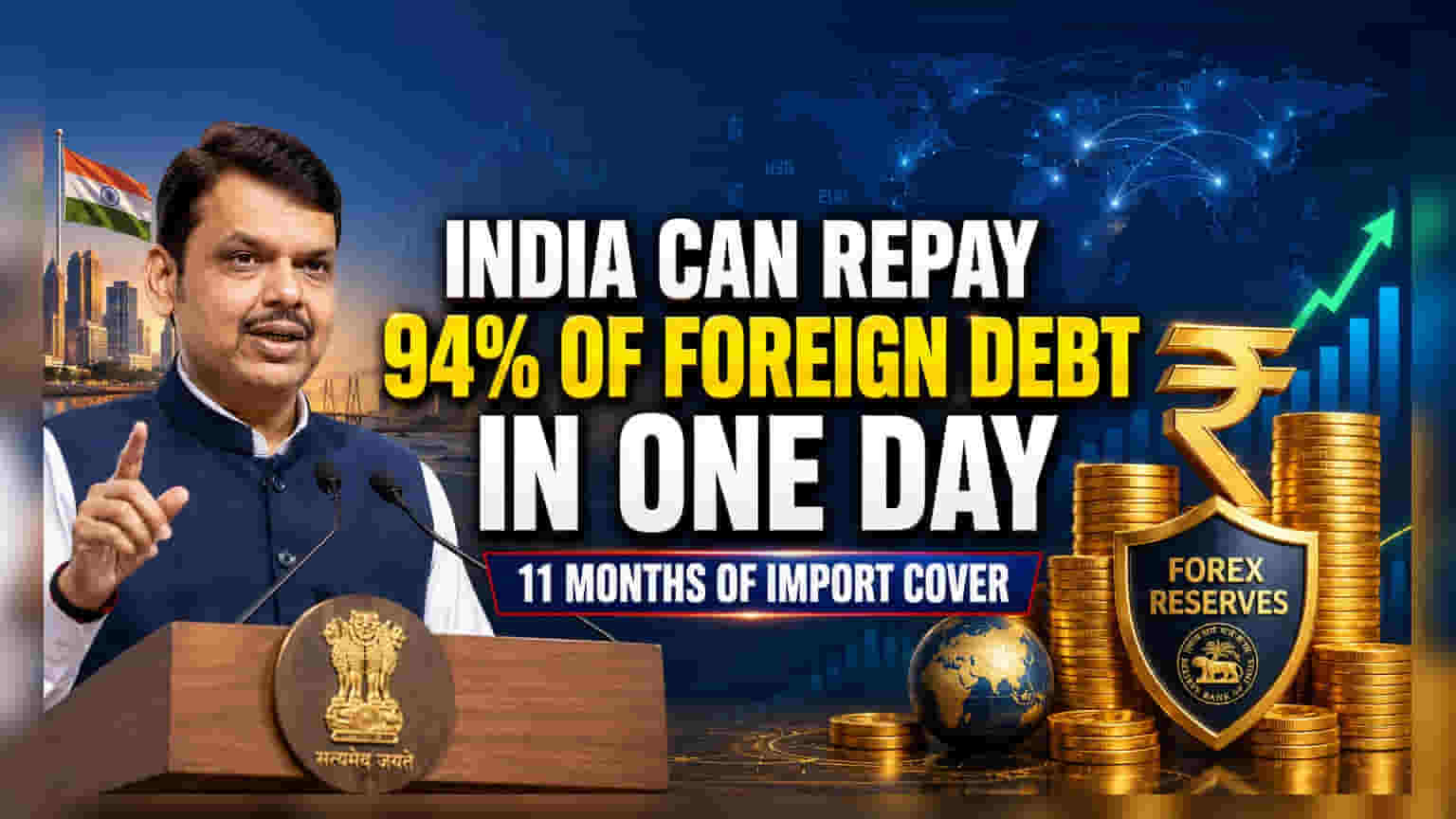


Maharashtra CM Devendra Fadnavis stated that India possesses the financial capacity to repay 94% of its foreign debt instantly, underpinned by robust foreign exchange reserves that provide 11 months of import cover. This highlights the nation's improved external stability, countering concerns over economic slowdowns and supporting its long-term growth trajectory.
What Happened
Maharashtra Chief Minister Devendra Fadnavis recently addressed concerns regarding India’s economic stability during a press conference in Mumbai. He stated that the country’s current financial position is strong enough to repay approximately 94% of its outstanding foreign debt in a single day if necessary. This claim was made while highlighting India's improved foreign exchange reserves, which currently provide sufficient funding to cover nearly 11 months of imports. These comments were part of a broader discussion on India's resilience against global economic headwinds and its continued status as a fast-growing major economy.
Why Reserves Matter for Investors
For stock market investors, the level of foreign exchange reserves is a vital indicator of a country's macroeconomic health. A high level of reserves acts as a buffer, reducing the risk of currency volatility and helping the economy withstand external shocks, such as spikes in global commodity prices or sudden shifts in global interest rates. When a country holds enough reserves to cover a significant portion of its import bill and external debt, it often leads to greater stability in the rupee and enhances investor confidence in the nation's financial autonomy. Market participants often track these metrics—specifically import cover and debt-to-reserve ratios—as they influence the central bank's ability to manage interest rates and liquidity without facing extreme currency depreciation pressures.
Understanding the Debt Coverage Claim
Fadnavis’s statement emphasizes the shift in India's external debt profile compared to previous decades. In the past, discussions around India’s balance of payments were often focused on the need for support from global institutions like the IMF or World Bank. By pointing to the current reserve strength, the CM was highlighting that India's reliance on external financing to meet immediate obligations has significantly decreased. This, combined with the country's reported GDP growth of 7.7% for the fiscal year, aims to provide a counter-narrative to global recession fears. The focus is on demonstrating that the domestic economy has built a solid foundation that allows for greater policy flexibility.
Macroeconomic Factors to Monitor
While the current foreign exchange reserves and import cover provide a strong defensive cushion, investors often look beyond these headline numbers to assess the broader economic health. Global interest rate cycles, particularly those influenced by the US Federal Reserve, can impact capital flows into emerging markets like India. Additionally, the country's trade deficit—the difference between imports and exports—remains a key variable that influences the depletion or accumulation of these reserves. The growth in digital transactions, specifically through the Unified Payments Interface (UPI), also reflects a transition toward a more formal and digitized economy, which can improve tax compliance and financial inclusion, ultimately supporting long-term structural growth.
What Investors Should Track
Moving forward, market participants may track several key data points to gauge the sustainability of this economic performance. These include monthly updates on the foreign exchange reserves from the Reserve Bank of India, which provide a real-time snapshot of the external balance. Additionally, trends in export growth, domestic inflation levels, and central bank policy decisions will be critical in determining how the economy balances growth and stability in the coming quarters. While the current buffer is significant, investors should remain attentive to global energy prices and capital flow movements that can influence these reserve levels over the medium to long term.